A Street with a Story

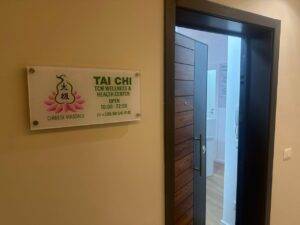
When I first opened Tai Chi – TCM Wellness and Health Center here in Tirana, one of the first things that caught my attention was the name of the street — Rruga Astrit Sulejman Balluku. It’s a long name, melodic and unfamiliar to me at first, and I used to wonder who this person was. Every time I wrote down the address for a new client or looked up at the street sign, I felt a quiet curiosity. Streets carry stories, I thought — and this one, surely, must too.

At the beginning, I tried to look for information online, but it was not easy to find much. Later, through conversations over coffee, some of my Albanian friends told me that Astrit Sulejman Balluku was a trade-union leader in Tirana who lived during the country’s difficult years of transition after the fall of communism. He was killed in October 1998, at a time when Albania was facing unrest and political violence.

For someone who arrived in Tirana decades later, it’s hard to imagine what those days were like. My friends described a city filled with uncertainty — protests, fear, and the feeling that the future was not yet secure. It was a time when courage and loss often went hand in hand.
When I walk along this same street today, it feels like another world. The air hums with the sound of construction; cafés spill laughter onto the sidewalks; people talk about their children studying abroad, about tourism, about business, and about Albania’s European future. The transformation is visible everywhere — in the new buildings, in the energy of young people, and even in the small details of daily life.

Of course, not everything is perfect. Like every growing city, Tirana still faces challenges — traffic, rising prices, moments of impatience, and the fast rhythm that modern life brings. But beneath it all, there is a strong sense of movement and possibility. People care deeply about their city. They are proud of how far it has come, and they keep working toward something better.

For me, coming from China and living here for six years, Tirana has become more than just a place of work — it feels like a community. I walk to the market and see familiar faces, I hear greetings in three different languages, and I feel safe walking home even late in the evening. There is a quiet trust in everyday life that I appreciate very much.
Sometimes, as I stand outside our center and look at the sign that says Rruga Astrit Sulejman Balluku, I think about how time transforms pain into memory, and memory into meaning. This street, once named after a man who lost his life in troubled times, is now a place where people come to rest, heal, and find balance. That feels symbolic — as if the city itself is breathing more peacefully now.

When I talk to my Albanian friends about the past, they often say the same thing: “We have been through worse. Now we want to live better.” And I believe they are doing just that.
So whenever I see the evening light fall softly on this street — the children playing, the trees whispering, the city slowly calming down after a busy day — I think of how far Tirana has come. The journey from unrest to peace is not simple, but it is beautiful.

And perhaps, in our own quiet ways, each of us can take a moment to slow down, to breathe, and to appreciate the calm we now enjoy — both within ourselves and around us.

“Mysafir” in Albania

When I first arrived in Tirana six years ago, I knew very little about Albania. I came with curiosity, open eyes, and an open heart – but I never imagined how deeply I would be touched by the warmth and hospitality of its people.

Albania has a wordless kindness that you can feel in daily life – in a neighbor’s smile, in the kind waiters from the coffee shop at the corner of my street who remember me, my favorite drink, and even how I like it served. This generosity of spirit is not just habit – it is part of an ancient tradition.

The roots of Albanian hospitality run deep, connected to Kanuni i Lekë Dukagjinit – the traditional code of honor that has guided Albanian life for centuries. One of its most famous rules says, “The house of the Albanian belongs to God and the guest.” This means that every guest, even a stranger, must be treated with the highest respect and care, as if sent by heaven itself. Though modern life has changed, this principle still lives strongly in the Albanian heart.

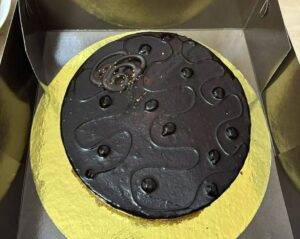
As a Chinese woman living in Tirana, I have always felt this kindness personally. From the very first day, people made me feel not like a foreigner, but like a friend. Whether I was trying to find an address and someone offered not only to show me the way but to walk with me, or when clients at my massage parlour show small gestures of friendship – it always warms my heart. One of my long-time guests, for example, often brings me my favorite cake, asks about my family, and sincerely cares for my well-being. It is a kind of human connection that goes far beyond business – it feels like friendship, like belonging.

What also surprises many foreigners is how safe Albania feels – especially for women. When occasionally I had to walk alone at night through the lively streets of Blloku or near Skanderbeg Square, I never felt threatened or uncomfortable. Respect runs deep in this culture; when you treat Albanians with kindness and dignity, they respond with genuine care and protection.

Tirana today is a beautiful mix of tradition and modern energy – full of cafés, laughter, and life. But beneath this modern face still beats the heart of an old world value: the sacred duty to welcome and protect the guest.

I often tell my friends back in China and other countries: Come to Albania, visit Tirana, and feel this warmth yourself. You will not only discover mountains, sea, and history – you will discover a nation that still believes that friendship begins with an open door and a full heart.

After six years, Tirana has become more than where I live – it has become my home.


— Yang Wang


Acupuncture worked for me

I have lived and worked in Tirana for many years, building my career in a bank. My days are spent in front of a computer, long hours of meetings and reports, with little time left for movement. Over time, this lifestyle left me with a constant, stubborn pain in my right shoulder.


I did the sensible thing and went to a doctor. An X-ray was taken, but nothing unusual showed up. The advice was to rest and to take painkillers. I tried for a while, but I didn’t want to become dependent on medication just to get through daily life. The thought of carrying this pain indefinitely, or relying on pills, felt discouraging.
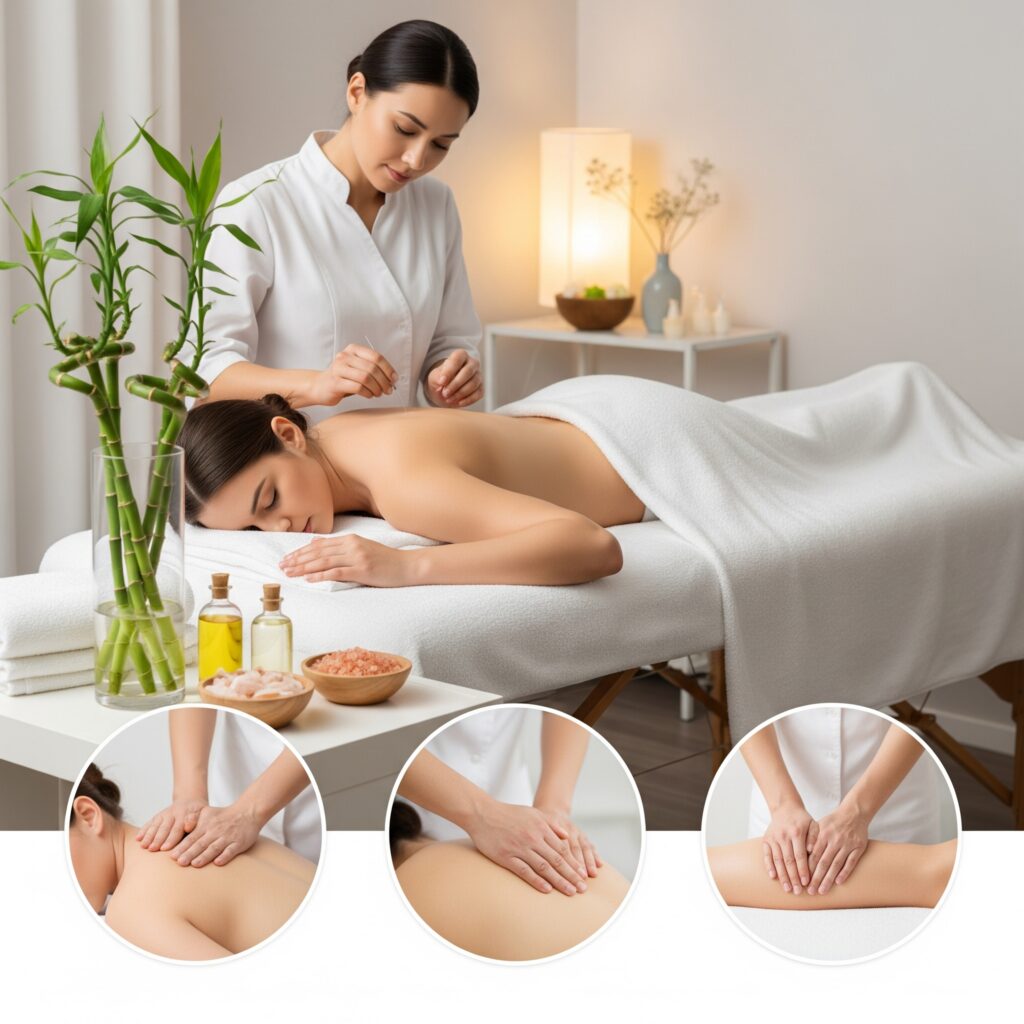
That’s when I decided to visit Yang’s salon. I originally booked a massage, which was wonderful, but when I shared my story about the shoulder pain, Yang suggested something I had never considered: a course of acupuncture, ten sessions in total.


I was skeptical at first. Acupuncture was unfamiliar to me, but Yang’s calm explanation and the confidence she inspired convinced me to try. From the very beginning, I felt her professionalism in the way she worked—each needle placed with care and purpose. Gradually, the tension in my shoulder started to ease. After a few sessions, I noticed real improvement. By the tenth session, the pain that had followed me for months was gone.

When I wanted to thank Yang, she told me that the best way would be to write down my experience so others in Tirana might benefit from it too. So here I am, sharing my story.

What stays with me most is not only the fact that my pain disappeared, but also the way Yang guided me through a method I had never thought of trying. Her mastery of acupuncture gave me a real alternative to medication and showed me that relief is possible—even when the usual medical tests say everything is “normal.”
For anyone in Tirana who spends too many hours sitting at a desk and struggles with unexplained pain, I would say this: don’t ignore it, and don’t give up. Sometimes the solution is closer than you think.

 Suela

[ story source: www.facebook.com/permalink.php?story_fbid=pfbid02cCELTC8KX7UnbzNgDYxXG8NtqFftXRdB1SrgkwxzshQTWd66oJiUDnZ4AiU3yEHkl&id=61581331277081 ]

What a headache!

Yesterday evening, just as we were getting ready to close, one of our neighbors knocked on the door. She looked pale, her hand pressing against her temple, and she told me she was suffering from a terrible migraine.

Migraines are not just headaches — they can be so intense that the world feels too bright, every sound is too loud, and even simple movement becomes exhausting. I could see how much she was struggling. She had already taken painkillers earlier in the day, but the pain wasn’t easing.

I invited her in and suggested we try a short acupuncture session. After a few minutes of rest, I gently placed thin needles in specific points: LI4 (Hegu) on her hand to release tension, GB20 (Fengchi) at the base of her skull to calm the pounding pain, and Taiyang near her temples. I also added LR3 (Taichong) on the foot to smooth the flow of Liver Qi, which in TCM is often linked to migraines.

At first, she was a little nervous — she had never tried acupuncture before. But within minutes, her breathing slowed, her shoulders relaxed, and I could feel the shift in her body’s energy. By the end of the session, she opened her eyes, surprised. The heavy pressure in her head had lightened, and the sharp pain had faded to something much more bearable. She smiled for the first time that evening and said, “It feels like a weight has been lifted.”

Moments like this remind me why I practice Traditional Chinese Medicine. Modern science may not fully explain how acupuncture works, but time and again, I see how it helps people — easing pain, calming the mind, and restoring balance.

For my neighbor, it wasn’t just about needles. It was about being cared for, about knowing there is a natural way to find relief when nothing else seems to work.

Serenity Full body massage

The Right Time for a Four Hands Massage

We all know those nights. You get in bed early, ready to sleep, and suddenly your brain opens a to-do list from hell: work, money, family, even that weird comment you made years ago. It doesn’t stop.

That’s the new normal for many of us—always “on,” rarely resting, running on empty. You wake up tired, move through the day like a zombie, and your body feels like it’s carrying the weight of it all.

This is where four hands come in. Not as a treat, but as a real reset button for your body and mind.

What Is Four Hands Massage?

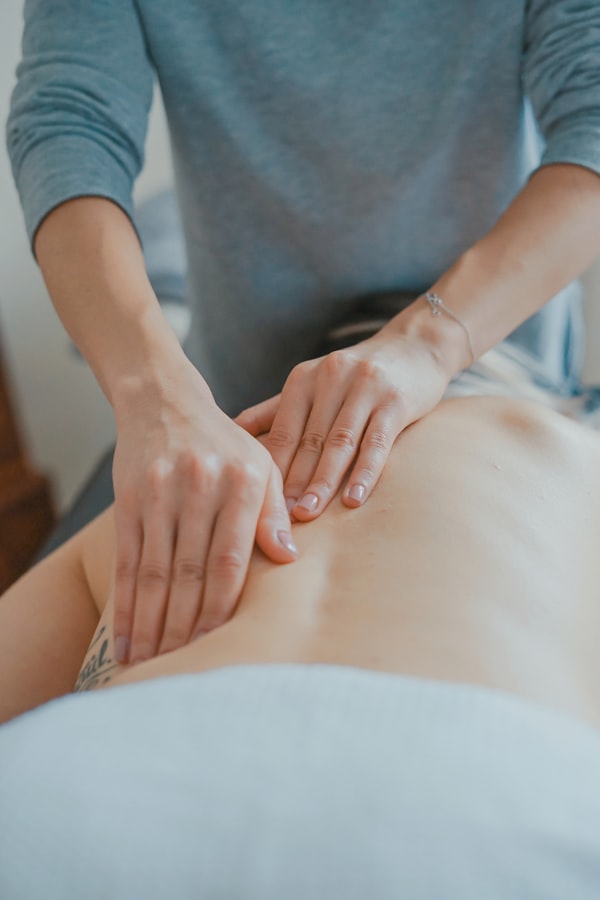
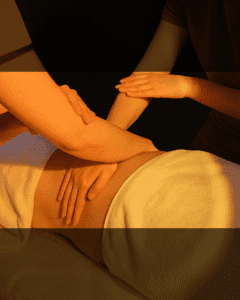
It’s exactly what it sounds like—two therapists working on you at the same time. But it’s not just “double massage.” It’s a coordinated rhythm, a mirrored flow of movement that covers your body evenly.

Picture this: you’re lying down, the room is calm, and two sets of skilled hands move in sync to release tension, boost circulation, and calm your nervous system.

It feels good, yes. But there’s also solid science behind why it works so deeply and effective.

Why Your Brain Loves It

Here’s the twist: your brain can’t keep up with two identical streams of touch at once. It stops trying to analyze or predict.

Instead, it lets go.

That endless loop of thinking, worrying, planning? It finally hits pause. Your body shifts out of stress mode and into true rest mode—the place where real healing and recovery happen.

Why It Hits Different Right Now

Life speeds up around seasonal changes, deadlines, and stress spikes. You may not even notice how much it’s weighing on you—until your shoulders lock up, your energy drops, or your stomach rebels.

Traditional Chinese Medicine calls this blocked energy, or Qi. Four-hand massage helps open the flow again. It calms down the nervous system, reconnects body and mind, and leaves you feeling more balanced than you thought it possible.

Like Meditation, Without the Effort

Meditation is hard when your head won’t stop spinning. But during a four-hand massage, your brain simply can’t hold on to all the input.

It’s like white noise for your nervous system. You stop waiting for the next move, stop planning, stop fixing.

You just exist in the moment. And that’s where calm settles.

Who Benefits Most?

If you:

  • Struggle to fall asleep or wake up groggy
  • Can’t stop replaying work or future worries
  • Feel weighed down or mentally foggy
  • Are going through a stressful change
  • Or simply forgot what deep relaxation feels like…

…then four hands might be exactly what your system is looking for.

Not Just Relaxation – A Reset

The effects go beyond a clear head. This treatment also tackles:

  • Muscle tension
  • Poor circulation
  • Low energy
  • Chronic fatigue

By working both sides of the body at once, it balances your whole system. Many walk out feeling lighter, clearer, and more grounded – like the noise finally turned down.

Final Word

A four-hand massage isn’t just “an hour of calm.” It’s the after-effect: better sleep, sharper focus, a steadier mood, and more energy to live your life.

So if you’re wired, tired, or stuck in your head, maybe the fix isn’t to push harder.

Maybe it’s letting go—while four hands do the work for you.

Double the care, double the healing."

The Hidden Highways of Health: Understanding Meridians and Meridian Conditioning in TCM

When I first studied Traditional Chinese Medicine (TCM), one of the most fascinating discoveries for me was the idea of meridians—the invisible pathways that carry energy through the body. They don’t appear in anatomy textbooks, and modern Western medicine does not recognize them as physical structures. And yet, for thousands of years, they have been central to how Chinese medicine understands health, balance, and healing.

What is interesting is that, even today, many patients who try treatments based on meridian work describe feeling lighter, more balanced, and more at ease. Whether it is through acupuncture, massage, or other techniques, they often notice changes that are difficult to explain in purely physical terms.

What Are Meridians?

Meridians can be thought of as energy highways. Instead of blood or nerves, they carry Qi (life energy) and influence how well our organs, muscles, and even emotions function. There are 12 main meridians, each linked to a specific organ system—like the lung, heart, liver, or kidneys.

When these pathways are open and flowing, the body feels alive, energetic, and in balance. When they are blocked or stagnant, problems may show up as pain, fatigue, mood swings, or other discomforts.

massage therapy

Signs of Imbalance

Many common complaints can be understood in TCM as signs of meridian imbalance:

  • Stiff muscles or aching joints
  • Constant tiredness or low energy
  • Stress, anxiety, or irritability
  • Digestive troubles
  • Poor sleep or frequent headaches

In practice, I often see that once the meridians are gently “opened,” these issues begin to improve naturally.

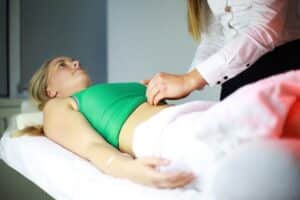
Manual Therapy:

What Is Meridian Conditioning?

Meridian conditioning is a way of keeping these pathways healthy and open. It is less about fixing a single symptom and more about maintaining the body’s overall balance. Some of the techniques include:

  • Acupuncture or acupressure – stimulating precise points along the meridians
  • Tui Na massage – using touch, pressure, and movement to free blocked energy
  • Cupping or gua sha – promoting circulation and removing stagnation
  • Gentle movement and breathing – such as Tai Chi or Qi Gong, to strengthen the natural flow of energy

I like to think of meridian conditioning as the equivalent of maintaining the roads in a city—if they are clear and well-kept, life moves smoothly.

Woman Suffers Medical Emergency

Why It Matters Today

Modern life is full of stress, poor posture, long hours in front of screens, and irregular routines. All of these can disrupt the body’s natural balance. That is why so many people today are turning to TCM approaches—not to replace modern medicine, but to complement it and support their own well-being.

Even though science has not yet mapped meridians the way it has blood vessels or nerves, what matters most is how people feel. And the truth is, many patients report a deep sense of relaxation, reduced pain, and renewed energy after meridian-based therapies.

cupping therapy on their back

A Personal Reflection

Over the years, I have seen people arrive tired, stressed, or in pain—and leave with a calm smile and lighter step. It’s not magic. It’s simply the body responding when the energy begins to flow again.

For me, this work is not just about easing discomfort, but about helping people reconnect with their natural vitality. Whether you see it as energy, circulation, or simply relaxation, the result is often the same: the body feels freer, and the mind feels clearer.

Frequently Asked Questions

  1. Are meridians scientifically proven?

Modern medicine does not recognize meridians as physical structures. They are not visible under a microscope or in medical imaging. However, many people find that therapies working on meridians bring real relief and improved well-being.

  1. Can meridian conditioning replace modern medical treatment?

No. TCM should not be seen as a replacement for necessary medical care. Instead, it can be a complementary approach that supports balance, relaxation, and the body’s natural healing processes.

  1. How many sessions are usually needed?

This varies from person to person. Some people feel noticeable changes after just one or two sessions, while others may benefit from regular treatments to maintain balance.

  1. Is meridian conditioning safe?

Yes, when performed by a trained professional. Techniques like acupuncture, massage, and cupping are generally safe and have been used for centuries.

  1. Who can benefit from it?

People of all ages may find benefit—from those with chronic stress or muscle pain to those who simply want to improve their energy and overall balance.

Final Thought

Meridians may not be visible under a microscope, but their effects are real to those who experience them. Meridian conditioning is about nurturing balance, preventing blockages before they turn into bigger problems, and giving the body the chance to heal itself.

As a practitioner, I see it as an invitation—to listen more closely to the body, to care for it gently, and to trust in its natural ability to restore harmony.