Back Pain in Corporate Life? Easy Office Fixes

As we age, especially beyond 40, many of us working in corporate environments begin to experience persistent back pain. Long hours at desks, constant computer use, and the stress of deadlines all contribute to a condition that affects both our productivity and quality of life.

What Causes Back Pain in Corporate Professionals Over 40?

  • Poor Posture – Sitting for hours without proper lumbar support strains the spine.
  • Sedentary Lifestyle – Limited physical activity reduces flexibility and weakens back muscles.
  • Stress and Tension – High-pressure work environments often lead to muscle tightness, especially in the neck, shoulders, and lower back.
  • Improper Desk Setup – Screens too low, chairs too stiff, or lack of movement breaks can gradually create misalignments.

4 Simple Exercises to Relieve Back Pain in the Office

These quick, discreet exercises can be done right at your desk:

Seated Spinal Twist
Sit upright with feet flat on the ground.
Place your right hand on the back of your chair and gently twist your upper body to the right.
Hold for 10 seconds, then switch sides.

Shoulder Rolls
Roll your shoulders forward in a circular motion 10 times, then backward 10 times.
Helps release tension and improve posture.

Neck Stretch
Tilt your head toward your right shoulder until you feel a stretch on the left side.
Hold for 15 seconds. Repeat on the other side.

Standing Backbend
Stand up, place your hands on your lower back, and gently arch backward.
This counters long hours of leaning forward and sitting.

No Time to Exercise? Try Traditional Chinese Massage
For those too busy to follow a stretching routine or working in a rigid environment where movement is limited, Chinese massage offers a powerful alternative. At Tai Chi – TCM Wellness and Health Center in Tirana, we specialize in Traditional Chinese Medicine (TCM) massage techniques that:

  • Relieve deep muscle tension
  • Improve circulation and flexibility
  • Reduce stress and mental fatigue
  • Address both acute and chronic back pain

Our experienced therapists tailor each session to your needs, targeting the meridians and pressure points associated with pain and tension.

Important Note: Seek Medical Advice When Needed

While massage and exercises are excellent for maintaining back health and managing everyday discomfort, serious or persistent back pain should always be evaluated by a doctor. However, Chinese massage can play an important supportive role—not only in managing physical pain but also in promoting relaxation and overall well-being.

Popular Methods For Treating Nerve Pain

Tai Chi Symbol Meaning: Balance & Harmony Explained

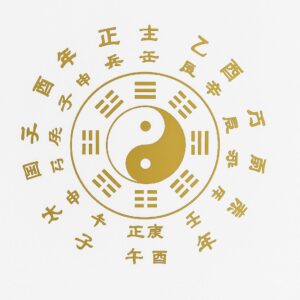
When you step into Tai Chi – TCM Wellness and Health Center in Tirana, one of the first things that might catch your eye is the striking gold emblem on the wall—a harmonious blend of circles, lines, and ancient Chinese characters. This isn’t just decoration. It’s a powerful symbol rooted in Traditional Chinese Medicine (TCM), and it represents the very heart of our healing philosophy.

The Symbol: A Window Into Ancient Wisdom

At the center of the design is the Taiji (Yin-Yang) symbol, representing the balance of opposites in the universe—light and dark, active and passive, masculine and feminine, health and illness. In TCM, health is understood as the dynamic balance of these forces in the body. When Yin and Yang are in harmony, the body functions optimally.

Surrounding the Taiji are the Bagua (Eight Trigrams)—symbols composed of three lines each, which represent fundamental natural elements such as Heaven, Earth, Fire, Water, Wind, and Mountain. These are not just poetic ideas; they are used in diagnostics and treatment to understand how energy (Qi) flows through the body and how it can be balanced through techniques like massage, acupuncture, and herbal medicine.

Encircling everything are characters from the Heavenly Stems and Earthly Branches system, part of a 60-year cycle used in Chinese astrology and medicine to understand a person’s constitution, health tendencies, and the best times for healing. This system is also foundational in Ba Zi (Four Pillars of Destiny), a diagnostic method often used alongside TCM.

How This Philosophy Shapes Our Practice

At Tai Chi – TCM Wellness and Health Center, we don’t treat symptoms in isolation. Just like the symbol on our wall, we look at your body as a whole—interconnected, dynamic, and full of potential for healing.

Our massages are designed not only to relax muscles but to restore energetic balance.

Our approach considers your individual constitution—whether you’re more Yin or Yang, hot or cold, deficient or excessive in Qi.

We respect seasonal rhythms, body cycles, and stress patterns, aligning your treatment with the natural flow of energy.

Why This Matters

In today’s fast-paced world, many of us feel out of sync—with our bodies, with nature, and with ourselves. The symbol on our wall is a reminder that healing is not just about relief, but about restoration and realignment. It’s about returning to balance.

So next time you visit us, take a moment to look at the golden circle on the wall. It’s not just art—it’s the philosophy we live by. And it’s our promise to guide you toward a healthier, more harmonious life.

Yang’s Journey: From Liaoning to TCM in Tirana

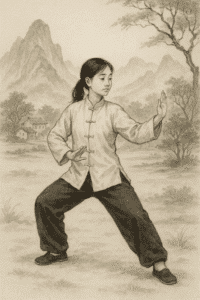
In the vast northeastern province of Liaoning, China, lived a modest girl named Yang. She never sought attention, but her quiet strength and inner determination always impressed those who knew her. Yang found happiness in simple, meaningful things — practicing tai chi with her father on quiet mornings, playing basketball with friends in the schoolyard, and watching in admiration as her mother practiced traditional Chinese massage with devotion and gentleness.

From an early age, Yang had a deep connection to body-mind harmony. Her father, a dedicated tai chi practitioner, taught her the philosophy of balance and flow. Her mother, a massage therapist, taught her that healing begins with compassion and genuine presence. Inspired by these teachings, Yang pursued her studies in Traditional Chinese Medicine, specializing in meridian therapy and therapeutic massage.

After several years of study and practice, Yang felt a strong desire to take her knowledge beyond the borders of Liaoning. She dreamed of sharing her culture and healing skills with the world. At the age of 25, with only her knowledge and a heart full of pure intention, she took a bold step and moved to Europe.

Of all the countries she visited, it was Albania that stole her heart. The mountains reminded her of her homeland, while its people welcomed her with warmth and curiosity. She began working in wellness centers in Tirana, offering traditional Chinese massage with care and precision. The beginning was challenging — the language was unfamiliar, the customs different — but Yang faced everything with humility and inner strength.

Her gentle spirit and extraordinary skill soon attracted loyal clients. Word spread, and more and more people came, not just to relieve pain or stress, but to experience the peace it offered. Over time, Yang built strong connections, made friends who became family, and created a community that appreciated her work.

After six years of dedication, Yang achieved what once seemed like a distant dream: opening her own Chinese massage center in the heart of Tirana. She called it Tai Chi – TCM Wellness and Health, a tribute to her roots in tai chi and Traditional Chinese Medicine, and to the journey that had brought her from Liaoning to Albania.

But that wasn’t the end of her story — it was the beginning of a new chapter.

Starting a business brought new challenges: responsibilities she hadn’t faced before, paperwork in a language she spoke only just enough to be understood, and the pressure to turn her passion into a sustainable living. It was a risky, uncertain, and sometimes exhausting journey. But Yang, like tai chi, faced each step with calm and determination.

She knew well that life is like tai chi — it flows slowly, at its own pace — sometimes difficult, sometimes graceful. With the support of family from afar, the help of friends, and the trust of her beloved clients, Yang jumped into this new chapter, ready to build something not only for herself, but also for all who sought healing, balance, and a moment of peace.

This was the beginning of a new journey — full of risk, challenging, but also exciting and full of hope.

TAI CHI - TCM WELLNESS AND HEALTH CENTER

Shiatsu vs Tuina vs Swedish: Which Massage Style Suits You?

Looking for the best massage in Tirana?

Whether you’re seeking stress relief, pain management, or deeper healing, understanding the unique benefits of different massage styles can help you make the right choice. In this guide, we explore the most well-known techniques—Chinese, Japanese, Tibetan, Thai, and Swedish massage—and explain how each can serve your body and mind.

Understanding the Differences: Chinese, Japanese, Tibetan, Thai, and Swedish Massage

Massage therapy is an ancient healing practice with diverse traditions rooted in different cultures. While they all aim to promote wellness and relaxation, the techniques, philosophies, and therapeutic goals can vary greatly. In this article, we’ll explore the main differences between five prominent styles: Chinese, Japanese, Tibetan, Thai, and Swedish massage.

1. Chinese Massage (Tui Na / Anmo)

  • Origin: Traditional Chinese Medicine (TCM)
  • Focus: Energy flow (Qi), meridians, and internal organ balance
  • Techniques: Tui Na combines rhythmic pressing, kneading, rolling, and stretching along meridians and acupressure points. It’s often used alongside acupuncture and herbal medicine.
  • Goal: To correct imbalances, remove blockages, and promote the smooth flow of Qi. It can be both relaxing and therapeutic.
  • Best for: Chronic pain, stress-related disorders, internal organ dysfunction, and musculoskeletal problems.

2. Japanese Massage (Shiatsu & Anma)

  • Origin: Traditional Japanese Medicine, influenced by Chinese TCM
  • Focus: Energy channels (meridians or “Keiraku”)
  • Techniques: Shiatsu involves applying pressure using fingers, palms, and thumbs along energy lines. Anma includes kneading, tapping, and stretching.
  • Goal: To harmonize energy, release tension, and restore vitality.
  • Best for: Fatigue, anxiety, joint stiffness, and general body tension.

3. Tibetan Massage (Kunye / Ku Nye)

  • Origin: Traditional Tibetan Medicine
  • Focus: Balancing the five elements and three humors (Loong, Tripa, Beken)
  • Techniques: Use of warm oil, kneading, rubbing, joint mobilization, and sometimes hot stones or compresses. Breathing and spiritual focus may also be involved.
  • Goal: To balance body, mind, and spirit by detoxifying and restoring energy.
  • Best for: Nervous system regulation, emotional trauma, detoxification, and spiritual grounding.

4. Thai Massage (Nuad Thai / Traditional Thai Yoga Massage)

  • Origin: Ancient Thai medicine, with Indian Ayurvedic and Buddhist influences
  • Focus: Energy lines (Sen), body flexibility, and joint mobility
  • Techniques: Performed on a mat, fully clothed. Includes assisted yoga-like stretches, rhythmic pressure, acupressure, and joint mobilization.
  • Goal: To enhance flexibility, open energy channels, and increase vitality.
  • Best for: Active individuals, flexibility improvement, and energy block release.

5. Swedish Massage

  • Origin: Western Europe (developed in Sweden by Per Henrik Ling)
  • Focus: Muscular relaxation, circulation, and general wellness
  • Techniques: Long gliding strokes (effleurage), kneading (petrissage), tapping (tapotement), friction, and vibration.
  • Goal: To relax the entire body, improve circulation, and ease muscle tension.
  • Best for: Stress relief, general relaxation, and muscle soreness.

Conclusion: A Harmonious Blend for Modern Wellness

In today’s world, it’s important to recognize that there is no such thing as a “pure” or isolated form of massage anymore. Over time, traditional techniques have evolved by drawing inspiration from one another—blending methods, philosophies, and healing insights across cultures. Whether it’s the precision of Shiatsu, the flowing rhythm of Swedish massage, or the deep energy work of Chinese Tui Na, each form contributes to the global practice of healing touch.

No matter the style, massage has become more than a luxury—it is a vital support for physical and emotional balance in our fast-paced, often stressful modern lives. Here in Tirana, where the rhythm of city life rarely slows down, taking time for massage therapy is one of the most effective ways to restore inner harmony and resilience.

Ready to try a massage that goes deeper than relaxation?

Visit Tai Chi – TCM Wellness and Health Center in Tirana and experience massage rooted in the wisdom of Traditional Chinese Medicine. Call us today!

tel:+355685414141