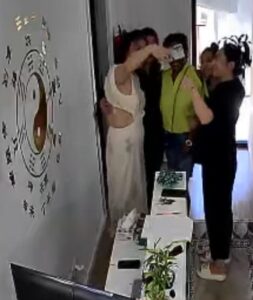
A guest came in for a session of therapeutic massage (Tui Na). She was kind and warm — the sort of person who walks through the door and immediately makes the whole room feel a little warmer. She had been carrying pain for a long time: the kind that becomes background noise, that you stop mentioning because you have already stopped expecting it to change.
She spoke English. This detail will matter shortly.
The call from Ying
About ten minutes after her session ended, my phone rang. It was Ying, one of our Chinese therapists. She called me in Chinese — which is how she always reaches me when something urgent is happening — and the word I would use to describe her voice is panicked.
“Yang — Yang — she is crying. I don’t know what she’s saying. Please come.”
I ran. That is not a metaphor. I actually ran to reception, my mind already sprinting through every possible explanation for what had gone wrong. Did something hurt? Did I miss something in the intake? Had she—
I arrived. I looked at the guest.
She was crying, yes. But she was also smiling. The kind of smile that takes up the whole face.
Here is what had happened in that reception room while I was not there. Ying does not speak English. The guest spoke English. So for the previous ten minutes, a very kind, very emotional guest had apparently been trying to explain something important — in English — and Ying, dear hardworking Ying, had understood approximately zero percent of it and had therefore concluded that something was terribly wrong.
In fairness to Ying: a crying person you cannot understand does look a lot like a problem.
What had actually happened
Nothing had gone wrong. Everything had gone right.
The guest told us — between tears, between gestures, between the three of us pointing at things and nodding with enormous sincerity — that she had not felt this way in a very long time. The pain that had become her background noise had, for the first time in months, gone quiet. She had not expected it. She had almost given up expecting it.
That is the thing about held pain: when it releases, it does not leave quietly. Sometimes the body has so much relief to express that it comes out the only way it knows how.
Once Ying understood — through my translation, between the two of us switching between Chinese — that the guest was not injured, not distressed, not demanding anything at all, but was in fact happy, Ying started crying too. I am not sure I was entirely dry-eyed either. We were at this point three women standing in a reception in central Tirana, communicating across three languages with no shared one between all of us, and completely in agreement about what had just happened.
The selfie
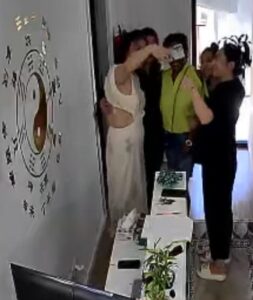
She asked if she could take a photo with us. We said yes before she finished the sentence.
There is a picture somewhere — I do not know what she did with it — of three women in a massage parlour reception, all of them slightly pink in the face, all of them beaming. Ying looks like she has just survived something. The guest looks like she has just been freed from something. I look like I sprinted here, because I did. It is not a professional photograph. It is a very good one.
Why this is the whole point
I trained for years to understand how Tui Na works: the meridians, the pressure, the movement of what has been sitting still too long. I believe in all of it. But what I believed in first, before any of it, was that people deserve to feel better in their bodies — and that when they finally do, after a long time of not, it is worth celebrating.
Even if nobody in the room shares the same language. Maybe especially then.
 |
 |
Yang Wang practises therapeutic massage (Tui Na) and other TCM treatments at Chinese Massage – Tai Chi Tirana. The parlour is in central Tirana, a short walk from Bulevardi Myslym Shyri. Names and identifying details in guest stories have been changed.