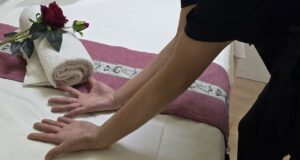
She Was Crying — and Everything Was Fine

I have learned, since opening the parlour, that you cannot always tell the difference between something going wrong and something going very, very right. Last month, I learned it again — this time with a selfie at the end.

A guest came in for a session of therapeutic massage (Tui Na). She was kind and warm — the sort of person who walks through the door and immediately makes the whole room feel a little warmer. She had been carrying pain for a long time: the kind that becomes background noise, that you stop mentioning because you have already stopped expecting it to change.

She spoke English. This detail will matter shortly.

The call from Ying

About ten minutes after her session ended, my phone rang. It was Ying, one of our Chinese therapists. She called me in Chinese — which is how she always reaches me when something urgent is happening — and the word I would use to describe her voice is panicked.

“Yang — Yang — she is crying. I don’t know what she’s saying. Please come.”

I ran. That is not a metaphor. I actually ran to reception, my mind already sprinting through every possible explanation for what had gone wrong. Did something hurt? Did I miss something in the intake? Had she—

I arrived. I looked at the guest.

She was crying, yes. But she was also smiling. The kind of smile that takes up the whole face.

Here is what had happened in that reception room while I was not there. Ying does not speak English. The guest spoke English. So for the previous ten minutes, a very kind, very emotional guest had apparently been trying to explain something important — in English — and Ying, dear hardworking Ying, had understood approximately zero percent of it and had therefore concluded that something was terribly wrong.

In fairness to Ying: a crying person you cannot understand does look a lot like a problem.

What had actually happened

Nothing had gone wrong. Everything had gone right.

The guest told us — between tears, between gestures, between the three of us pointing at things and nodding with enormous sincerity — that she had not felt this way in a very long time. The pain that had become her background noise had, for the first time in months, gone quiet. She had not expected it. She had almost given up expecting it.

That is the thing about held pain: when it releases, it does not leave quietly. Sometimes the body has so much relief to express that it comes out the only way it knows how.

Once Ying understood — through my translation, between the two of us switching between Chinese — that the guest was not injured, not distressed, not demanding anything at all, but was in fact happy, Ying started crying too. I am not sure I was entirely dry-eyed either. We were at this point three women standing in a reception in central Tirana, communicating across three languages with no shared one between all of us, and completely in agreement about what had just happened.

The selfie

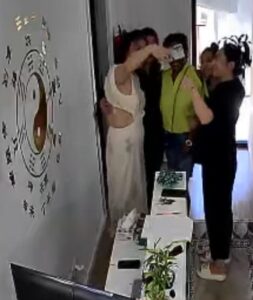
She asked if she could take a photo with us. We said yes before she finished the sentence.

There is a picture somewhere — I do not know what she did with it — of three women in a massage parlour reception, all of them slightly pink in the face, all of them beaming. Ying looks like she has just survived something. The guest looks like she has just been freed from something. I look like I sprinted here, because I did. It is not a professional photograph. It is a very good one.

Why this is the whole point

I trained for years to understand how Tui Na works: the meridians, the pressure, the movement of what has been sitting still too long. I believe in all of it. But what I believed in first, before any of it, was that people deserve to feel better in their bodies — and that when they finally do, after a long time of not, it is worth celebrating.

Even if nobody in the room shares the same language. Maybe especially then.

Yang Wang practises therapeutic massage (Tui Na) and other TCM treatments at Chinese Massage – Tai Chi Tirana. The parlour is in central Tirana, a short walk from Bulevardi Myslym Shyri. Names and identifying details in guest stories have been changed.

Tui Na or Sports Massage — Why It Is Not the Same Question

A young man came in last winter — late twenties, runs three times a week along Liqeni Artificial, had finished a half-marathon in Durrës a month earlier and was preparing for a longer race in Vlora in the spring. His right calf had a hard knot the size of a chicken egg above the soleus. He had been to two sports massage therapists in Tirana. Both had worked the knot directly with thumb pressure for about thirty minutes. Both times the knot was softer for a day and then came back, harder.

“My physio in Bologna,” he said — he had played football in Italy in his early twenties — “always told me deep tissue, deep tissue. The harder the better.”

I asked him whether it had ever fully solved the problem.

“No. But it always felt like it should.”

Most of us here keep one universal first prescription for any ache: do të kalojë — it’ll pass. Often it does. A calf that has been knotted for eight months has simply stopped listening. This is one of the most useful conversations I have in the parlour, and I have it twice a week. The Western reflex — when a muscle is tight, press it hard — is so deeply built into our cultural imagination of what massage is that even experienced therapists do not question it. But it is not the only way the body responds to skilled touch. And on certain presentations, it is not even the best way.

Two traditions, two definitions of “deep”

Tui Na and Western sports massage share a vocabulary they do not always share a meaning for. The word “deep” is the clearest example.

In sports massage, deep means deep pressure: a high vertical force applied through the thumb, elbow, or forearm into the muscle belly. The intention is to mechanically disrupt adhesions in the soft tissue, to break up scar tissue, to physically push through fascial restrictions. It is a force-based intervention. It works, sometimes spectacularly, on certain conditions — particularly acute athletic overuse with localised trigger points.

In Tui Na, deep means deep reach: an intervention that influences not just the muscle being touched but the tissue and structures three or four layers under it. The pressure required to do this is often surprisingly modest. The technique relies on direction, rhythm, the manipulation of fascia in coordinated planes, and a precise understanding of where one muscle’s tension is being held by another muscle’s compensation. A skilled Tui Na practitioner can produce significant tissue change at one-third the apparent pressure a sports therapist would use — because the work is finding the right vector, not the most force.

Both are deep. They mean different things. (For a similar comparison between Tui Na and the Japanese tradition, I have a separate piece on Shiatsu versus Chinese Tui Na — same family of confusion, different details.)

What sports medicine seems to be discovering

I keep an eye, in a casual way, on how Western sports medicine talks about manual therapy, because clients ask me about it. Something I have noticed: the conversation has been quietly shifting over the last decade or so. The picture I get is that the old “deep tissue, the deeper the better” idea is being questioned by people who used to teach it.

For an acute injury in the first few days, both traditions agree — no aggressive pressure. The body is busy and should be left alone.

For an injury that is a few weeks old but not chronic, the newer thinking, as I have come across it in articles and in conversation with physiotherapists, is that lower-force, sustained, well-aimed work usually does more than high-force pressure. Less force, applied in the right direction, gets further.

For chronic compensatory patterns — the kind of complaint that brought the runner to my table — the gap is even wider, at least in what I have read. High-force work on a chronically tight calf releases it for a day. The same calf, addressed through the antagonist muscles, the upstream fascial chain, and the opposite hip, stays released for weeks. The body has a kind of memory. Releasing the wrong place over and over teaches it that the tightness is structural and that it should hold on harder.

I find this satisfying because it lines up with what Tui Na has been doing for a long time without anyone needing to confirm it. We are politely pleased that the newer conversation is arriving at a similar place.

The runner’s calf, in practice

What happened on the table with the young runner from Bologna was almost boring to describe. We did not touch the knot at all in the first session. We worked the contralateral hip — the left side — because his right calf was carrying tension from a slightly weaker left gluteus medius. We worked his right hamstring origin under the gluteal fold. We worked the soleus’s attachment behind the knee, not the belly of it.

He left the session sceptical. He said politely that he would come back, but he was not sure.

Three days later he ran his usual ten kilometres along the lake. The knot — he reported by phone the next morning — was, for the first time in eight months, not where it had been. It had not disappeared. It had migrated to a different position, about four centimetres lower, much smaller.

This is what therapists who do this work mean when they say “the body is talking.” The original knot had been guarding something. When the guarding became unnecessary, the tissue rearranged itself.

We had six sessions. By the third, the knot was gone. By the sixth, he had stopped favouring the right leg in his stride.

He ran the Vlora half-marathon four months later. Personal best.

Why this matters for anyone who is not an athlete

The question is rarely “Tui Na or sports massage?” It is “What is the body actually trying to tell me?”

If the answer is “I have just sprained an ankle and there is acute swelling” — neither modality. Rest, ice, elevation, and a physiotherapist for graded loading.

If the answer is “I have an acute one-spot pain after a single identifiable event, in a young healthy body” — sports massage is often the cleaner intervention. Find a good practitioner; the work is specific and effective.

If the answer is “I have had pain for months and it moves around, or it always comes back to the same place, or it changes character with stress” — this is where Tui Na earns its reputation. The work is slower, less dramatic, and far more likely to resolve the underlying compensation.

If the answer is “I am stressed, exhausted, my whole back feels tight and I do not have one specific complaint” — this is also Tui Na territory, though it overlaps with relaxation massage and the right answer often involves both.

My grandmother’s shelf in Liaoning

There is an image I keep returning to that captures the difference better than the science does.

My grandmother in Liaoning kept a row of small jars on a shelf in the kitchen. Each jar held a dried herb. When someone in the family had a complaint, she would mix three or four of the herbs into hot water and watch you drink it. She did not say much about what she was doing. She had been doing it for forty years, and she had never once measured anything.

She was not choosing the strongest herb. She was choosing the right one for the person in front of her — sometimes one thing, sometimes another, depending on the day. That is the habit I carry to the table. She did not know that what she did would be studied and explained centuries later. She simply paid attention to the body and to what helped.

Tui Na works the same way. So does sports massage, at its best. The question is not which tradition is correct. The question is which one is doing the right work for the body in front of it.

In the parlour, we ask that question every time. The answer is sometimes one thing, sometimes the other, sometimes both, sometimes neither — and the table waits patiently while we work it out.


Yang Wang practises Tui Na and acupuncture at Chinese Massage – Tai Chi Tirana.

The Stubborn Hip: A Story of Six Tuesdays

Drita came in on a Tuesday in late September, the kind of afternoon when the heat had finally let go of Tirana and the air had a thin clean edge to it. She walked carefully. Not limping, not yet — but you could see her right hip carrying her in a way the left one wasn’t. She had a folder under her arm with two X-rays and a printout from a private practice in Pristina. She apologised for the folder before she sat down.

“Sorry. Doctors like papers.”

I told her the papers could wait. I asked her how she’d come up the stairs.

Three years of waiting for a miracle

Drita was sixty-one. She had been a school administrator for thirty-four years and was now two years from retirement. Her hip had started bothering her in the autumn of 2023 — a small ache after long days, dismissed as ordinary tiredness. By spring of 2024 the ache had moved closer to the surface and stayed there. By the time she came to see me, three years had passed.

In those three years she had seen, by her count: two general practitioners, an orthopaedic surgeon, a physiotherapist in Tirana, another physiotherapist in Pristina, a chiropractor in Skopje recommended by a cousin, and a reflexologist in Durrës who had told her the hip was a manifestation of unresolved family conflict. She had taken ibuprofen, naproxen, paracetamol, two short courses of celecoxib, magnesium, vitamin D, and a turmeric tincture from a herbalist in Korça. She had been told she needed surgery and she had been told she absolutely did not need surgery. She had been told to walk more, walk less, swim, not swim, and lose two kilograms.

By the time she sat across from me, what she wanted was not a miracle. What she wanted was someone to tell her honestly what they could and could not do for her.

What the body said when the papers were quiet

The X-rays showed what most hips that age show: mild osteoarthritic changes, joint space slightly narrower on the right than the left, no surgical indication. Nothing dramatic. Nothing that explained three years of progressive pain.

I asked her to lie on her back on the table without doing anything special — just settle. I watched her for about a minute before I touched her at all. The right leg was rotated outward by maybe fifteen degrees more than the left. The right ilium was sitting slightly higher. When I asked her to flex her right knee toward her chest, the range was halved compared to the left, and the stop point came not from the hip joint but from the gluteus medius — the small fan-shaped muscle that runs from the side of the pelvis to the top of the femur — which had become guarded and brittle from three years of compensating.

The hip itself was probably fine. The structure around it had quietly seized up.

This is the part where someone with a longer training might explain at length. In therapeutic Tui Na we have a shorthand for this kind of presentation — what classical texts call cold-damp obstruction in the lesser yang. The translation is not important. What my hands found was straightforward: muscles that have been holding still for too long, fibres that have lost their elasticity, fascia that has begun to behave like dried leather. (Readers whose hip pain travels down into the back may want to look at the related piece on therapeutic massage for back pain as well.)

The treatment is patient.

Mamica’s kind of patience

There is an Albanian word that does not have a direct equivalent in Chinese, though our culture has something close: the patience of someone who weathers a long winter without complaining about the snow. Mamica Kastrioti — Skanderbeg’s sister — had this quality. She is not in the schoolbooks the way her brother is. She moved through the resistance not with force but with composure, holding what she held without making noise about it. The body of a woman in her sixties who has worked the same job for thirty-four years has this kind of dignity built into it. It will not be rushed.

I told Drita the first session was for finding things. Mapping. No promises of dramatic change. She nodded. She did not want dramatic change. She had been promised dramatic change five times.

The protocol — slow, in three layers

We agreed on six weekly sessions, Tuesdays at four in the afternoon. The protocol was the unremarkable Tui Na sequence for chronic gluteal and trochanteric work, layered:

In the first two sessions, all the work was around the hip, not on it. We released the lower lumbar paraspinals on the right side, the quadratus lumborum, the iliopsoas through the abdomen (a manoeuvre many therapists skip because it is awkward to teach, but which makes the difference for these cases), and the lateral thigh fascia down to the knee. The hip itself was barely touched.

In the third and fourth sessions, we began direct work on the gluteus medius and the small external rotators — piriformis, quadratus femoris, the obturators. By the fourth session, Drita could bring her right knee to her chest at the same range as her left, which she had not been able to do for fourteen months.

In the fifth and sixth sessions, we worked the joint capsule with traction-and-release techniques, restored the rotation of the femoral head in the socket, and integrated the new range of motion with simple movement re-education — gentle leg circles on the table, then standing.

What she said on the seventh Tuesday

By the seventh Tuesday — which we had not originally planned, but which she came in for anyway — Drita walked up the stairs without holding the rail. She had not done that since 2024. She set the folder of X-rays down on the chair, and she laughed at it.

“All those papers, and what worked was an hour a week with someone who didn’t read them.”

I told her I had read them, on the second Tuesday, while she was on the table. They confirmed that what we were doing was safe. They did not explain her pain, because her pain had moved out of the joint and into the muscles around it, and X-rays do not photograph muscles.

She has been a regular for fourteen months now. We see her once a month — sometimes a maintenance session, sometimes she has overdone a weekend in Pogradec and needs the hip released again. She drives up from her village forty minutes away. We talk about her grandchildren, the school where she still works two days a week as a consultant, the way the seasons keep changing.

What I learned from her, not the other way around

There is a thing therapists do not often say: every patient teaches the therapist something. Drita taught me how much can be done with how little, if both sides agree on a time horizon. Six Tuesdays is not a long time when you have already waited three years. The body knows how to repair itself when its surroundings are made quiet enough. Our job is mostly to make the surroundings quiet.

When we said six sessions, we meant six. We did not stretch them to ten because we wanted to. We did not cut to four because she felt better at three. We made an agreement and we kept it. Besa, in its modern sense: a word given and honoured.

That is the work, mostly.


Yang Wang practises therapeutic massage and acupuncture at Chinese Massage – Tai Chi Tirana. Names in this story have been changed to protect client privacy; the sequence of sessions is described as it happened.

When Office Shoulders Forget How to Hang

There is a specific shape that walks into the parlour around six in the evening. The shoulders are slightly forward, slightly up, slightly turned inward toward each other as if the body had spent the day apologising for taking up space. The neck has lost its lazy curve and become a straight column. The clavicles have rotated downward by perhaps eight or ten degrees. When I press the upper trapezius with two fingers, the tissue does not yield — it answers like a piece of fabric that has been ironed too many times in the same direction.

This is the office shoulder. We see five or six of them every evening between 17:30 and 19:30, walking up from the cafés on Bulevardi Myslym Shyri after work. The diagnosis is rarely a mystery. What is interesting is the question of what the body is actually doing wrong, and why pressing harder almost never helps.

A muscle that forgets is not a muscle that needs more force

There is a common belief — held by therapists as well as clients — that a tight muscle is a strong muscle pulling. So the instinct is to push against it with equal force, the way you would push against a stuck drawer. With the upper trapezius and the levator scapulae, this instinct produces almost no result, and sometimes makes the next morning worse.

The problem is that the office shoulder is not strong. It is exhausted. After eight hours of holding the same low-grade contraction — keyboard, mouse, slightly hunched, slightly forward — those small postural muscles have entered a state that physiology calls protective splinting. They are not contracting voluntarily anymore. They have lost the neuromuscular signal to release. They are stuck in the “on” position the way a light switch can be jammed.

You cannot un-jam a switch by pressing harder on the switch itself. You have to work around it.

How Tui Na approaches this differently

Classical therapeutic massage — Tui Na in the Chinese tradition — has a specific protocol for this presentation, and it has changed almost nothing in the last thousand years. The opening movements are not on the trapezius at all. They are on the muscles around it. The forearms first, then the chest, then the upper back below the shoulder blades, then the back of the neck where it meets the skull.

The principle is simple: a muscle that has forgotten how to relax has to be given permission by its neighbours. When the surrounding tissue becomes soft, the over-contracted muscle is no longer the only one holding the structure together, and it can let go. This usually happens around the twenty-minute mark, often without the client noticing. They report afterwards that their shoulders feel “lower,” but they cannot pin down the moment when the lowering happened.

A client of mine — an interpreter who works for an Italian firm in Tirana, three days a week onsite, two days remote — described it once as the moment when “the muscle finally exhaled.” She was on the table thinking about a contract she was reviewing in her head. The exhale was not hers. It was somewhere along the right side of her neck. She felt it as a small drop, a settling, the way a building settles after a long warm afternoon.

Something I read once that confirmed what the hands already knew

I came across an article, several years ago, about how scientists had measured what happens in the trapezius muscle when therapists work on it in different ways. The detail that stayed with me was this: pressing the tight muscle directly relaxed it only for a short time. Working the neighbouring tissue — the chest, the forearm — relaxed the trapezius for much longer, even though no one touched the trapezius itself.

I do not remember the names or the dates. What I remember is feeling pleased. Tui Na practitioners have been working this way for many generations without anyone needing to measure it. The principle is one the body teaches you, if you spend long enough listening to it: the tight place is rarely the source of the tightness. The source is usually somewhere upstream, and the tight place is the body’s downstream complaint.

Why the morning matters more than the evening

A small detail that gets lost in most office-stress conversations: the office shoulder does not start at nine in the morning when work begins. It starts in the first ninety seconds of waking, when most people roll out of bed and check their phone before they have stretched.

That first ninety seconds is a window. The fascia is at its most pliable after a night of horizontal rest. If the first thing the body does is curl forward and look down at a screen, it commits to the day’s posture in a way that is very hard to undo later. If the first thing the body does is roll the shoulders three times in each direction, reach overhead, and yawn a real yawn — the kind that involves the entire chest — the day starts from a different baseline.

I tell this to clients sometimes. I do not tell it to make them feel they have done something wrong. I tell it because the cheapest, most boring intervention is also the most effective, and a session every two or three weeks is much more useful when it is built on top of a morning that is not already pre-stressed.

The return-from-Italy version

A particular kind of office shoulder I see often: the client who has lived in Italy for ten or fifteen years and moved back to Tirana for work. The pattern is the same — keyboard, sitting, screens — but there is an additional layer. Returning from a diaspora carries a quiet tension of its own. The body is doing two things at once: holding the new daily life, and re-negotiating an old one. Stories of mothers, apartments rented out, languages re-warming after years away.

That tension lives in the body somewhere, and for many returning women it lives between the shoulder blades. The first session usually goes longer than planned. We talk less than usual. Sometimes the second session is the one where they actually fall asleep on the table — which is, in my experience, the body’s signal that it has decided to trust the room.

What to do, if you do not want to come in yet

You do not need to book a session to start working with this. Three things, ranked by usefulness, that anyone with an office shoulder can do today.

First, when you sit down at your desk, set the screen one finger-width higher than your relaxed gaze. This single adjustment unloads the levator scapulae by enough to change your evening.

Second, twice a day — once mid-morning, once mid-afternoon — stand up, raise your arms straight overhead, and yawn deliberately for ten seconds. The yawn is not optional. It opens the chest the way nothing else does.

Third, before sleep, press your shoulder blades together for five seconds, then let them slide down your back as if a thread is pulling them toward your pockets. Five repetitions. Done lying down or standing, either works.

If after a few weeks the body still has not remembered how to hang its shoulders, that is when the table starts to make sense. The work is gentler than people expect, and the results, when they come, tend to last.

Yang Wang practises therapeutic massage and acupuncture at Chinese Massage – Tai Chi Tirana. The parlour is in central Tirana, a short walk from Bulevardi Myslym Shyri.

How to Choose the Right Chinese Massage Centre

Guide · Chinese Massage Tirana

6 questions to ask, the red flags to watch for, and what truly makes the difference.

When you search "Chinese massage Tirana," several options appear. But how do you know which one to choose? Chinese massage — especially the therapeutic kind rooted in Traditional Chinese Medicine (TCM) — is not the same everywhere. The difference between a good session and a misguided one is not merely a matter of enjoyment — it can have a direct impact on your health.

What Chinese Massage Is — and What It Isn't

The term "Chinese massage" is frequently misused. Not every massage labelled "Chinese" has any connection to TCM.

✓ Authentic Chinese massage

Grounded in meridian theory and specialised techniques such as Tui Na (muscular and articular manipulation), acupressure (targeted stimulation of specific meridian points), and therapeutic Qigong. A TCM-trained therapist understands the body as an energetic system — and treats accordingly.

⚠ Generic "Chinese" massage

May simply be a relaxation massage under a different name — not necessarily bad, but not the same thing. Without TCM certification, there is no meridian treatment, no precise acupressure, no therapeutic protocol.

When you choose, know what you are looking for. Ask directly: "Are you certified in Traditional Chinese Medicine?" — and observe the response.

6 Questions to Ask Every Centre Before Booking

1
What qualifications do the therapists hold?
Look for official TCM training certification — ideally issued by recognised Chinese or international institutions — plus years of centeral practice, not just a short course. Serious centres do not hide their therapists' qualifications.
2
Is there an individual consultation before the session?
A professional therapist does not begin immediately without asking questions. The pre-session consultation is not a formality — it is the first diagnostic instrument. If a centre skips this step, you will receive a standard massage, not personalised treatment.
3
Can they explain what they will do and why?
A good therapist can explain — in plain terms — why they are choosing technique X and not Y, which area they are treating, and what effect they expect. Therapeutic transparency is a sign of competence.
4
What is the hygiene standard?
Observe the environment. Sheets must be fresh for every client. Oils and other products must be quality and safe. The massage table, floor coverings, walls — everything communicates the centre's standard.
5
Are there verified reviews?
Read comments on Google Maps. Reviews that describe specific situations and real outcomes carry genuine weight. Be wary of centres with only very short, generic reviews — "great place!" — with no detail.
6
Can you communicate before booking?
Trustworthy centres are open to welcoming you, showing you the premises, and answering your questions before any financial commitment. If they avoid questions, that is a signal.

Red Flags — When to Walk Away

🚩
Prices far too low without explanation

Quality massage requires time, skill, and materials. If someone offers 60 minutes of therapeutic Chinese massage at a nominal price, ask yourself what is being compromised.

🚩
No information about the therapist

Anonymity around who will treat you is a negative signal. Clients have every right to know who is treating them.

🚩
Unclean or disorganised premises

Hygiene is not optional in therapeutic work. Never overlook this.

🚩
Pressure to book immediately without consultation

Professional centres understand that your decision requires time and information.

🚩
They cannot explain the difference between treatments

If they cannot tell you how Tui Na differs from a standard massage, they may not know the difference themselves.

What Makes Tai Chi Tirana Different

At Chinese Massage – Tai Chi Tirana, we build trust through transparency:

🎓
Official Chinese certification

Yang Wang — certified with years of centeral TCM practice.

🗣
Consultation before every session

Treatment begins with listening, not a massage table.

🎯
Personalised treatment

No two sessions are ever identical.

💬
Full transparency

We explain everything — from techniques to expected outcomes.

5.0 stars

Genuine reviews from verified clients.

🏥
Therapeutic standard

Not a commercial spa — centeral-grade hygiene and care.

We are not the right centre for everyone — we are the right centre for those who are looking for authentic TCM, not merely surface-level relaxation.

Start With an Introductory Session

If you're unsure whether Chinese massage is right for you, begin with 60 minutes and see for yourself. We believe in results — not contracts.

📍 Rruga Astrit Sulejaman Balluku, Tirana 📞 +355 68 541 4141 🕙 Every day 10:00 – 22:00
Book Your Session

Pregnancy Massage · Guide

Pregnancy Massage · Guide

What you need to know before you book — safety, benefits, and what to expect.

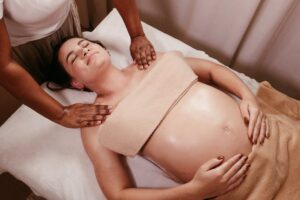
Pregnancy is one of the most beautiful — and physically demanding — experiences in a woman's life. Hormonal changes, a growing belly, a shifting centre of gravity, and pressure on the pelvic structures all create real tensions, aches, and daily discomforts. Pregnancy massage, performed by a qualified therapist, can offer deep and safe relief — both physical and emotional.

Is Massage Safe During Pregnancy?

✓ Yes — safe after the first trimester

Pregnancy massage is safe and recommended by many healthcare professionals after week 13. During the first trimester, a woman's body is undergoing the most intensive hormonal and structural changes — and many therapists choose to wait until the pregnancy stabilises.

At Chinese Massage – Tai Chi Tirana, our therapist is certified and specifically trained in pregnancy massage. Before every session we conduct a full consultation, ask about any existing complications, and coordinate with your gynaecologist's recommendations if needed.

Before each session we:
  • Conduct a full consultation about your current health status
  • Ask about any existing complications
  • Coordinate with your gynaecologist's recommendations if you have any specific condition.
When we do not recommend massage
  • Placenta complications (placenta previa)
  • Pre-eclampsia or severe hypertension
  • Thrombophlebitis or DVT (deep vein thrombosis)
  • High-risk pregnancy as diagnosed by your doctor

In all other cases, massage is not just safe — it is genuinely beneficial.

What Changes in Pregnancy Massage

Pregnancy massage is not a standard massage with a little extra caution. It requires real modifications:

Positioning

No face-down after the first trimester. We use a side-lying position with purpose-designed bolsters, or a semi-reclined position — comfortable and safe for both mother and baby.

Pressure

Significantly reduced, particularly in the lumbar region and lower back. Any direct pressure on the abdomen and inguinal areas is avoided entirely.

Avoided areas

Certain acupressure points — primarily on the inner ankle — are avoided, as stimulating them may provoke contractions. Our therapist knows these points precisely.

Products

Natural oils safe for pregnancy — without aggressive synthetic fragrances or essential oils not recommended during gestation.

The Key Benefits of Massage During Pregnancy

🌿 Physical Pain Relief

Massage relieves lumbar and pelvic pain, reduces tension in the shoulders and neck, helps with sciatic nerve pain — very common in the third trimester — and reduces swelling in the feet and hands by stimulating the lymphatic system.

🧘 Anxiety & Stress Reduction

Massage stimulates the production of serotonin and dopamine — the wellbeing neurotransmitters — while reducing cortisol. Our clients often report a sense of calm and emotional balance that lasts for several days after the session.

🌙 Improved Sleep Quality

Massage helps the body transition gently into the parasympathetic state — the body's "rest and heal" mode — which promotes deep, restorative sleep, often disrupted by hormonal changes during pregnancy.

Preparation for Birth

Regular massage during the third trimester can support the elasticity of pelvic tissues and reduce pre-birth stress — both physical and psychological.

What a Session Looks Like With Us

Sessions typically last 60–75 minutes and follow this flow:

1
Welcome & consultation

We discuss your current condition, specific concerns, and what you'd like from the session.

2
Comfortable positioning

Supporting bolsters in place, back and pelvis protected.

3
Gentle back & shoulder massage

The areas where tension accumulates most during pregnancy.

4
Leg & hip massage

With careful attention to sensitive zones.

5
Light work on neck & head

Deep relaxation without movement.

6
Closing & guidance

How to care for your body between sessions.

How Often Should You Have Massage?

Second trimester

Weeks 13–26 · Once a month or every 2–3 weeks, as needed.

Third trimester

Weeks 27–40 · 1–2 times per month — or weekly in the final 4–6 weeks as discomforts increase.

Every body is different. Our therapist will recommend the optimal frequency based on your individual condition.

Hear From Our Clients

I had severe lumbar pain in my 7th month. My gynaecologist recommended pregnancy massage. After two sessions at Tai Chi, the pain reduced noticeably and my sleep improved. Very professional and caring.

— Maja D., Tirana

I arrived anxious and left calm. The therapist knew exactly what to do and what to avoid. I felt completely safe throughout.

— Donika H., Tirana

Your Body Is Doing Something Extraordinary

You deserve care. Book your pregnancy massage session today.

📍 Rruga Astrit Sulejaman Balluku, Tirana 📞 +355 68 541 4141 🕙 Every day 10:00 – 22:00
Book Your Session

Therapeutic Massage · Back Pain

Therapeutic Massage · Back Pain

How it works, what you need to know, and how many sessions are needed.

Back pain is one of the most common complaints clients bring to us. Some have been living with it for months. Others arrive after years of trying medications, physiotherapy, and enforced rest — without finding a lasting solution. Traditional Chinese Medicine looks at back pain differently — and that shift in perspective often leads to different outcomes.

Why Does Your Back Hurt? The Main Causes

The back is one of the most complex structures in the body — the vertebral column, paraspinal muscles, tendons, ligaments, and discs all work together without pause. When something loses its balance, pain follows quickly.

Sedentary lifestyle & poor posture

8–10 hours in front of screens, rounded backs, heads tilted forward, frozen shoulders. The back muscles strain to compensate — and over time, that strain becomes chronic pain.

Chronic stress

Cortisol — the stress hormone — causes continuous muscular contraction, especially in the mid and lower back. Even without any physical injury, chronic stress produces real, muscular, physical pain.

Injuries & micro-traumas

Incorrect weightlifting, sudden movements, minor accidents — create fixed zones of tension that do not release on their own. A whole compensation network develops around the original problem.

Energy imbalance (TCM)

Back pain interpreted as a blockage in the flow of Qi through the Bladder and Kidney meridians. When energy stagnates, pain follows.

How Chinese Massage Treats Back Pain

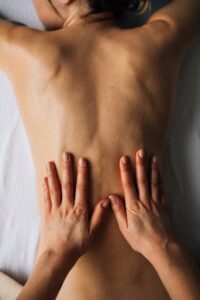
Tui Na — Chinese therapeutic massage — is not a relaxation massage. It is a structured, focused therapy grounded in meridian anatomy. The therapist applies specific techniques — finger pressure (acupressure), deep friction, passive joint movements, and gentle manipulation — with a precise goal: releasing blockages and restoring flow.

Clinically validated effects documented in modern research:

  • Reduction of muscular tension and release of trigger points — the hardened zones where pain originates
  • Increased local blood circulation, delivering oxygen and nutrients to damaged tissue
  • Stimulation of the parasympathetic nervous system, reducing cortisol production and cortisol-mediated muscle spasms
  • Reduction in pain perception through the release of natural endorphins
  • Restoration of mobility — many clients leave with full lumbar range of motion after just one session

What Happens During a Back Pain Session

Every session begins with a brief consultation — we ask where it hurts, when it started, how it presents (sharp, dull, radiating toward the legs?), what makes it worse and what provides relief.

1
Warming the superficial tissues

Releasing surface tension and preparing the deeper layers.

2
Deep meridian work

Identifying and treating the main blockages along the energy channels.

3
Precise acupressure

Stimulating key points that influence pain and communicate with internal organs (in TCM terms).

4
Passive movements

Helping the spine rediscover its natural alignment.

5
Closing & guidance

How to preserve the effects and what to avoid between sessions.

How Many Sessions Are Needed?

Acute pain

1–2 weeks · Often 2–3 sessions provide significant relief.

Chronic pain

Months or years · We typically recommend 6–8 sessions at 5–7 day intervals, with a progress assessment after the third session.

Many of our clients report noticeable relief from the very first session — not necessarily complete elimination, but real reduction and improved mobility.

What Our Clients Say

I had back pain for 3 years. I tried everything. After my first session at Tai Chi, I slept through the night without waking from pain for the first time.

— Erjon M., Tirana

I was working from home and my lumbar pain had become unbearable. After 4 sessions, I can sit normally and focus on work without any problem.

— Mirela K., Tirana

When to Come to Us — and When to See a Doctor First

Chinese therapeutic massage is safe and effective for the vast majority of muscular and connective tissue pain. However, we recommend prior medical consultation if:

⚠ See your doctor first if:
  • The pain is accompanied by numbness or weakness in the legs
  • You have unexplained loss of coordination
  • The pain intensified following a recent accident
  • You have an existing diagnosis of acute herniated disc

In these cases we work closely alongside your doctor's recommendations.

You Don't Have to Live With Back Pain

Often the solution exists — you simply haven't tried the right approach yet.

📍 Rruga Astrit Sulejaman Balluku, Tirana 📞 +355 68 541 4141 🕙 Every day 10:00 – 22:00
Book Your Session

How Much Does Massage Cost in Tirana?

Pricing Guide · Tirana

A complete guide to understanding prices and choosing wisely.

If you've searched "massage price Tirana" or "how much does a massage cost," you've probably found a wide range of numbers — and wondered why. That's a fair question. Massage prices in Tirana vary significantly depending on the type of treatment, the therapist's qualifications, and the standards of the centre. This guide helps you understand what you're paying for and how to choose wisely.

Why Do Prices Vary So Much?

In Tirana you can find massage sessions ranging from 3,000 to 18,000 lek, depending on the type of treatment and duration. The difference is not random.

The therapist's qualifications are the number-one factor. A therapist certified in Traditional Chinese Medicine (TCM), with formal training and years of centeral practice, offers something fundamentally different from someone who completed a basic course. Their hands understand anatomy, the meridian channels, and how the body responds to pressure. That knowledge has real value.

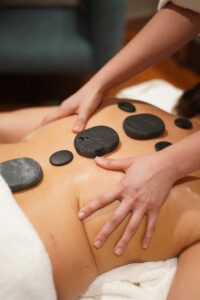
The type of massage directly affects the price. Relaxation massage and therapeutic Tui Na are typically priced similarly — the difference lies in technique and intent, not cost. Therapeutic massage targets specific muscular and meridian problems; relaxation massage aims for general calm and renewal. Moxibustion, acupuncture, and volcanic stone therapy require additional specialised technique and preparation time.

Session duration also plays a role. A 30-minute session costs less than a 90-minute one — but a short session is often not enough to address deep muscular problems or chronic conditions.

The environment and hygiene standards contribute to pricing too. A serious centre invests in cleanliness, quality products, and therapeutic conditions — factors that may not be visible at first glance, but are felt during and after the session.

What to Expect from the Albanian Market

This is a general orientation — not all centres follow the same structure:

Relaxation massage
5,000 / 7,000 / 9,000
lek  ·  60 / 90 / 120 min
Therapeutic / Tui Na
5,000 / 7,000 / 9,000
lek  ·  60 / 90 / 120 min
Pregnancy massage
5,000 / 7,000
lek  ·  60 / 90 min
Volcanic stone therapy
5,000 / 7,000 / 9,000
lek  ·  60 / 90 / 120 min
Four-hands massage
10,000 / 14,000 / 18,000
lek  ·  60 / 90 / 120 min
Couple massage
10,000
lek  ·  60 min
Acupuncture
3,500
lek / session  ·  30,000 × 10
Mud Moxibustion
3,500
lek / session  ·  30,000 × 10
Gua Sha & Cupping
1,000
lek / technique

When you see prices significantly below this range without explanation, ask yourself: what is being compromised — the therapist's qualifications, hygiene standards, actual session duration, or the products being used?

The Cheap Option Can Be the Expensive One

This is not just marketing — it's centeral reality. An incorrect massage can worsen muscular tension, provoke pain, and leave the body more confused than before. The opposite of healing.

When you go to a qualified professional, the investment in your first session can save you months of corrective therapy — or money spent at multiple centres with no lasting result.

What Our Price Includes

At Chinese Massage – Tai Chi Tirana, your session fee covers:

  • Individual consultation before the session — we understand your specific needs
  • Personalised therapy — never a one-size-fits-all approach
  • Therapist with official Chinese TCM certification
  • Natural products and quality therapeutic tools
  • A calm, hygienic environment in the heart of Tirana
  • Post-session guidance — how to preserve the effects and continue your care

We don't bill minutes. We bill outcomes.

Single Session or Package?

If you have a specific issue — back pain, chronic tension, accumulated stress — we generally recommend a course of sessions. The effects are cumulative: each session builds on the last.

We offer combined packages at a preferential rate for regular clients. Contact us to find out the current options.

Book Your First Session

Don't make your decision based on price alone. Make it based on trust, qualifications, and results.

📍 Rruga Astrit Sulejaman Balluku, Tirana 📞 +355 68 541 4141 🕙 Every day 10:00 – 22:00
Book Now

A real break for tired shoulders🌿

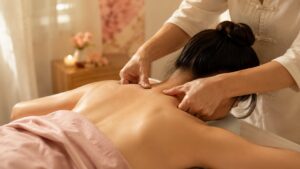
Tension in your shoulders can quietly build up from long hours at a desk, stress, or even bad posture — until one day, you suddenly feel that tight, heavy pressure that just won’t go away. A focused shoulder massage can do more than ease the pain in the moment; it helps restore balance, movement, and calm to your whole body.

With every session, your body learns to relax again, and posture naturally begins to improve.

In the short term, you’ll feel lighter, breathe more easily, and regain freedom of movement. Over time, regular massage supports better alignment, helps prevent recurring pain, and leaves you more energized throughout the day.

Book your session today and rediscover how it feels to move again without tension.

Release tension from shoulders and neck

Relieve the tension and discomfort accumulated in your shoulders and neck. Say goodbye to headaches caused by stress and poor posture, and rediscover freedom of movement and a deep state of relaxation.

📲 Book now online 👉 www.taichi.al/book-now/
📞 or by phone: 068 541 41 41