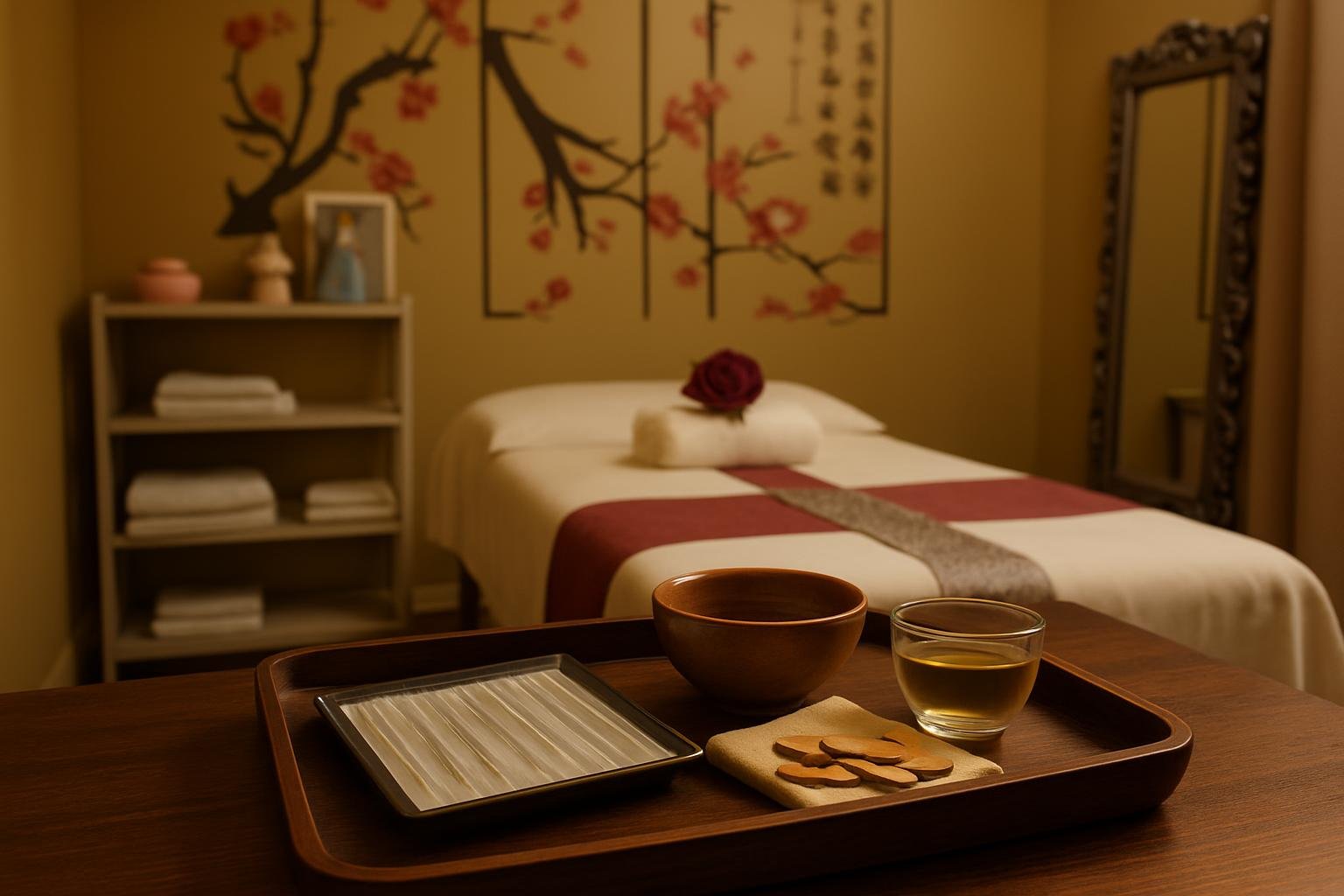
There is a particular look that arrives at the parlour — not sick, not injured, just emptied out. People describe it in different ways: “I sleep eight hours and wake up tired.” “I have no drive.” “I get to two in the afternoon and I’m done.” Sometimes it has been going on for months. Sometimes years. They have had their bloods checked. Everything came back fine. And yet.
This is one of the things I find most interesting to work with, because it sits right at the intersection of what Chinese medicine is unusually good at and what conventional tests find hardest to measure.
What TCM means by “low energy”
In Chinese medicine, persistent fatigue usually points to one of two patterns — sometimes both together. The first is a deficiency of qi (氣), the body’s circulating vitality: the systems that produce and distribute energy are running below capacity, often after a long period of overwork, illness, or poor sleep. The second is stagnation — qi that is not deficient in quantity but is stuck, not moving freely. This second pattern is subtler. People with it often feel a strange mix of tired and wired: exhausted but unable to switch off, heavy but restless.
Neither pattern shows up on a standard blood panel. Both respond well to needles.
What the needles actually do
Acupuncture points for fatigue are not random. The points I use most often for a deficiency pattern sit along the Spleen and Stomach meridians — in TCM, these govern the transformation of food and experience into usable energy. A few classic points on the lower leg and foot, worked consistently across sessions, seem to help the body shift from a kind of background conservation mode into something more engaged.
For the stagnation pattern, the Liver meridian does a lot of the work. One point in particular — Taichong (太衝), between the first and second metatarsals on the top of the foot — is almost embarrassingly reliable for people who describe that “tired but can’t switch off” feeling. It sits quietly in the foot and asks the nervous system to let go of whatever it has been clenching.
Marta’s Tuesday visits
Marta came in first for a shoulder that had been bothering her. After the second session she mentioned, almost as an aside, that she had been waking up exhausted for most of the year. We added a few energy-specific points to the shoulder protocol. By the fourth visit she said she was sleeping more deeply. By the eighth she had stopped mentioning the fatigue, which is usually a sign it has resolved well enough to stop being interesting.
She still comes in every few weeks. Not for the shoulder — that settled long ago. She calls it maintenance, which is exactly the right word.
What to expect
Fatigue that has built up over months rarely clears in a single session. I usually suggest a short initial course — four to six visits, spaced close together — and then we assess. Some people feel noticeably different after two visits; others need the full course before anything shifts. A handful come back for occasional top-ups when life gets demanding again.
If your tiredness has a clear medical cause — thyroid, iron deficiency, sleep apnoea — please address that first; acupuncture works well alongside medical treatment, not instead of it. But if the tests have come back normal and you are still running on empty, this is exactly the conversation worth having.
You can read more about how I approach this on the acupuncture page.
Yang Wang practises acupuncture and therapeutic massage at Chinese Massage – Tai Chi Tirana. The parlour is in central Tirana, a short walk from Bulevardi Myslym Shyri. Names in client stories have been changed.
Ready to Feel the Difference?
Book your session today — same-day appointments available.
Book Your Session