When Migraines Stop Coming on Tuesday

Erjona’s migraines used to arrive on Tuesday afternoons, between three and five o’clock, with a regularity that had made her stop scheduling client meetings for that window. She had tracked them for nearly a year before she came to see me — a small notebook with dates, weather, sleep hours, what she had eaten, what she had drunk, where she had been in her cycle. The notebook was the kind of document a person keeps when they have stopped expecting doctors to solve their problem and have decided to solve it themselves.

She was thirty-four. She worked in marketing for a logistics company with an office near Bllok. The migraines had started in 2024, six months after she moved back from Milan to take care of her mother through a long illness. They had outlasted her mother’s recovery by two years.

The neurologist she had seen — a kind, competent specialist at a private practice in Tirana — had given her sumatriptan for the acute episodes and propranolol as a preventive. The sumatriptan worked. The propranolol made her tired without reducing the frequency. She had tried magnesium, riboflavin, coenzyme Q10, the elimination of nightshades, the elimination of dairy, the elimination of red wine. The migraines kept arriving on Tuesday afternoons.

When she sat down in my office and showed me the notebook, I asked her one question.

“What happens on Monday evenings?”

She paused. She had not asked herself that question.

The pattern under the pattern

Migraines have a reputation for being unpredictable, but a careful look at the data — one’s own data, kept in a notebook — almost always reveals a pattern. The body does not produce a fifteen-hour vascular and neurological event at random. Something precedes it, sometimes by hours, sometimes by a full day. The trick is to find the upstream signal.

In Erjona’s case, the answer turned out to be small but consistent. Monday evenings, after work, she met three friends at a café in Bllok for what they called the catch-up. Two glasses of wine, often three, conversation that ran late. The wine she had eliminated once and then re-introduced after the migraines kept coming anyway. She had concluded the wine was not the trigger. She was wrong, but in a more interesting way than she had assumed.

The wine was not triggering the migraine. The wine was triggering a small, predictable disruption of her sleep architecture, which combined with elevated cortisol on Tuesday morning meetings, which combined with the late lunch she usually skipped on Tuesdays because of those meetings, which combined with — the actual immediate trigger — a small drop in blood sugar around three in the afternoon.

It was a stack of four small factors, none of them sufficient on its own. The pattern was visible only if you looked at all four together.

What acupuncture seems to do for migraine

I have read, over the years, that acupuncture is one of the better-tested traditional treatments for migraine, and that some European countries now suggest it for migraine sufferers when the usual medicines have not worked. The mechanism is still being worked out, as far as I understand it, but the broad picture goes something like this — and here I am simplifying what doctors much more qualified than me have written.

Migraine is, very roughly, a kind of over-reactive event in the brain. Something — stress, a hormonal shift, a missed meal, a glass of wine the night before — pushes the system over a threshold, and the migraine arrives. The brain of a migraine sufferer sits closer to that threshold than the average brain.

Acupuncture, done well and consistently, seems to raise the threshold by a small but useful amount. The needles work, as I understand it, partly on the nerves of the face and head, partly by quietening down inflammation, and partly through the nervous system as a whole — bringing the over-alert “fight or flight” mode back to a calmer baseline.

It is not a cure. It does not eliminate migraines for most patients. What it reliably does, in clients who respond, is reduce the frequency by between thirty and sixty percent and reduce the severity of the episodes that still occur. For someone having eight migraines a month, this means three or four migraines a month. The change is significant. It is also rarely dramatic enough to convince a sceptic in a single session.

What we did

I told Erjona the truth: her notebook had already done eighty percent of the work. The single most useful intervention she could make, before any needle touched her, was to address the Monday evening pattern. Not eliminate the friends. Not eliminate the wine. Reduce the wine to one glass, eat a real lunch on Tuesday before any meeting, carry a small protein snack for the three-o’clock window. She agreed to try this for six weeks.

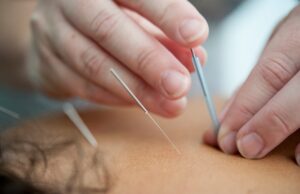
In parallel, we began acupuncture. Twice a week for the first three weeks, then once a week. Points: Taiyang (the extra point at the temples), Fengchi (the gallbladder-20 point at the base of the skull), Hegu (large-intestine-4, in the hand), Taichong (liver-3, between the toes), and a rotating selection of secondary points based on what her pulse and tongue showed at each visit. A familiar pattern for migraine prevention, the kind of protocol many TCM practitioners have used for many years. Nothing experimental.

The first two weeks: no change. She had two migraines, both on Tuesday.

The third week: one migraine, on Wednesday rather than Tuesday. We discussed whether this was meaningful or coincidence. I told her honestly that I did not know yet.

The fourth week: no migraine.

The fifth week: no migraine.

The sixth week: no migraine.

She came in on the Tuesday of the seventh week, smiling for the first time since I had met her.

“I think I have not had a Tuesday afternoon in three years.”

What I told her, and what I tell anyone with a similar story

Erjona’s migraines have not vanished. She had one in the eighth week, mild, lifted with rest and a single dose of sumatriptan. She has had three more in the eleven months since. Three migraines in eleven months, compared with the previous frequency of two to three per month, is a meaningful change. It is not perfection. It is enough that she has her Tuesdays back.

The lesson I take from her case — and I have seen variations of it many times — is that acupuncture rarely fixes migraine on its own. It works best as part of an honest investigation into what the body is reacting to. The needles raise the threshold. The lifestyle changes lower the load. Together, the gap between threshold and load opens up enough that the migraines do not arrive. There is a short earlier piece on a different migraine-relief acupuncture story, if you want a second example.

If you are reading this and considering acupuncture for your own migraines, the suggestion I would make is this: keep a notebook for at least three months before your first session. Write down everything that seems irrelevant. Hours of sleep, what you drank the day before, where you were in your cycle if you have one, the weather, whether you ate breakfast. The patterns will surface. The acupuncturist’s job is then to help you address what the patterns are showing.

The needles are useful. They are not the whole story.

A small footnote about the diaspora

I notice in my practice that the migraine clients who improve the most are often those who have moved between countries — diaspora returnees, expatriates, people whose nervous systems have adapted twice or three times to new climates, new schedules, new languages. The migrating nervous system seems to be more sensitive to small ongoing disruptions. It also seems to respond particularly well to interventions that respect its complexity rather than trying to override it with a single drug.

I do not have data to back this up, only an impression from many client conversations. But it matches something I notice in myself, having moved from Liaoning to Tirana a few years ago: a body that has crossed borders carries a different kind of attention.

The work is to give it the right kind of quiet.


Yang Wang practises acupuncture at Chinese Massage – Tai Chi Tirana. The parlour is in central Tirana, near Bulevardi Gjergj Fishta. Names in client stories have been changed.
Acupuncture for Sleep: The Point Behind Your Ankle

There is a point on the inside of the ankle, in the small hollow between the back of the medial malleolus and the Achilles tendon, about a finger-width above the bone. Press it firmly with your thumb for thirty seconds, and most people will notice — if they are paying attention — a slight, slow feeling of heaviness moving up the leg. The breath drops a notch lower in the chest. The shoulders, almost imperceptibly, settle.

This is Taixi — the kidney-3 point. In a thousand years of Chinese practice it has been the single most-used point for sleep that does not arrive easily or does not stay through the night. We needle it almost every day in our parlour. It is not, by itself, a cure for insomnia. But it is one piece of a careful approach that addresses something most modern sleep advice misses: the body needs to want to sleep, and most insomniacs have a body that has lost the wanting.

Why pills work and then stop working

The usual medical approach is medicine. There are older sleeping pills and newer ones; doctors can advise on which is which. From what I have heard from clients and from doctors I trust, they often work on the first night and through the first week. After three or four weeks, two things tend to happen: the dose stops being enough, and the natural shape of sleep — the rhythm between deeper and lighter phases — gets flattened. The body has been put to sleep but not rested.

This is not a criticism of sleep medication. There are crises in which it is the right intervention, briefly. The problem is that it does not teach the body anything. When the medication is stopped, the body has not learned to fall asleep on its own; it has only learned to be put to sleep.

Acupuncture for sleep works on a completely different principle. It does not sedate. It does not produce drowsiness during the session. It works on the underlying patterns — what classical TCM calls deficiency, excess, or disharmony — that have caused the body to lose its sleep instinct in the first place.

Three patterns, three protocols

In Chinese medicine, insomnia is never a single condition. It is a symptom, and the protocol depends entirely on the pattern.

The mind-too-busy insomnia. The patient lies down tired but cannot stop thinking. Thoughts circle. The body is heavy but the head is alert. This is most common in office workers, students before exams, anyone running mental work in the evening. The TCM pattern: heart fire rising. The protocol: needles at Shenmen (heart-7, on the wrist crease), Yintang (between the eyebrows), and Taixi (the ankle point above). The goal is to bring the active mental energy downward, anchoring it in the lower body so the head can rest.

The body-too-tired insomnia. The patient is exhausted, falls asleep within minutes, but wakes between two and four in the morning and cannot return to sleep. They often feel a vague anxiety on waking, with no specific thought attached. This is the most common pattern in clients who have been chronically overworked, postpartum women, people in long-term grief. The TCM pattern: yin deficiency. The protocol: bilateral kidney-3 (Taixi), spleen-6 (Sanyinjiao), and a moxa application over the lower back — gentle, warming, rebuilding the deep reserve.

The digestive-disturbance insomnia. The patient sleeps fine until midnight, then wakes with bloating, slight nausea, or vivid disturbing dreams. They often eat late or eat in a stressed state. The TCM pattern: food stagnation. The protocol: stomach-36 (Zusanli), large intestine-4 (Hegu), pericardium-6 (Neiguan) — combined with dietary discussion. No needling alone will fix this one without the eating pattern shifting.

There are other patterns — the agitated insomnia of menopause, the cold-feet insomnia of poor peripheral circulation, the post-trauma insomnia where the nervous system has lost trust in the dark — but these three cover perhaps seventy percent of what walks into the parlour. If you are curious about how the meridian system underlying these points actually works, I have a longer piece on meridian conditioning in TCM that goes into the mapping in more detail.

The grandmother’s point

In the Liaoning of my childhood, grandmothers pressed a restless child’s Taixi point — this same ankle hollow — when the child could not settle to sleep. The pressure is firm but never sharp. The effect, observed by every generation of mothers without anyone writing it down, is that the child becomes calm. My own grandmother did it to me on the heated kang in winter, two fingers on the inside of the ankle, until my eyes gave up.

What she was doing, without the vocabulary for it, was working a neurological reflex. The point does not sedate. It settles. It tells a wound-up nervous system that the floor of the bed is, in fact, safe enough to fall through.

I think of her hands every time I needle that point. Tirana sleeps badly for reasons she never had to deal with — the café two floors down that mistakes midnight for early evening, the neighbour renovating a bathroom that was apparently load-bearing — but the ankle hollow has not changed, and neither has what it asks the body to do.

What to expect from an acupuncture session for sleep

The first session is rarely the one where the change happens. The body needs to register that something new is being offered.

Expect: a forty-five-minute appointment, including intake. About twenty minutes with needles in. Six to ten points, depending on the pattern. The needles are very fine — much finer than the hypodermic needles used for vaccinations — and most clients feel only a brief sensation on insertion, sometimes nothing at all. During the twenty minutes you may feel small involuntary movements in the muscles near the needles. This is normal and indicates the nervous system is engaging.

About one in three first-session clients sleep better that night. About one in two sleep better the third night after the session. The reliable improvement comes between the third and fourth session in a standard course of six.

What you should not expect: dramatic immediate change, lasting effects after a single session, or that acupuncture alone will fix a sleep problem that has structural causes (sleep apnoea, severe restless legs syndrome, hyperthyroidism, depression with insomnia features). For these, acupuncture can support but cannot substitute.

The honest part

I want to say this clearly because the field does not always say it clearly: acupuncture is not magic for sleep. There are clients for whom it works beautifully and clients for whom it makes no measurable difference. The percentage who respond well is, in my own practice, around three out of four. The other one out of four either needs a different intervention or has a sleep problem with an underlying cause we need to identify and address differently.

What I can promise is this: the work will be done with care, the protocol will be tailored to the actual pattern (not a generic insomnia recipe), and if four sessions in we are not seeing change, I will tell you honestly and we will talk about what else might help. Sometimes the answer is to send someone for a sleep study. Sometimes it is to address an anxiety condition with a psychologist first. Sometimes it is simpler — a client who has not made the connection between the espresso at four in the afternoon and the wakefulness at midnight.

Sleep is a delicate piece of the body’s intelligence. The needles, when they work, are not adding anything new. They are removing the small obstacles that have been keeping the body from doing what it already knows how to do.


Yang Wang practises acupuncture and Tui Na at Chinese Massage – Tai Chi Tirana.

The Best Chinese Massage in the Heart of Tirana

The Best Chinese Massage in the Heart of Tirana

Experience authentic Chinese massage techniques designed to restore your energy and soothe your soul, right in the vibrant center of Tirana! 🌿

✅ Authentic Techniques: Traditional methods for deep healing.
✅ Professional Care: Expert therapists dedicated to your wellbeing.
✅ Premium Oasis: A calm, zen atmosphere in the middle of the capital.

Treat yourself to the care you deserve. Your journey to wellness starts here! ⛩️🙌

International Women’s Day at Chinese Massage – Tai Chi Tirana

International Women’s Day at Chinese Massage – Tai Chi Tirana

🌸 we protect the unique you


You’re used to taking care of your family’s well-being, but you often forget to take care of your own body.
🌸
This International Women’s Day, we protect the unique you.

🌿 Special treatments
for you
  • 🌿 Relaxation Massage
  • 🌿 Deep Stress Release
  • 🌿 Balance your body and mind

💆‍♀️ Your relaxation moment
book now
🇦🇱 Albanian
Book now

🇬🇧 English
Book now

#InternationalWomensDay
#RelaxationMassage
#Wellness
#SelfCare
#taichitcm
#acupuncture
Chinese Massage – Tai Chi Tirana · March 8

How One Hour in March Can Change Everything

How One Hour in March Can Change Everything — Chinese Massage - Tai Chi Tirana Tirana
🌿 Chinese Massage - Tai Chi Tirana · Tirana · March Wellness

How One Hour in March
Can Change Everything

Recovery does not need to be long to be powerful.
It needs to be complete.

🌸 When the City Wakes

March in Tirana does not arrive quietly. It rushes in. One moment the city is wrapped in winter gray and damp air. The next, the sun grows stronger, cafés fill, traffic accelerates, and everyone seems ready to begin again.

After months of cold, Tirana breathes.

Spring boulevard — city awakening
✦ Spring energy rises · Tirana awakens

🫱 What the Body Still Carries

But inside the treatment room, I see something different. Shoulders still lifted from February. Necks stiff from long hours at screens. Lower backs tight from cold days and accumulated stress.

Almost every client arrives and says the same thing:

"I'm exhausted."
"But I don't have time."
"I can only manage one hour."

As if one hour is too little to matter.


🕯️ Then We Begin

The door closes. The outside noise fades. For sixty minutes, there is no traffic, no calls, no pressure.

At first, the body remains guarded. The breath is shallow. And then — something shifts.

10 min
Shoulders begin to drop The first layer of tension releases. The nervous system starts to recognise safety.
20 min
Warmth spreads through deeper tissues Circulation improves. Muscles that have been braced for weeks begin to soften.
30 min
Breathing slows — naturally This is where real recovery begins. The body no longer needs to be guided — it remembers how to rest.
60 min
Complete The session ends. There is always a pause — they sit up slowly, roll their shoulders, take a deeper breath.

🌿 Why One Hour Is Enough
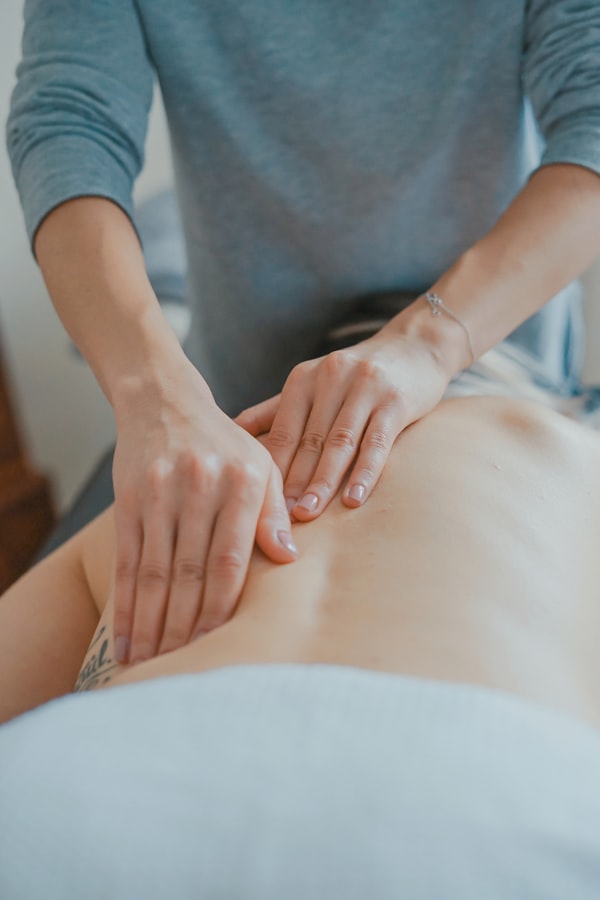
Chinese massage therapy hands
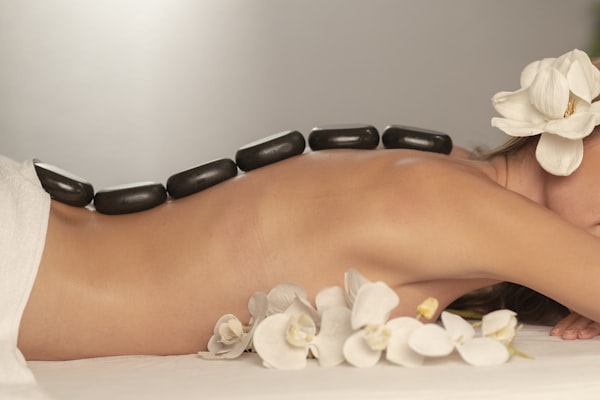
Deep tissue work
Calm wellness space
Stillness restored

One hour is short — but it is complete. It allows focused, deep work without exhausting the body. The body does not measure healing in days. It responds to presence.

Sixty minutes of uninterrupted attention can reset the nervous system, improve circulation, and release tension built over weeks.

"How can just one hour make such a difference?" — Because recovery does not need to be long to be powerful. It needs to be complete.

☯️ March, Spring Energy & the Body

In Traditional Chinese Medicine, spring is governed by the Wood element — the energy of growth, movement, and new beginnings. After winter's contraction, the body naturally seeks to expand, to move, to release what has been held.

This is why March is one of the most important months to receive care. As spring energy rises through the body, a single session of deep massage becomes the bridge — between winter heaviness and renewed vitality.

Stillness restored — spring renewal
✦ Spring · Renewal · Balance

Outside, Tirana keeps moving fast.
Inside that hour, the body learns to move with it — lighter, calmer, stronger.

Your one hour is waiting.

Step out of March's rush — and into a room where the only thing that matters is how you feel when you leave.

🌿   Book Your Session

Cupping and Bloodletting in Traditional Chinese Medicine

How These Therapies Help in Everyday Health Problems

In my daily centeral practice, many patients ask the same question: “What exactly do cupping and bloodletting do, and how do I know which one I need?”
Both therapies belong to the external treatment methods of Traditional Chinese Medicine (TCM), and while they may look simple, their effects can be deep and precise when applied correctly.

Cupping and bloodletting share a common goal – to restore circulation and remove what the body no longer needs – but they do so in different ways and for different situations. Understanding this difference helps patients feel more confident and involved in their treatment.


Cupping Therapy: Releasing Tension and Restoring Flow

What Cupping Therapy Does

Cupping creates a gentle suction on the skin that draws blood and fluids to the surface. From a TCM perspective, this helps move stagnant Qi and Blood, warm the meridians, and relax contracted tissues.

Many patients describe the feeling after cupping as lighter, warmer, and more flexible – especially in areas that felt tight or blocked before.

Common Symptoms and Conditions Treated with Cupping

In practice, cupping is often helpful for:

  • Chronic neck and shoulder stiffness from desk work

  • Lower back pain that feels heavy or sore rather than sharp

  • Muscle tightness after sports or physical labor

  • Frequent colds with chest tightness or cough

  • Fatigue accompanied by a sense of body heaviness

  • Digestive discomfort linked to stress and tension

For example, patients who sit long hours at a computer often come in with stiff shoulders, headaches, and a feeling of pressure between the shoulder blades. Cupping in these cases helps relax the muscles and improve circulation, often bringing noticeable relief even after one session.


Bloodletting Therapy: Clearing Heat and Stagnation

What Bloodletting Therapy Does

Bloodletting involves releasing a very small amount of blood from specific points or congested areas. In TCM, this is used when there is excess Heat, strong stagnation, or toxicity.

Patients are often surprised by how little blood is involved – and how quickly symptoms can change afterward.

Common Symptoms and Conditions Treated with Bloodletting

Bloodletting may be recommended when patients present with:

  • Sharp or intense headaches, especially with a feeling of pressure or heat

  • Sudden neck or shoulder pain with redness and swelling

  • Acute flare-ups of acne or skin inflammation

  • Migraines accompanied by irritability or facial flushing

  • Pain that feels fixed, stabbing, or burning

For instance, patients with recurring migraines often describe a heavy, tight sensation in the head that worsens with stress or heat. In selected cases, gentle bloodletting can quickly reduce this pressure and calm the system.


When Cupping and Bloodletting Are Combined

There are situations where cupping alone is not enough, and bloodletting alone would be incomplete. This is when combining the two therapies becomes especially effective.

Practical Examples of Combined Therapy

In my experience, combined treatment works well for:

  • Long-standing shoulder or back pain with swelling and heat

  • Sports injuries that remain painful and inflamed for weeks

  • Chronic fatigue with a feeling of heaviness and congestion

  • Recurrent neck pain with visible dark or congested areas

  • Old injuries that flare up with weather changes

In these cases, bloodletting helps release the deep stagnation, while cupping immediately afterward encourages fresh blood flow and faster recovery.


Possible Disadvantages and Temporary Reactions

Both therapies are generally well tolerated, but it is important to know what to expect:

  • Temporary bruising or marks from cupping

  • Mild soreness for one or two days

  • Feeling tired or relaxed after bloodletting

  • Rare skin irritation if aftercare instructions are not followed

These reactions are usually signs that circulation has been activated and tend to resolve on their own.


When These Therapies Should Not Be Used

Safety always comes first. Cupping and bloodletting are not suitable for everyone, and proper assessment is essential.

General Contraindications

  • Pregnancy (especially abdomen and lower back)

  • Severe weakness, exhaustion, or anemia

  • Bleeding disorders or poor clotting

  • Advanced chronic disease without medical supervision

Bloodletting-Specific Contraindications

  • Use of anticoagulant medication

  • Very low blood pressure

  • Severe fear or sensitivity to blood

  • Children and elderly patients (unless strictly indicated)

A personalized diagnosis ensures that treatment supports the body rather than overloading it.

cupping therapy on their back

A Street with a Story

When I first opened Chinese Massage – Tai Chi Tirana here in Tirana, one of the first things that caught my attention was the name of the street — Rruga Astrit Sulejman Balluku. It’s a long name, melodic and unfamiliar to me at first, and I used to wonder who this person was. Every time I wrote down the address for a new client or looked up at the street sign, I felt a quiet curiosity. Streets carry stories, I thought — and this one, surely, must too.

At the beginning, I tried to look for information online, but it was not easy to find much. Later, through conversations over coffee, some of my Albanian friends told me that Astrit Sulejman Balluku was a trade-union leader in Tirana who lived during the country’s difficult years of transition after the fall of communism. He was killed in October 1998, at a time when Albania was facing unrest and political violence.

For someone who arrived in Tirana decades later, it’s hard to imagine what those days were like. My friends described a city filled with uncertainty — protests, fear, and the feeling that the future was not yet secure. It was a time when courage and loss often went hand in hand.
When I walk along this same street today, it feels like another world. The air hums with the sound of construction; cafés spill laughter onto the sidewalks; people talk about their children studying abroad, about tourism, about business, and about Albania’s European future. The transformation is visible everywhere — in the new buildings, in the energy of young people, and even in the small details of daily life.

Of course, not everything is perfect. Like every growing city, Tirana still faces challenges — traffic, rising prices, moments of impatience, and the fast rhythm that modern life brings. But beneath it all, there is a strong sense of movement and possibility. People care deeply about their city. They are proud of how far it has come, and they keep working toward something better.

For me, coming from China and living here for six years, Tirana has become more than just a place of work — it feels like a community. I walk to the market and see familiar faces, I hear greetings in three different languages, and I feel safe walking home even late in the evening. There is a quiet trust in everyday life that I appreciate very much.
Sometimes, as I stand outside our center and look at the sign that says Rruga Astrit Sulejman Balluku, I think about how time transforms pain into memory, and memory into meaning. This street, once named after a man who lost his life in troubled times, is now a place where people come to rest, heal, and find balance. That feels symbolic — as if the city itself is breathing more peacefully now.

When I talk to my Albanian friends about the past, they often say the same thing: “We have been through worse. Now we want to live better.” And I believe they are doing just that.
So whenever I see the evening light fall softly on this street — the children playing, the trees whispering, the city slowly calming down after a busy day — I think of how far Tirana has come. The journey from unrest to peace is not simple, but it is beautiful.

And perhaps, in our own quiet ways, each of us can take a moment to slow down, to breathe, and to appreciate the calm we now enjoy — both within ourselves and around us.

Therapeutical Escape

A moment away from the daily noise – Relaxation and Energy in one place. This video takes you right inside our center, where traditional Chinese techniques work for your well-being.

From deep tissue massage to energy rebalancing techniques, the best place to help you reconnect.


➡️ Book your session now!

“Mysafir” in Albania

When I first arrived in Tirana six years ago, I knew very little about Albania. I came with curiosity, open eyes, and an open heart – but I never imagined how deeply I would be touched by the warmth and hospitality of its people.

Albania has a wordless kindness that you can feel in daily life – in a neighbor’s smile, in the kind waiters from the coffee shop at the corner of my street who remember me, my favorite drink, and even how I like it served. This generosity of spirit is not just habit – it is part of an ancient tradition.

The roots of Albanian hospitality run deep, connected to Kanuni i Lekë Dukagjinit – the traditional code of honor that has guided Albanian life for centuries. One of its most famous rules says, “The house of the Albanian belongs to God and the guest.” This means that every guest, even a stranger, must be treated with the highest respect and care, as if sent by heaven itself. Though modern life has changed, this principle still lives strongly in the Albanian heart.

As a Chinese woman living in Tirana, I have always felt this kindness personally. From the very first day, people made me feel not like a foreigner, but like a friend. Whether I was trying to find an address and someone offered not only to show me the way but to walk with me, or when clients at my massage parlour show small gestures of friendship – it always warms my heart. One of my long-time guests, for example, often brings me my favorite cake, asks about my family, and sincerely cares for my well-being. It is a kind of human connection that goes far beyond business – it feels like friendship, like belonging.

What also surprises many foreigners is how safe Albania feels – especially for women. When occasionally I had to walk alone at night through the lively streets of Blloku or near Skanderbeg Square, I never felt threatened or uncomfortable. Respect runs deep in this culture; when you treat Albanians with kindness and dignity, they respond with genuine care and protection.

Tirana today is a beautiful mix of tradition and modern energy – full of cafés, laughter, and life. But beneath this modern face still beats the heart of an old world value: the sacred duty to welcome and protect the guest.

I often tell my friends back in China and other countries: Come to Albania, visit Tirana, and feel this warmth yourself. You will not only discover mountains, sea, and history – you will discover a nation that still believes that friendship begins with an open door and a full heart.

After six years, Tirana has become more than where I live – it has become my home.


— Yang Wang


Acupuncture worked for me

I have lived and worked in Tirana for many years, building my career in a bank. My days are spent in front of a computer, long hours of meetings and reports, with little time left for movement. Over time, this lifestyle left me with a constant, stubborn pain in my right shoulder.


I did the sensible thing and went to a doctor. An X-ray was taken, but nothing unusual showed up. The advice was to rest and to take painkillers. I tried for a while, but I didn’t want to become dependent on medication just to get through daily life. The thought of carrying this pain indefinitely, or relying on pills, felt discouraging.
That’s when I decided to visit Yang’s salon. I originally booked a massage, which was wonderful, but when I shared my story about the shoulder pain, Yang suggested something I had never considered: a course of acupuncture, ten sessions in total.


I was skeptical at first. Acupuncture was unfamiliar to me, but Yang’s calm explanation and the confidence she inspired convinced me to try. From the very beginning, I felt her professionalism in the way she worked—each needle placed with care and purpose. Gradually, the tension in my shoulder started to ease. After a few sessions, I noticed real improvement. By the tenth session, the pain that had followed me for months was gone.

When I wanted to thank Yang, she told me that the best way would be to write down my experience so others in Tirana might benefit from it too. So here I am, sharing my story.

What stays with me most is not only the fact that my pain disappeared, but also the way Yang guided me through a method I had never thought of trying. Her mastery of acupuncture gave me a real alternative to medication and showed me that relief is possible—even when the usual medical tests say everything is “normal.”
For anyone in Tirana who spends too many hours sitting at a desk and struggles with unexplained pain, I would say this: don’t ignore it, and don’t give up. Sometimes the solution is closer than you think.

 Suela

[ story source: www.facebook.com/permalink.php?story_fbid=pfbid02cCELTC8KX7UnbzNgDYxXG8NtqFftXRdB1SrgkwxzshQTWd66oJiUDnZ4AiU3yEHkl&id=61581331277081 ]