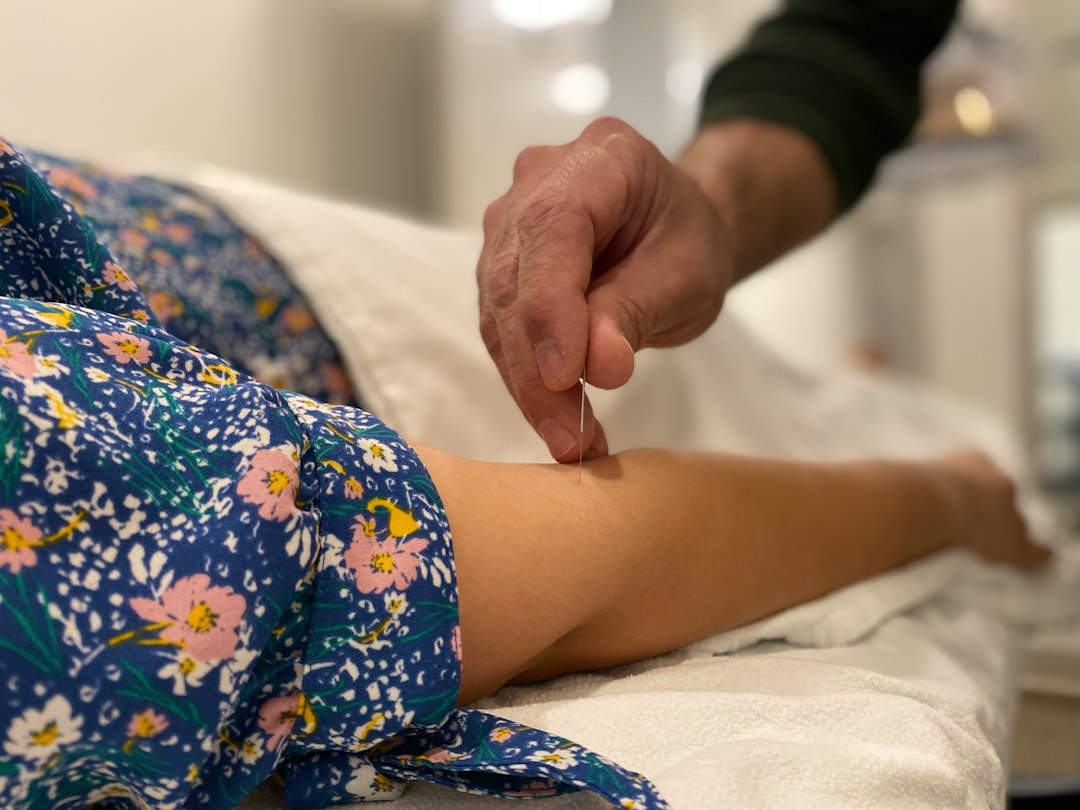
There is a particular look I recognise — a woman sitting in the chair across from me, a little embarrassed, listing the same week every month: the cramps that start a day or two before, the low mood that arrives like an uninvited guest, the heavy tiredness, sometimes the headaches. She has managed it for years with painkillers and patience. She is not sure acupuncture is for this. She is also, quietly, very tired of just managing.
She is right to wonder. And acupuncture is exactly for this.
What the cycle reveals
In Chinese medicine, the menstrual cycle is one of the clearest windows into the body’s overall balance — not just reproductive health, but circulation, energy, and the way the nervous system handles stress. Irregular timing, pain, heavy clots, or that grey pre-period fog are not separate complaints; they are different expressions of the same underlying pattern.
The most common patterns I see: blood and energy that are not moving freely through the pelvis (the cramping kind); a deficiency of warmth and nourishment in the uterus (the exhausted, cold, scanty kind); or a system that is simply running too hot and reactive (the irritable, heavy, headachy kind). These patterns overlap — most women present with more than one — and they shift slowly over months and years.
What the needles do
The points I use most for menstrual work are not on the abdomen. They are on the lower legs, the feet, the lower back — a map that looks strange until you understand that in classical Chinese medicine the liver, spleen, and kidney channels are the three pillars of women’s hormonal health. Moving stagnation in the liver channel eases the cramping and the mood swings. Strengthening the spleen and kidney builds the foundation that supports a steadier cycle.
On a physical level, studies consistently show that acupuncture affects blood flow to the uterus and ovaries, modulates the autonomic nervous system, and influences the same prostaglandin pathways that drive menstrual pain. The needles are small. The effect is not.
A returning patient, and what twelve cycles taught me
Elira came first in winter, a few months after I opened. She was in her early thirties, the cramps bad enough that she had taken days off work, and she had tried two kinds of hormonal contraception that helped the pain but left her feeling distant from herself. She wanted to see whether there was another way.
We worked month by month. The first cycle after three sessions showed no dramatic change — I told her not to expect it. The second was a little easier. By the fourth or fifth she noticed the pre-period fog was shorter. By about the ninth cycle the cramps had become manageable without medication on most months. She still comes every four to six weeks, not for crisis management but as maintenance, and she describes it the way people describe a regular run: the week without it is when she notices what it was doing.
This is the rhythm that works. A handful of sessions in the first one or two cycles, then a longer view.
What to expect at your first visit
I will ask a long list of questions that may seem unrelated — your sleep, your digestion, your temperature at different times of day, how you feel in the week before versus the week after your period. This is not curiosity for its own sake; the answers build the pattern that tells me which channels to work on and in what order.
Treatment is not uncomfortable. Most women feel a spreading warmth or a light ache at the needles — a sensation Chinese medicine calls de qi, the arrival of response. Sessions last around thirty minutes of needles-in. The broader appointment is sixty minutes including the conversation and any additional work like cupping or moxibustion that the pattern calls for.
If your symptoms are severe — very heavy bleeding, fibroids confirmed by scan, endometriosis — I work alongside your gynaecologist, not instead of them. Acupuncture is genuinely useful for pain, mood, and cycle regulation; it is not a replacement for investigation.
You can read more about how I approach each visit on the acupuncture page.
Yang Wang practises acupuncture at Chinese Massage – Tai Chi Tirana. The parlour is in central Tirana, a short walk from Bulevardi Myslym Shyri. Names in client stories have been changed.
Ready to Feel the Difference?
Book your session today — same-day appointments available.
Book Your Session