There is a specific kind of client I see fairly often — not because they booked about their jaw, but because they mentioned it offhand while we were already talking about something else. Shoulder tension, maybe. Or the headaches that show up every morning before the first coffee. Then, almost as an aside: “My teeth have been making this sound when I open my mouth.” They say it the way you’d mention a dripping tap you’ve learned to ignore.
The jaw is one of the most overworked joints in the body, and one of the least complained about. That combination tends not to end well.
What is actually happening in there
The temporomandibular joint — the hinge that connects your jaw to your skull, just in front of each ear — is in near-constant use. Speaking, chewing, swallowing, and (crucially) the low-grade grinding and clenching most people do without knowing, especially when concentrating or under stress. In Albanian daily life, between long hours and a coffee culture that can run to four or five cups a day with the jaw set at a particular angle of mild vigilance, the joint rarely gets a rest.
When it becomes overloaded, the result is a cluster of complaints that sound unrelated: clicking or popping when you open wide, morning headaches that sit behind the eyes or at the temples, tension that runs from the jaw up into the scalp or down into the neck, and — the one people least expect — a dull ache in the ear with no sign of infection.
Why this is exactly the kind of thing acupuncture helps
In Chinese medicine, chronic tension in a joint means qi and blood have become sluggish in that area — the tissue is braced, circulation is low, and the nervous system has learned to hold that pattern. Fine needles placed around the jaw (and, depending on the picture, at points on the hand and forearm that correspond to the face) do two things at once: they increase local circulation through the clenched muscle, and they interrupt the holding pattern the nervous system has settled into. The jaw, in a word, is invited to let go.
It is worth saying plainly: this is not dentistry. We are not adjusting a bite or prescribing a splint. But the muscular and nervous-system component of jaw dysfunction — the part that makes mornings hard and keeps the tension cycling — is very much within what acupuncture addresses.
The colleague who finally said something
Mira had been coming for shoulder work for about six weeks. Around the third session she mentioned the clicking. By the fifth, almost casually, she added that she’d started waking with a headache most days and that her ear felt oddly full. I suggested we spend the last fifteen minutes of the next session on the jaw points — something small, just to see.
She later told me that she’d been half-expecting more clicking. Instead, she felt a slow, unfamiliar loosening in the hinge — the kind of release you don’t know you’ve been bracing against until it releases. The morning headaches were noticeably lighter within two weeks. We kept the jaw work woven into each session for about a month.
That is typical. A jaw that has been clenching for years does not resolve in one go — but it usually responds faster than people expect, because the real driver is muscular habit and nervous-system pattern, not structural damage.
What to expect if you come for this
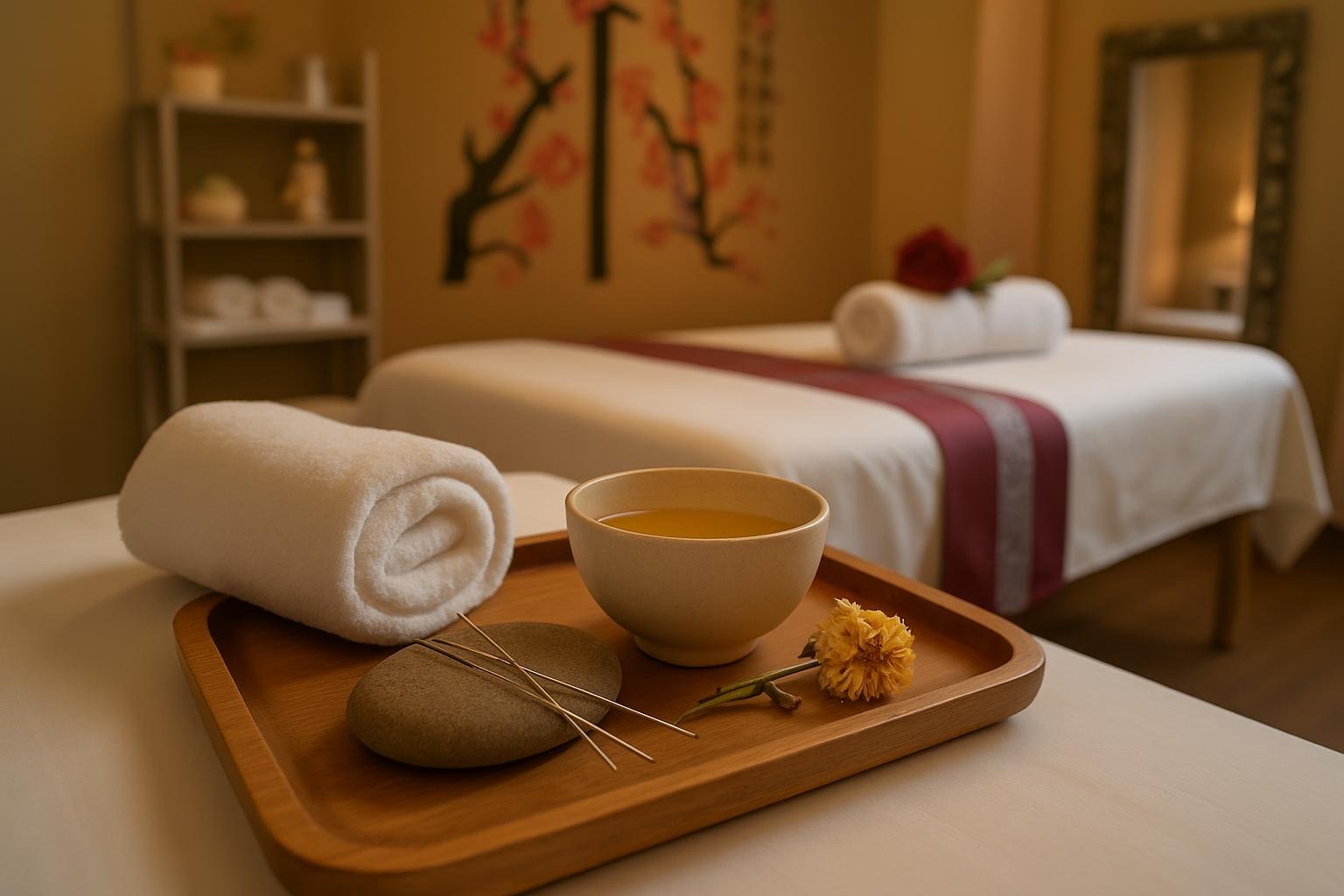
A session for jaw and TMJ pain looks like a regular acupuncture appointment — you lie comfortably, a handful of fine needles go in around the face, jaw, and sometimes hand or lower arm, and you rest for about twenty to thirty minutes. There is usually a mild warmth or a soft spreading sensation. Very occasionally a small twitch, then quiet.
If the jaw clicking comes with significant pain on opening, locking, or was caused by an impact, please see a dentist or specialist first — we complement that care, we do not replace it. For the more common picture — chronic clenching, morning headaches, ear fullness, the jaw that has been tense for as long as you can remember — this is a reasonable place to start.
You can read more about how I approach sessions on the acupuncture page.
Yang Wang practises acupuncture at Chinese Massage – Tai Chi Tirana. The parlour is in central Tirana, a short walk from Bulevardi Myslym Shyri. Names in client stories have been changed.
Ready to Feel the Difference?
Book your session today — same-day appointments available.
Book Your Session