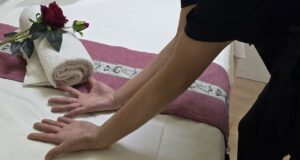
There is a particular kind of quiet that Ying Wang brings into the room. She does not announce herself. She sets up, asks two or three careful questions, and then she begins — and somewhere in the first ten minutes you understand that something different is happening.
Ying is one of the therapists at Chinese Massage – Tai Chi Tirana who practises the more demanding end of Therapeutic Massage (Tui Na). Demanding in both directions: it asks a great deal of the therapist, and it asks you to trust that the sensation of your body being slowly, deliberately, systematically taken apart is, in fact, the point.
What “strong massage” actually means in Tui Na
Tui Na is not a single speed. The same tradition that produces a gentle, rocking relaxation session also produces something far more structural — long, deliberate compressions and mobilisations that work into layers most massage barely reaches. This is not pain for its own sake. It is the pressure required to release tissue that has been guarding itself for months, sometimes years.
The difference between this and a typical relaxation massage is the difference between a conversation and a negotiation. A relaxation massage talks to your nervous system: calm down. Ying’s work negotiates with your body’s deeper structures: let go of what you have been holding.
She is always asking. That is the other thing people notice. Every few minutes, a quiet check: too much? Is the pressure right? She works with you, not on you — which is partly why people who usually find strong massage too aggressive feel, with her, something closer to trust.
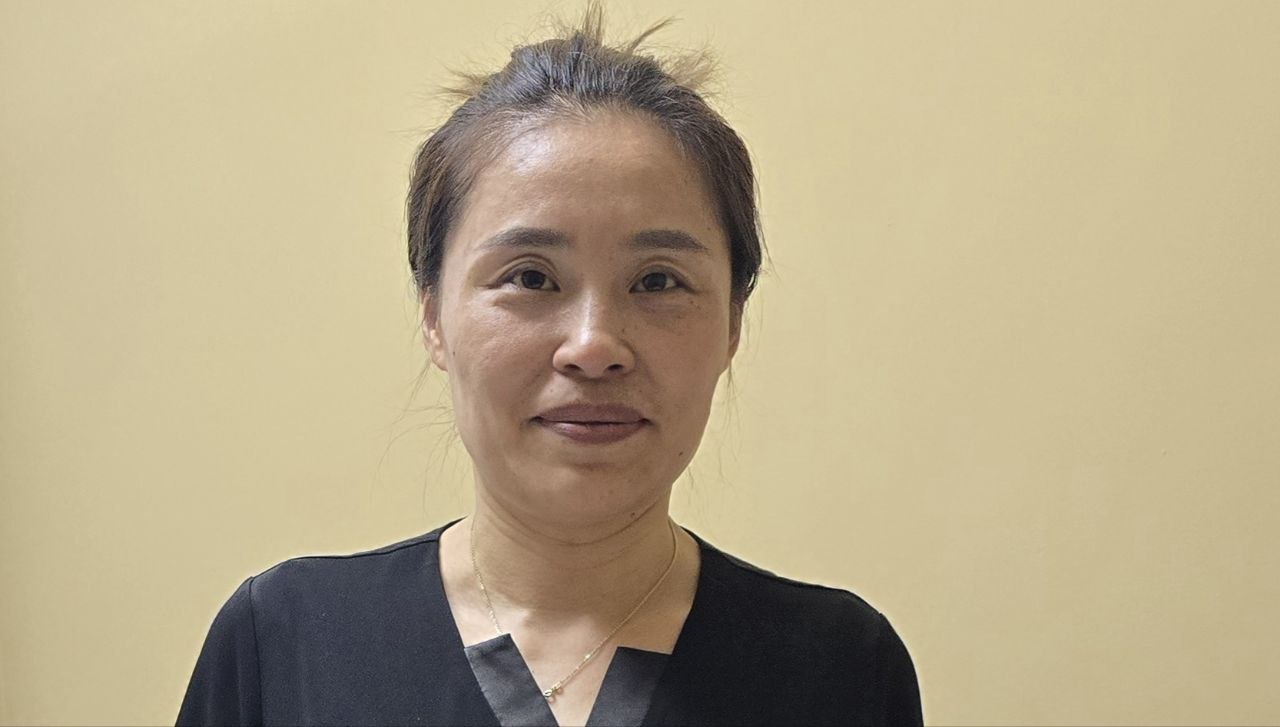
The physical intelligence behind the technique
What Ying does is genuinely hard work. A session at this intensity costs the therapist — in focus, in physical output, in the sustained mental attention of reading a body’s responses in real time. She does not take back-to-back bookings at this level the way a gentler session might be scheduled. When she works, she is fully present, and that concentration is a large part of why the results feel different.
In Chinese medicine terms, she is moving what has become stuck — breaking up the stagnation in muscle and connective tissue and encouraging circulation to return to areas that have been closed off. In plain terms: you feel, for a day or two afterwards, as though your joints have been oiled and your muscles reminded of where they were supposed to sit.
The foot technique one guest will not stop talking about
A regular guest — one who has tried most of what we offer — is particularly fond of what Ying does with the soles of the feet. It is a specific sequence of pressure and mobilisation along the plantar surface: methodical, thorough, and not especially gentle. The guest describes the result as a relaxation in the feet that lasts close to a week. The feet, in Tui Na, are far from a small thing — the sole maps, in classical theory, to almost every major system of the body, and sustained, skilled work there resonates further than you expect.
A note of honesty: this particular technique is not for everyone. If your feet are sensitive to pressure, if the idea of working firmly on the sole makes you wince just reading it, this is useful information about yourself. No judgement — Ying will find something else. But if you have always wanted someone to really work on your feet and most therapists have felt too tentative, this is exactly the session to book.
Is this the right kind of massage for you?
If what you are looking for is an hour of drifting and ambient music, Ying’s signature style is probably not the session you want — and she would say so herself. But if you leave most massages feeling like they barely touched the problem, if you have tension that has become a resident rather than a visitor, if you are particular about pressure and have been disappointed before — this is the kind of work that tends to surprise people.
The session is a subcategory of Therapeutic Massage (Tui Na), which you can read about in more detail on the service page. As with all our work here, it is not a medical treatment and it is not a replacement for a doctor when a doctor is what you need — but for the body that has simply been carrying too much for too long, it can feel, by the end, like a very thorough unpacking.
Yang Wang practises Therapeutic Massage (Tui Na) and acupuncture at Chinese Massage – Tai Chi Tirana. The parlour is in central Tirana, a short walk from Bulevardi Myslym Shyri. Names in client stories have been changed.