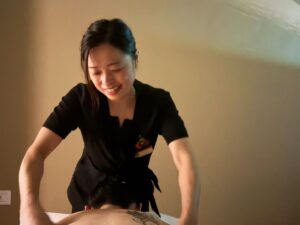
Wei Huang walks into a room the way a cat crosses a kitchen: you only notice when she is already there. She is petite, softly spoken and elegant in a way that makes you straighten your posture without knowing why. If you met her over tea, you would guess calligraphy teacher. Or a very good librarian.
You would not guess that she can find the one knot in your shoulder that you have been politely ignoring for months.
I did not guess it either, not properly. I am the boss. I plan the rooms, I check the towels, and until last week I had only watched Wei work from the corridor. So I did what any sensible owner should do and asked her to give me a massage. Here is my report.
Quiet is not the same as gentle
A lot of people assume that a small, soft-spoken therapist means a light touch. In my experience it is the other way round. Wei’s work looks calm from the outside and is very precise underneath.
We have an old Chinese idea for this: 以柔克刚, softness overcoming hardness. It is the same thinking that sits behind Tai Chi. You do not win by pushing harder. You win by being in exactly the right place, at exactly the right angle, at exactly the right speed.
Why small hands do the job so well
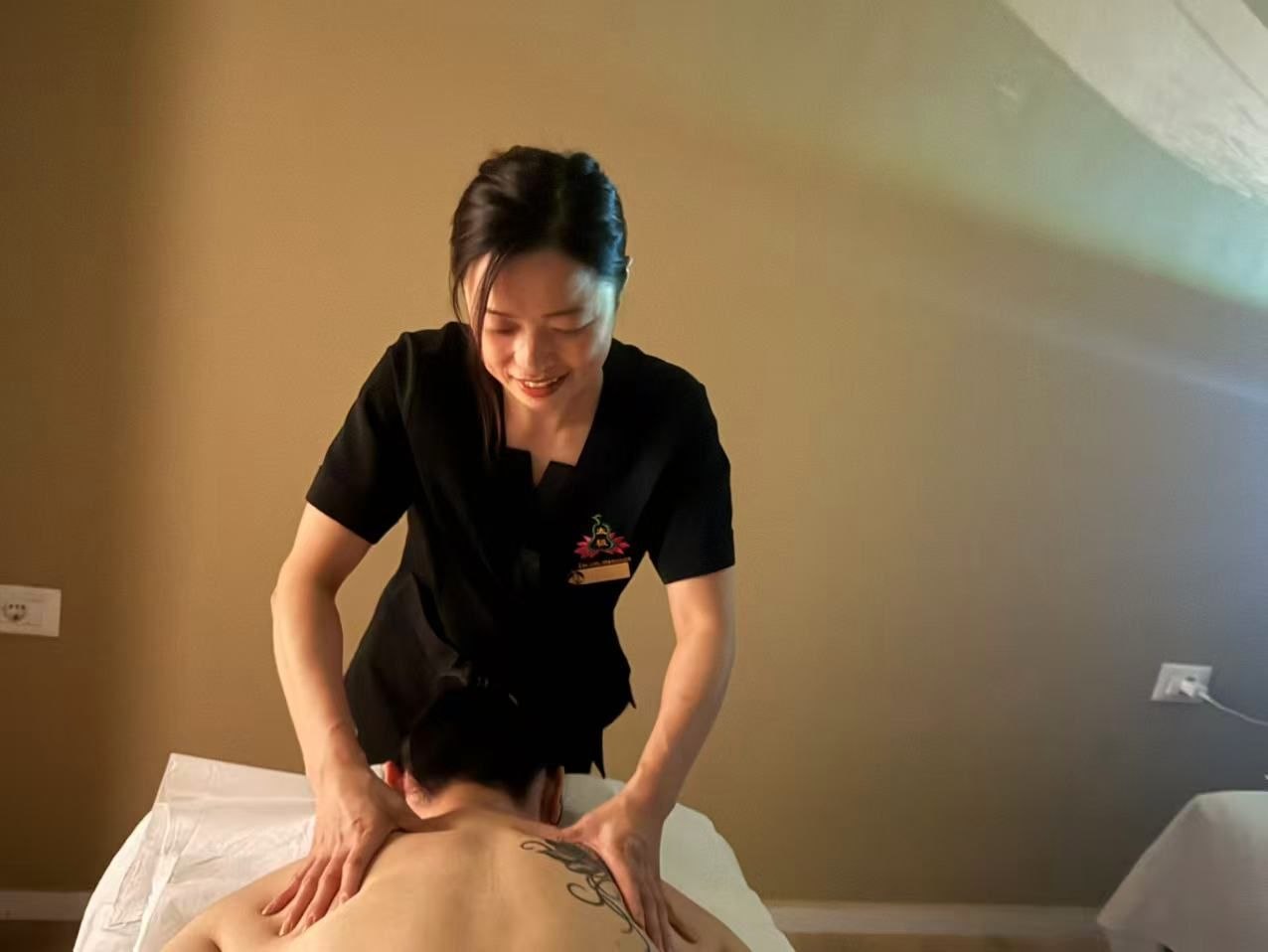
Tui Na is not a contest of muscle. It is leverage, rhythm and listening. The therapist rolls, presses, kneads and pushes along the body’s pathways, and a skilled one uses body weight and angle instead of raw force.
That is how a petite therapist reaches real depth without hurting you. It is also why she can work a full day and still be gentle at six in the evening. Strength you cannot see is the kind that lasts.
The boss on the table
I lay down fully intending to supervise. I had a plan: mental notes on the temperature of the towel, the pace of the room, the way she greeted me. I lasted about four minutes.
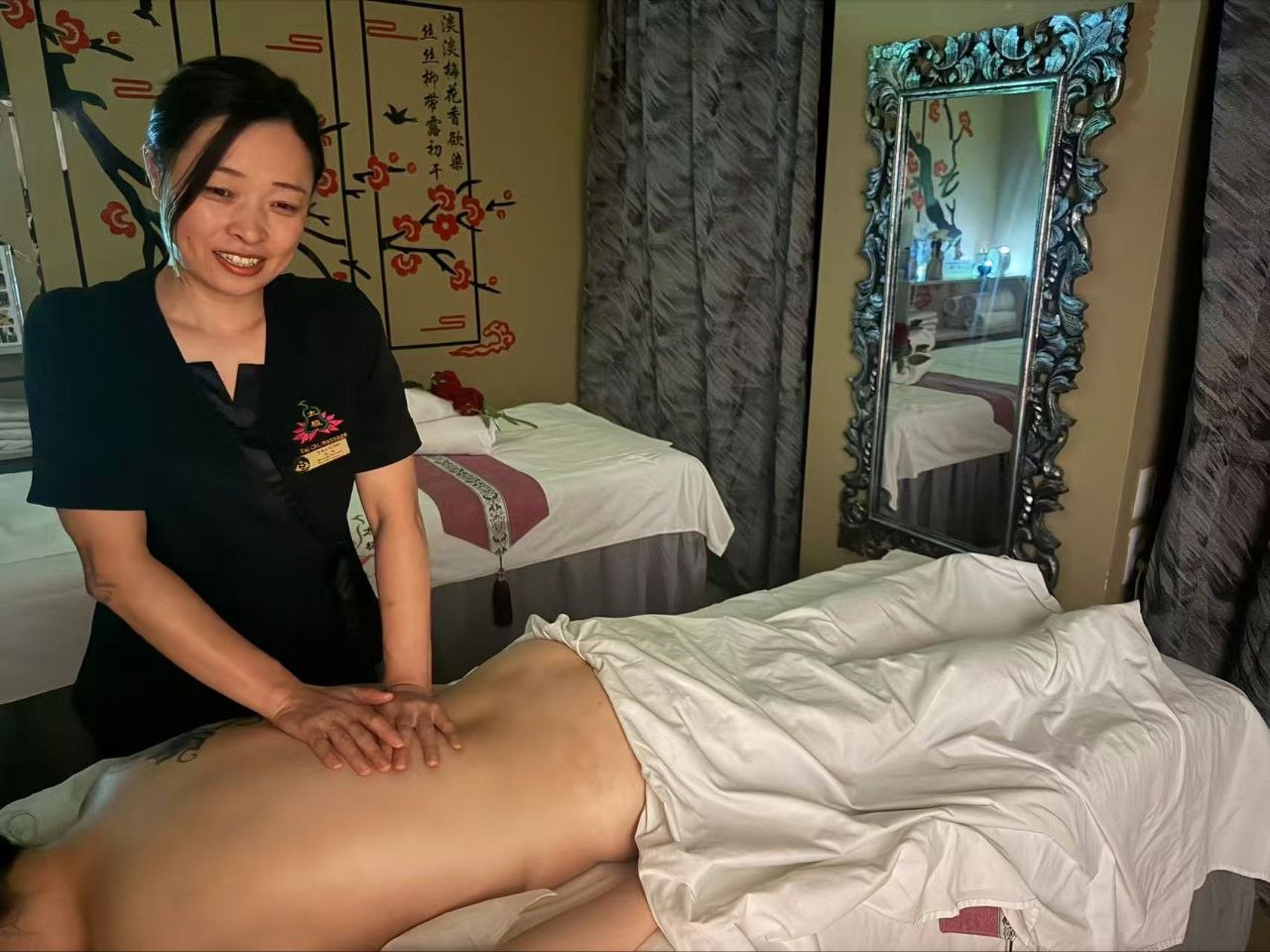
Wei started with my back and shoulders. Then her thumb found a spot between my shoulder blade and my spine – the spot I had blamed on my laptop, my chair and the traffic on the boulevard. She said one word, in that soft voice: “Here?”
Yes. Here.
The rest of the hour passed in near silence. No small talk, no advice, no performance. Just steady pressure that arrived slowly, stayed exactly as long as it was needed, and left without fuss. When I finally sat up, my shoulders were sitting a good two fingers lower than when I came in. I had not realised how tense I was until it stopped. Many of our clients say the same sentence at the end of a session, and now I have said it too.
I also forgot every note I had meant to take. For a boss, that is the highest compliment I can give a colleague.
What this says about the parlour
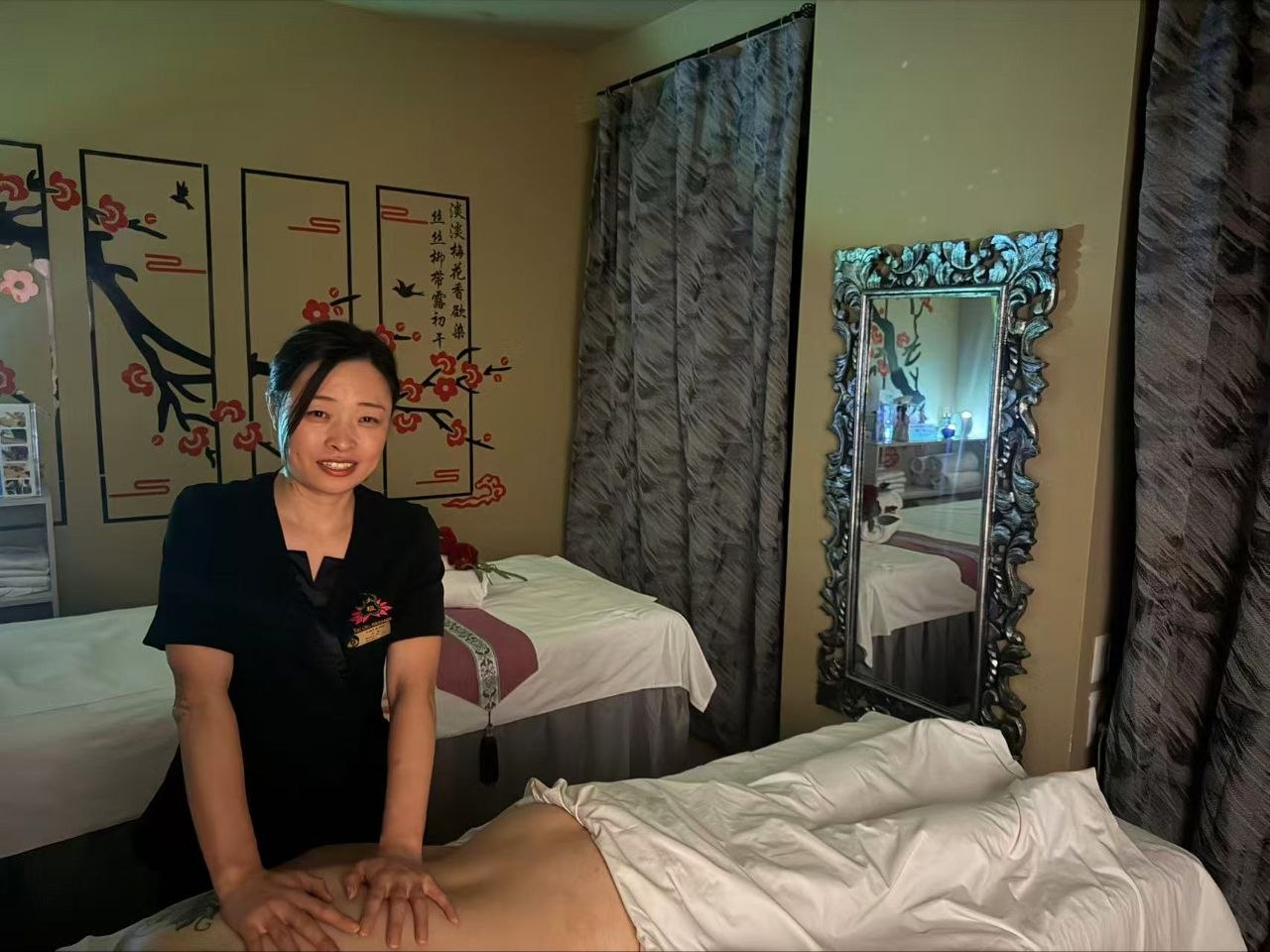
We are a small business. We do not have a pool or a sauna, and we do not pretend to. The money goes into the massage itself, into clean rooms, and into people whose hands you can trust. People trust the best hands, not the flashiest lobby – in China and in Albania alike. The same goes for my other colleagues, Xia Xiao among them: the hands you can trust are rarely the loudest ones in the room.
Wei will blush when she reads this. She will read it through Google Translate, which means a small misunderstanding is likely and a smile is guaranteed. That is how we work: a little humour, a lot of care, nobody left stuck.
I am lucky to work with colleagues like Wei and Xia Xiao, and I say so with only one exclamation mark: thank you both!
If you would like to try it
A one-hour Therapeutic Massage (Tui Na) is the natural place to start. Tell your therapist how firm you like the pressure, and tell her about any sore spot, new or old. She will adjust, quietly. If you have a recent injury or sharp, sudden pain, see a doctor first – we work alongside that, not instead of it.
You can read more about the session on the Therapeutic Massage (Tui Na) page.
Yang Wang practises Therapeutic Massage (Tui Na) and acupuncture at Chinese Massage – Tai Chi Tirana. The parlour is in central Tirana, a short walk from Bulevardi Myslym Shyri.