Tag: stress and pain relief
Yang’s Journey: From Liaoning to TCM in Tirana
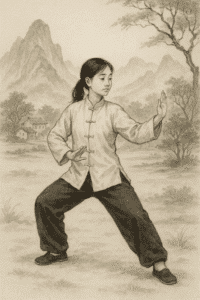
 In the vast northeastern province of Liaoning, China, lived a modest girl named Yang. She never sought attention, but her quiet strength and inner determination always impressed those who knew her. Yang found happiness in simple, meaningful things — practicing tai chi with her father on quiet mornings, playing basketball with friends in the schoolyard, and watching in admiration as her mother practiced traditional Chinese massage with devotion and gentleness.
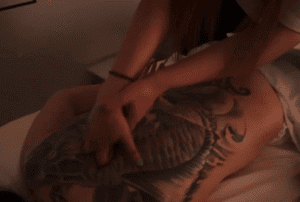
From an early age, Yang had a deep connection to body-mind harmony. Her father, a dedicated tai chi practitioner, taught her the philosophy of balance and flow. Her mother, a massage therapist, taught her that healing begins with compassion and genuine presence. Inspired by these teachings, Yang pursued her studies in Traditional Chinese Medicine, specializing in meridian therapy and therapeutic massage.
After several years of study and practice, Yang felt a strong desire to take her knowledge beyond the borders of Liaoning. She dreamed of sharing her culture and healing skills with the world. At the age of 25, with only her knowledge and a heart full of pure intention, she took a bold step and moved to Europe.
Of all the countries she visited, it was Albania that stole her heart. The mountains reminded her of her homeland, while its people welcomed her with warmth and curiosity. She began working in wellness centers in Tirana, offering traditional Chinese massage with care and precision. The beginning was challenging — the language was unfamiliar, the customs different — but Yang faced everything with humility and inner strength.
 Her gentle spirit and extraordinary skill soon attracted loyal clients. Word spread, and more and more people came, not just to relieve pain or stress, but to experience the peace it offered. Over time, Yang built strong connections, made friends who became family, and created a community that appreciated her work.
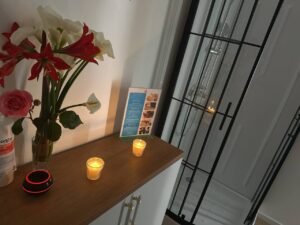
After six years of dedication, Yang achieved what once seemed like a distant dream: opening her own Chinese massage center in the heart of Tirana. She called it Tai Chi – TCM Wellness and Health, a tribute to her roots in tai chi and Traditional Chinese Medicine, and to the journey that had brought her from Liaoning to Albania.
But that wasn’t the end of her story — it was the beginning of a new chapter.
Starting a business brought new challenges: responsibilities she hadn’t faced before, paperwork in a language she spoke only just enough to be understood, and the pressure to turn her passion into a sustainable living. It was a risky, uncertain, and sometimes exhausting journey. But Yang, like tai chi, faced each step with calm and determination.
She knew well that life is like tai chi — it flows slowly, at its own pace — sometimes difficult, sometimes graceful. With the support of family from afar, the help of friends, and the trust of her beloved clients, Yang jumped into this new chapter, ready to build something not only for herself, but also for all who sought healing, balance, and a moment of peace.
This was the beginning of a new journey — full of risk, challenging, but also exciting and full of hope.

Shiatsu vs Tuina vs Swedish: Which Massage Style Suits You?
Frequently Asked Questions
Q: I’ve never had a massage before. Which style should I start with? Swedish massage is the most accessible entry point — gentle, oil-based, and with no prior experience required. If you’re in Tirana and want something with deeper therapeutic value from your very first session, our Relaxation Massage blends Western comfort with Eastern insight.
Q: What is the difference between Shiatsu and Chinese Tui Na? They sound similar. Both are meridian-based, but the approach differs significantly. Shiatsu uses sustained, stationary pressure and has a meditative quality. Tui Na is more active — rolling, kneading, mobilising — and is used centerally for specific conditions. We break this down in detail in our article: Shiatsu vs Chinese Tui Na Massage.
Q: I have chronic back pain. Which massage is most effective? Chinese Tui Na is considered one of the most centerally effective styles for musculoskeletal pain. It works not just on the muscles but on the underlying Qi imbalances that perpetuate pain cycles. Our Therapeutic Massage is specifically designed for these cases, and can be combined with Acupuncture or Gua Sha & Cupping for enhanced results.
Q: Is Thai massage painful? It can be intense, especially if you have tight hips or hamstrings — but it shouldn’t be sharply painful. Good Thai massage practitioners work within your range and adjust pressure to feedback. The sensation is often described as “good pain” — uncomfortable but immediately releasing.
Q: I feel emotionally drained and burned out. Which massage helps most? Shiatsu and Tibetan-inspired approaches are best suited to nervous system reset and emotional depletion. At Tai Chi Tirana, our Volcanic Stone Therapy and Mud Moxibustion are also particularly effective for deep nervous system calming.
Q: Can I combine different massage styles in one session? Yes — and this is often the most effective approach. At Tai Chi, our practitioners naturally blend Tui Na, acupressure, Gua Sha, and heat therapy based on what your body needs in that session. You don’t need to choose one style rigidly.
Q: How often should I get a massage? For general wellness maintenance: once every 2–4 weeks. For active therapeutic goals (e.g. chronic pain, insomnia, post-injury): weekly or bi-weekly, at least for the first 4–6 sessions. Our practitioners can advise a protocol after your first visit.
Q: Do you offer couple massages and four-hands massages? Yes! These are among our most popular experiences. See our Couple Massage and Four Hands Massage pages to learn more and book.
Conclusion: A Harmonious Blend for Modern Wellness
In today’s world, it’s important to recognize that there is no such thing as a “pure” or isolated form of massage anymore. Over time, traditional techniques have evolved by drawing inspiration from one another—blending methods, philosophies, and healing insights across cultures. Whether it’s the precision of Shiatsu, the flowing rhythm of Swedish massage, or the deep energy work of Chinese Tui Na, each form contributes to the global practice of healing touch.
No matter the style, massage has become more than a luxury—it is a vital support for physical and emotional balance in our fast-paced, often stressful modern lives. Here in Tirana, where the rhythm of city life rarely slows down, taking time for massage therapy is one of the most effective ways to restore inner harmony and resilience.
Not sure which style is right for you? Contact us or simply book a session — our therapists will assess your needs and recommend the most suitable approach. We are located in the centre of Tirana.
