Relaxation Massage After a Long Flight — A Diaspora Story

Erion called from Rinas airport on a Wednesday morning. He had landed forty minutes earlier on a flight from London via Vienna. Twelve hours of travel, two airports, three time zones, and a long overnight layover in a Vienna terminal that had not been kind to anyone. He was in Tirana for his grandfather’s funeral on Friday and he had a meeting Thursday afternoon with the lawyer handling the estate. He had two and a half days to be functional in a city he had not lived in for fourteen years.

“Can I come at three?” he asked. “My back is one solid piece.”

I knew Erion’s family — they had been clients for years — though I had only met him once before, briefly, on a previous visit. I told him to come at three, that we would do a ninety-minute relaxation session, and that he should drink a litre of water between now and then.

He arrived looking exactly as I remembered the diaspora returnees of his generation. Late thirties, tired, slightly displaced in his own physical body, carrying a familiar particular kind of fatigue that is not exactly jet lag and not exactly grief but partakes of both.

This piece is for him and for the many clients like him — the diaspora returning to Tirana for family events, the business travellers spending three days in the city, the visitors who arrive having travelled too long and need their body to catch up before they can do what they came here to do.

What a long flight actually does to the body

Air travel is harder on the body than most people give it credit for. The combination of factors — low cabin humidity, low cabin pressure, prolonged sitting, disrupted circadian rhythms, the dehydration that even moderate drinkers do not fully compensate for, the mild low-grade stress of being in a confined space surrounded by strangers — produces a specific physiological state that is reliably present after any flight longer than four hours.

The state has several components.

Mild dehydration affecting fascia and joint mobility. Cabin humidity is typically below twenty percent (compared to the forty-to-fifty percent of a comfortable room). Twelve hours in this environment leaves connective tissue noticeably stiffer. Many travellers experience this as a generalised body ache they cannot localise.

Sluggish circulation in the lower body. Prolonged sitting reduces venous return from the legs. Even without the rare but serious risk of deep vein thrombosis, most long-haul travellers arrive with mild lower-extremity edema, calf tightness, and slight cognitive fogginess from the reduced peripheral circulation.

Shallow breathing pattern. Aircraft seats are designed in a way that compresses the diaphragm slightly. Twelve hours of slightly compromised breathing produces a measurable shift in the chest mechanics that takes hours to resolve.

A body still on alert from cumulative low-grade stress. Even for experienced travellers, the small ongoing stressors of airports — security lines, departure board anxiety, the discomfort of close quarters — accumulate. The body arrives at the destination braced in a way that is rarely felt consciously but is plainly there once you settle on the table.

Circadian disruption. Even a single time zone shift produces measurable disruption to the body’s hormonal rhythms. Three time zones, with overnight layover in the wrong direction, produces a particular kind of disorientation that affects mood, sleep, and basic cognitive function for several days.

What a relaxation massage addresses, and what it does not

A well-designed post-travel relaxation massage can address most of these factors in a single session, though not all to the same degree.

Hydration of fascia and connective tissue. The massage strokes themselves do not add water to the body, but the work mechanically distributes fluid through the connective tissue layers and improves the local circulation that allows the body to rehydrate the affected areas effectively. Combined with adequate water intake, this can resolve most of the air-travel stiffness within the first session.

Lower body circulation. Lymphatic-style strokes in the legs, calves, and feet — performed as part of the standard relaxation protocol — mobilise the accumulated fluid and restore normal venous return. Most clients report visible reduction in lower-leg swelling within an hour of the session.

Breathing depth. The work on the upper back, shoulders, and chest restores the rib cage mobility that the airline seat compressed. Clients usually notice their breath has descended within the first thirty minutes of the session.

Sympathetic activation. The parasympathetic shift that a sustained relaxation session produces directly counteracts the accumulated low-grade stress of travel. For many travellers, this is the most subjectively important effect.

What the massage does not address is the circadian disruption itself. The body’s hormonal rhythms will reset on their own timeline (typically one day per time zone), and no amount of bodywork can speed this up. But by addressing the other components of post-flight fatigue, the massage allows the traveller to feel functional during the days that the circadian rhythm is still resetting in the background. (Travellers arriving for the December family-visit window may want to read the related piece on the particular Tirana fatigue of the holiday season.)

The protocol for post-travel clients

The session I gave Erion is one I have refined over many years of treating travellers, and it differs in specific ways from a standard relaxation session.

The first portion focuses on the legs, calves, and feet — earlier and longer than usual, because the lower-body congestion is what most post-flight clients feel most acutely. Long, slow, ascending strokes that mobilise fluid back toward the trunk. About fifteen minutes.

The second portion addresses the lower and upper back, with particular attention to the area between the shoulder blades that takes the brunt of airline-seat compression. About twenty minutes.

The third portion works the shoulders, neck, and base of the skull. This is where the cumulative travel tension becomes most accessible. About fifteen minutes.

The client then turns over. We work the chest and ribs gently to restore breathing mobility, then the abdomen lightly to support digestion (which often shuts down during travel and benefits from gentle stimulation), then the arms and hands, then return to the legs from the front. About twenty minutes.

The final ten minutes are spent on the face, scalp, and ears — partly for the deep relaxation effects, partly to address the specific tension that accumulates in the small facial muscles during a long flight when one is trying to sleep in an upright position.

The total session is ninety minutes. Sixty minutes is not enough for a post-travel session; the body needs the longer protocol to fully address the multiple components.

Erion, that Wednesday afternoon

Erion fell asleep about forty minutes into the session, which is normal and often a sign that the body has decided it is safe to do the recovery work. He woke up briefly when I asked him to turn over, and again, more fully, at the end of the session.

He did not say much. He sat up slowly, drank the glass of water I gave him, looked at his hands as if he was rediscovering them.

“I forgot what my back was supposed to feel like,” he said eventually.

He drove to his family’s house after the session. He told me later that he slept twelve hours that night — much longer than he had planned, but his body needed it — and that he felt clear-headed for the meeting on Thursday and able to be fully present at the funeral on Friday. He came back for a second session before flying out the following Tuesday.

This is the part of post-travel work that I find most quietly satisfying. The traveller arrives in Tirana with too little time to do everything they need to do, and the small intervention of a single ninety-minute session shifts the entire trajectory of their visit. They can be present for the family. They can be present for the meetings. They can sleep when they need to sleep.

A note for the diaspora specifically

The diaspora returnee carries a particular kind of travel fatigue that is not just physical. The flight from London or Frankfurt or Milan brings with it a parallel emotional adjustment: returning to a city that is and is not home, to a language that is and is not the daily language, to family members who have aged in ways that one has not seen happening in real time.

This emotional layer is not something a massage can directly address. But the parasympathetic state that the massage produces creates the conditions in which the emotional adjustment becomes easier. The body, in a regulated state, supports the heart and mind in their own work.

I have come to think of post-travel massage for the diaspora as a kind of bridge. The traveller arrives at the airport in one mode — international transit, distant from the place they have just landed in. The session at the parlour, ideally within the first twenty-four hours of arrival, helps the body actually arrive in Tirana, rather than remain in the airport-and-aircraft mode for the first several days of the visit. The visit becomes, in a useful sense, a real visit rather than a transit through.

Practical suggestions for travellers planning ahead

A few small things make the post-travel session more effective.

Drink water aggressively in the twenty-four hours before and after the session. The body needs the fluid to fully benefit from the work.

Avoid alcohol on the day of arrival. The temptation, after a long flight, is to celebrate arriving with a glass of something. Wait until the next day; the body has too much recovery to do to also process alcohol.

Schedule the session for late afternoon or early evening on the day of arrival, not first thing in the morning of the second day. The first night’s sleep after the massage is when much of the integration happens.

Plan for a quiet evening after the session. The deep relaxation effect makes social events feel forced; a slow meal at home or with very close family is the right register.

If you have travelled with significant time-zone change, also plan for an early bedtime on the night of the session. Your body will be ready for sleep sooner than usual.


Yang Wang practises massage and Chinese medicine at Chinese Massage – Tai Chi Tirana. Names in client stories have been changed.
Sleep Pressure, Cortisol, and the Sunday Session

We see a particular pattern in our weekend booking calendar that has held steady for years. Saturdays are mixed: couples on dates, post-work-week treats, occasional first-timers using a free afternoon to try something new. Sundays — particularly Sunday afternoons between three and six — book up earliest, and the clients who come in these slots are almost always the same kind of client: working professionals, mostly in their thirties and forties, mostly women, mostly with the same pattern of complaint when we ask why they are coming in.

“I sleep badly Sunday night. I want to start the week feeling rested. I have tried everything.”

The phrase “tried everything” usually refers to: blackout curtains, melatonin, magnesium, no screens after nine, herbal teas, a strict bedtime, a relaxation app, sometimes pharmaceutical sleep aids on the worst nights. None of it produces the clean refreshing sleep these clients remember from earlier in their lives.

What is happening, in most of these cases, is a small but specific pattern in how the body manages alertness and rest across the week. I have read a little about it, and the picture that I have come to find useful is this. Two things in the body, between them, govern sleep: the daily clock that lifts you up in the morning and lets you down in the evening, and the slow build of tiredness across the day. When both line up, you fall asleep easily. When they drift apart — and that is what happens after a stressful week — sleep becomes a problem.

How sleep seems to work, as I understand it

There are two systems in the body, working alongside each other, that decide whether you can sleep. They are usually talked about separately, but they work together. A problem in one often looks like a problem in the other.

The first is the body’s daily clock — the roughly twenty-four-hour cycle that lifts you up in the morning and lets you down in the evening. It is driven by light, by certain hormones, and by the small daily rise and fall of your body’s core temperature. A healthy clock gives you alertness in the late morning, a small natural dip in early afternoon, more steady focus through late afternoon, and an easy descent into sleepiness in the evening.

The second is what doctors I have spoken with call “sleep pressure” — the slow build of tiredness in the brain across the day. The longer you have been awake, the more it builds, and the stronger the pull toward sleep. Coffee, as I understand it, does not remove this tiredness; it just hides it for a few hours. When the coffee wears off, the hidden tiredness comes back, sometimes harder than before.

When you are well, these two systems line up. The evening clock turns down at roughly the same time the tiredness reaches its peak. You fall asleep easily, you sleep deeply, you wake well. When you are stressed for weeks at a time, the two systems drift apart in a way I have come to recognise.

What stress seems to do to all of this

A chronically stressful week — a demanding job, ageing parents, a long commute, the small constant load of modern life — does several things to these systems, as far as I have read and as I have watched in clients.

It keeps the “alert” hormone, cortisol, raised for longer than it should be. Cortisol is supposed to be high in the morning and gradually lower through the day. When stress is constant, it stays high into the evening, when the body should be settling.

It interferes with the slow build of tiredness across the day. The person feels tired in a vague drained way but cannot fall asleep when they try.

It breaks up the sleep itself. Even when you do fall asleep, the deepest, most refreshing phase of sleep becomes shorter, and you wake up more often between cycles without quite remembering it.

By Friday afternoon, in many working professionals, this pattern has produced a significant cumulative sleep debt. Saturday is usually spent partly recovering: a later wake time, a nap, a gentler day. By Saturday night, sleep is often quite good — the body, finally given permission to rest, takes advantage of the opportunity. (I have written separately about the particular fatigue of the Tirana holiday season, which sits on top of the ordinary work-week version.)

Sunday is where the trouble usually starts.

Why Sunday night is the hardest

“Sunday night insomnia” — difficulty sleeping on Sunday night with a low hum of anxiety about the coming week — is one of the most common sleep complaints I hear in the parlour. It is not imaginary; from what I have read, it is a real and well-recognised pattern in working adults.

What is happening, physiologically, is a combination of factors.

First, the body is still partly in its work-week alert mode. The hormonal pattern that kept you going through Friday has not yet settled.

Second, the half-conscious anticipation of Monday — the mental work of preparing for the week, which most people start doing around Sunday afternoon — quietly raises the alertness again in the evening, just when the body should be coming down.

Third, the weekend has, in small ways, shifted your daily clock. The later wake time on Saturday and Sunday, the nap, the dinner that ran late — these have nudged the evening sleepiness to arrive later than your intended bedtime.

Put together, you get the classic Sunday-night insomnia: tired body, busy mind, no descent into rest.

What the Sunday afternoon session does

A relaxation massage at three or four o’clock on a Sunday afternoon, in my observation, helps with all three of these at once. The timing is not accidental — it is part of why these slots reliably work.

The settling effect of the session eases the body’s alert hormones down in a way that the evening then continues, rather than fights against. By bedtime, the body is genuinely ready to rest.

The session provides a period of deep quiet in the afternoon — not exactly sleep, but close enough that the body’s slow build of tiredness across the day catches up with the day’s clock by evening. The body, in other words, is properly tired at bedtime, in the right way.

And the timing of the session — afternoon, not evening — supports rather than disrupts the daily clock. The natural early-evening sleepiness arrives where it should.

The cumulative effect, for clients who come consistently on Sunday afternoons, is a Sunday night that resembles a normal night of sleep rather than the anxious half-rest that has become the norm for many working adults. Monday morning is, correspondingly, more functional.

A small story about a regular client

A client we have had for nearly three years — a tax accountant who works through the seasonal rush from January to April with brutal weekly hours — first came in on a particular Sunday in February. She had been having three or four hours of broken sleep per Sunday night for several weeks. She had developed mild heart palpitations during the work week that her cardiologist had told her were stress-related but unexplained.

Her first session was a standard ninety-minute relaxation, in the Sunday afternoon slot she could fit between picking up her daughter from a piano lesson and starting dinner. She slept seven hours that Sunday night. By the third week, the palpitations had become rare. By the second month, she was sleeping well on most nights of the week.

She comes in every other Sunday now, year-round, and increases to weekly during the tax-season rush from late January through mid-April. Her cardiologist commented at her annual check-up last year that her resting heart rate had dropped by twelve beats per minute. She had not mentioned the massage sessions to him.

She told me this story not because she wanted me to take credit for it, but because she had been surprised that something she had thought of as a minor wellness routine had produced what her doctor considered a real medical change. She wanted me to know.

A note on what is not happening

It is worth being honest about what the Sunday session does not do.

It does not fix underlying sleep apnoea, restless legs syndrome, hyperthyroidism, depression with sleep features, or other medical conditions that produce sleep disruption. If your sleep problem is structural or pathological, massage will help with the surrounding stress component but will not address the underlying cause. See a sleep specialist or a doctor.

It does not work the same way for night-shift workers, who have a fundamentally different sleep-wake architecture that requires a different timing strategy.

It does not substitute for adequate sleep hygiene. The other interventions — consistent bedtime, reduced evening screen exposure, avoidance of late caffeine — still matter. The massage is one piece of an overall approach, not a replacement.

It does not produce results in a single session for every client. Some respond beautifully to the first session. Others need three or four before the pattern shifts. A few do not respond to this particular approach at all, and we discuss alternatives.

But for the working professional with stress-driven insomnia and a relatively healthy underlying physiology, the Sunday afternoon session is one of the more reliable interventions in our practice. The Sunday slots fill up because the people who have tried it have found that it works.

The slot, the rhythm, the city

There is a particular small ritual that some of our Sunday afternoon regulars have developed around the session. They walk a slow route to the parlour, sometimes stopping somewhere to pick up something for the week ahead. They sometimes stop at one of the cafés on Bulevardi Myslym Shyri afterwards for a quiet hour before going home. The session itself becomes part of a slower Sunday rhythm that is itself part of the therapeutic effect.

The pace of the city in late Sunday afternoon, just before evening, is one of Tirana’s quieter and more pleasant qualities. Our parlour sits in this rhythm naturally. We are not the only piece of a good Sunday — but for the clients for whom we have become part of one, the effect is more than the sum of the parts.

That, in the end, may be the real intervention. A small claim on the body’s behalf that Sunday is allowed to be Sunday, and Monday will arrive in its own time, and the body has a right to enter the week well-rested rather than already braced against it.


Yang Wang practises massage and Chinese medicine at Chinese Massage – Tai Chi Tirana.
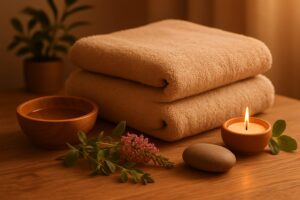
How One Hour in March Can Change Everything

How One Hour in March Can Change Everything — Chinese Massage - Tai Chi Tirana Tirana
🌿 Chinese Massage - Tai Chi Tirana · Tirana · March Wellness

How One Hour in March
Can Change Everything

Recovery does not need to be long to be powerful.
It needs to be complete.

🌸 When the City Wakes

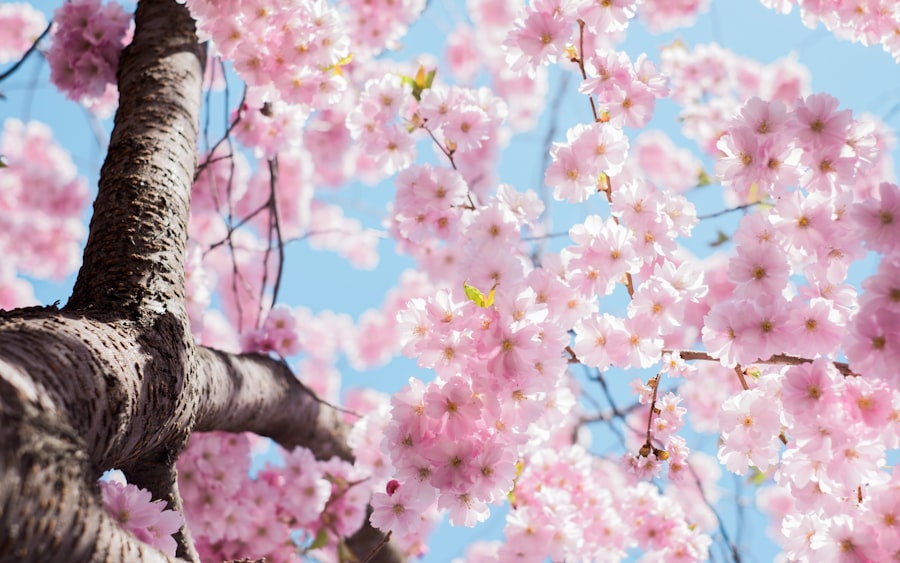
March in Tirana does not arrive quietly. It rushes in. One moment the city is wrapped in winter gray and damp air. The next, the sun grows stronger, cafés fill, traffic accelerates, and everyone seems ready to begin again.

After months of cold, Tirana breathes.

Spring boulevard — city awakening
✦ Spring energy rises · Tirana awakens

🫱 What the Body Still Carries

But inside the treatment room, I see something different. Shoulders still lifted from February. Necks stiff from long hours at screens. Lower backs tight from cold days and accumulated stress.

Almost every client arrives and says the same thing:

"I'm exhausted."
"But I don't have time."
"I can only manage one hour."

As if one hour is too little to matter.


🕯️ Then We Begin

The door closes. The outside noise fades. For sixty minutes, there is no traffic, no calls, no pressure.

At first, the body remains guarded. The breath is shallow. And then — something shifts.

10 min
Shoulders begin to drop The first layer of tension releases. The nervous system starts to recognise safety.
20 min
Warmth spreads through deeper tissues Circulation improves. Muscles that have been braced for weeks begin to soften.
30 min
Breathing slows — naturally This is where real recovery begins. The body no longer needs to be guided — it remembers how to rest.
60 min
Complete The session ends. There is always a pause — they sit up slowly, roll their shoulders, take a deeper breath.

🌿 Why One Hour Is Enough
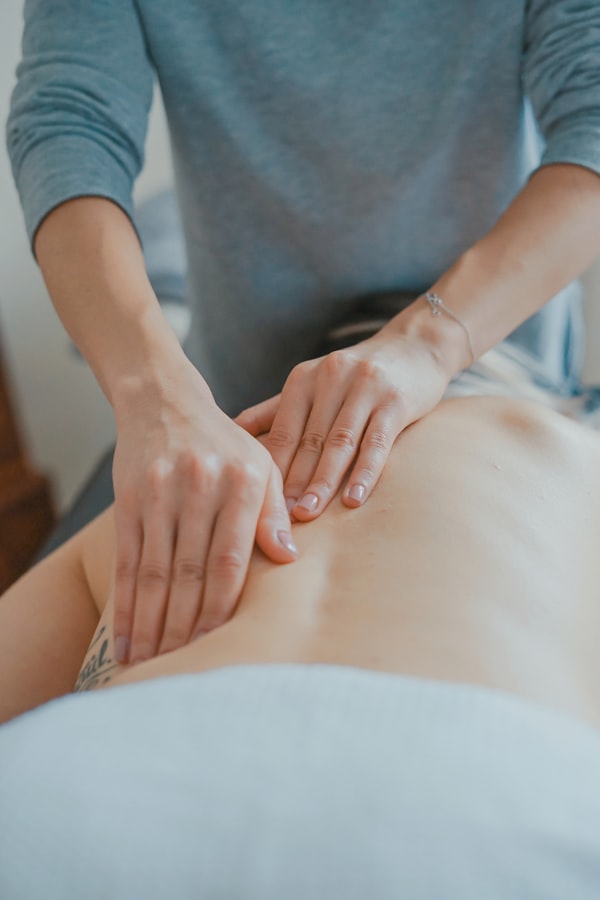
Chinese massage therapy hands
Deep tissue work
Calm wellness space
Stillness restored

One hour is short — but it is complete. It allows focused, deep work without exhausting the body. The body does not measure healing in days. It responds to presence.

Sixty minutes of uninterrupted attention can reset the nervous system, improve circulation, and release tension built over weeks.

"How can just one hour make such a difference?" — Because recovery does not need to be long to be powerful. It needs to be complete.

☯️ March, Spring Energy & the Body

In Traditional Chinese Medicine, spring is governed by the Wood element — the energy of growth, movement, and new beginnings. After winter's contraction, the body naturally seeks to expand, to move, to release what has been held.

This is why March is one of the most important months to receive care. As spring energy rises through the body, a single session of deep massage becomes the bridge — between winter heaviness and renewed vitality.

Stillness restored — spring renewal
✦ Spring · Renewal · Balance

Outside, Tirana keeps moving fast.
Inside that hour, the body learns to move with it — lighter, calmer, stronger.

Your one hour is waiting.

Step out of March's rush — and into a room where the only thing that matters is how you feel when you leave.

🌿   Book Your Session

December in Tirana: A Beautiful Month That Quietly Exhausts Us

Every December, as I walk through Tirana on my way to the center, I can feel the city transforming around me. Lights appear on every street corner, cafés dress up their windows, and Skanderbeg Square becomes a little universe of music, color, and warmth. Families stroll together, children run around with glowing balloons, and the whole city vibrates with a kind of festive joy that is impossible to ignore.

Even after many years in Albania, these sights still make me smile and, on a different scale remind me of what we do at home, in China, to celebrate the Lunar New Year.

But at the same time, in hDecember I notice something else — something quieter, hidden behind the sparkle: people getting more and more tired.

December’s Hidden Pace

December looks magical, but it moves fast. Too fast.

Traffic becomes unpredictable, the malls feel like airports during holiday season, and everyone seems to be carrying more bags, more to-do lists, more obligations.

My patients often arrive and sit down with a sigh:

“I’ve been running around all day.”

“I still haven’t finished buying gifts.”

“I need to prepare the house for guests.”

“I’m cooking every day now.”

“I can’t sleep well lately.”

It’s the month when joy and pressure walk hand in hand.

The Holidays Are Beautiful — But the Body Pays a Price

Then come the celebrations. Christmas dinners, New Year parties, late nights, heavy meals, family gatherings, planning, cleaning, cooking again… All wonderful moments — but also physically intense.

By the time January begins, most people realize that the holiday season didn’t give them much rest at all.

But something I always remind my patients is this:

the tiredness doesn’t start in January — it starts in December. And that means the care for your body should begin in December too.

Why Massage Helps During December

During December, the body is already under constant pressure:

  • heavy holiday preparations
  • long hours standing, cooking, cleaning
  • rushing through crowded stores
  • poor sleep from stress and late evenings
  • cold weather tightening the muscles

A massage during December works like putting the brakes on an engine that’s overheating.

It prevents tension from accumulating, helps you sleep better, supports your immune system, and clears your mind so you can actually enjoy the holidays instead of just surviving them.

Many people wait until January to take care of themselves — but by then, the stress has already settled deep.

And Why You Still Need It in January

Then, when the decorations come down and normal life starts again, the fatigue becomes more noticeable. I often hear:

“I thought I would rest during the holidays, but I’m even more tired now.”

January is the perfect moment to reset, to allow the body to release everything it carried through the last month.

A massage in January:

  • melts the tension accumulated during December
  • improves circulation after weeks of heavy meals and little movement
  • restores energy for work and daily routines
  • lifts mood and clears mental fog

Your body needs care both during the holiday rush and after it.

My “Jingle Bells” Gift Card

Because I see how challenging this season is every year, I created something to help you take care of yourself or someone you love.

The “Jingle Bells” Gift Card

  • 5 massage sessions
  • 60 minutes each
  • with a 14% discount

It’s a beautiful way to support your wellbeing throughout December and into January — a small gift with a big impact. Moreover, you are not limited to massage, the 5 sessions can combine massage, acupuncture, cupping, moxibustion and gua sha, depending on your specific needs. Did I say this a beautiful gift to show you care for the ones you love?

December in Tirana is charming, emotional, and full of light. But it’s also a month that demands a lot from us. If you feel the weight of it — in your body, in your sleep, in your energy — you are not alone.

Give yourself permission to pause, to breathe, to reset.

Whether in the middle of December or at the start of the new year, your body will thank you.

Meanwhile, Merry Christmas and a Happy New Year to all you!

Love,
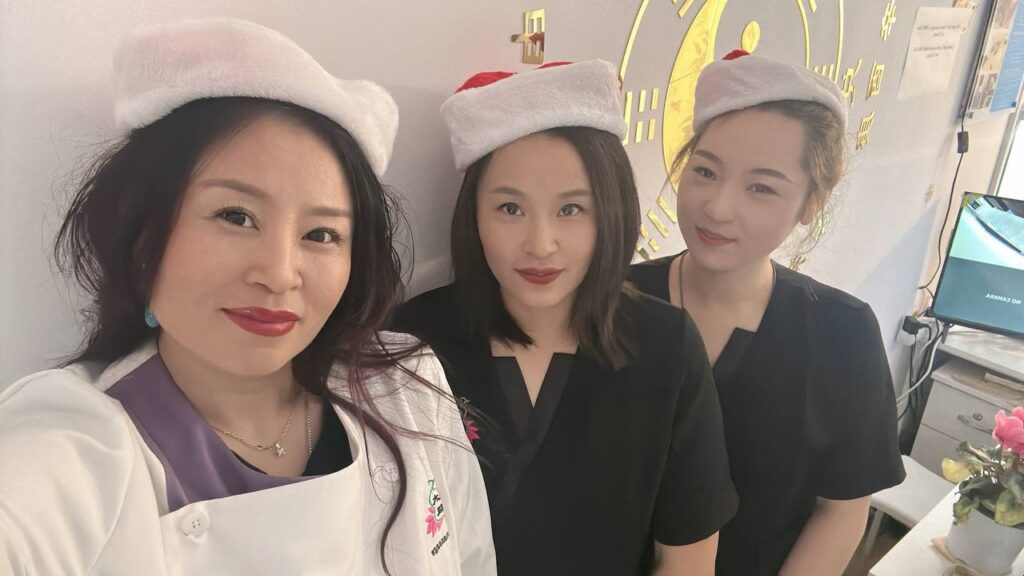
TaiChi team

Discover the Harmonizing Touch of Chinese Massage – Deep Relaxation for Body and Mind

In our studio, Traditional Chinese Massage brings tranquility to every muscle and vitality to every energy flow.

With millennia-old techniques, tension is naturally released, stress is reduced, and your body regains the lightness it was missing.

Every session aims to open blockages, soothe the mind, and restore your body’s inner harmony.

Enjoy an experience where relaxation becomes part of your day — a pure moment of well-being that belongs to you.

Allow our hands to guide you towards balance and renewed energy.

Book now and experience the serenity you deserve.

Discover the Healing Art of Chinese Massage – A Moment of Relaxation in Our Massage Studio

Through the ancient techniques of Traditional Chinese Massage, tension vanishes, energy flows freely, and your body rediscovers its natural balance.

Every movement is designed to relieve stress, improve circulation, and restore your inner vitality. Experience a therapy that connects body and mind — a moment of tranquility in your busy day.

Let us guide you toward your harmony and rediscover your balance.

Book your session now and allow us to bring you the quiet energy your body and mind deserve.

Therapeutical Escape

A moment away from the daily noise – Relaxation and Energy in one place. This video takes you right inside our center, where traditional Chinese techniques work for your well-being.

From deep tissue massage to energy rebalancing techniques, the best place to help you reconnect.


➡️ Book your session now!

Relaxation and recovery massage

Your body has always supported you, no matter the challenges. Now it’s time to give back! Discover how massage and Traditional Chinese Medicine can soothe tired legs and restore your energy.


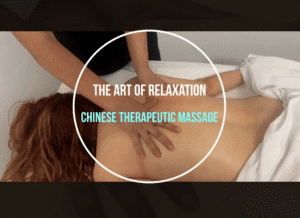
The Art of Relaxing Massage

Our expert therapists at Tai Chi focus on combining traditional Chinese medicine techniques to relieve stress and revitalize your energy.

Imagine a peaceful escape where tension disappears and balance is restored. Our massages not only relax the muscles but also nourish your spirit, promoting inner equilibrium. Allow the gentle, yet effective touch to transport you to a world of tranquility, where your only responsibility is to breathe and relax.

Ready to embrace a revitalized version of yourself? Book your appointment today and step into a journey of healing and harmonious well-being.

https://youtube.com/shorts/qyDLmiNasoQ?feature=share

🌿 Relax, Restore and Renew with Chinese Massage 🌿

🌿 Relax. Restore. Renew. 🌿
✨ Let go of stress and invite balance back into your body. ✨
🎥 This video invites you to a relaxing massage experience, where every touch brings:
💆‍♀️ Deep relaxation – release physical and mental tension
🔥 Therapeutic warmth – feel your worries melt away
🌸 Inner regeneration – rediscover calm, energy, and well-being
📍 Cozy, clean and modern location
🕯 Techniques based on Traditional Chinese Medicine
💛 Tailored massage for you
📲 Book your session now and give yourself a moment of peace.
Your body deserves it. You deserve it. 🌺
🌐 www.taichi.al/book-now
📱 068 541 4141