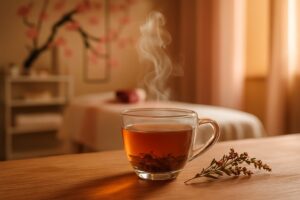
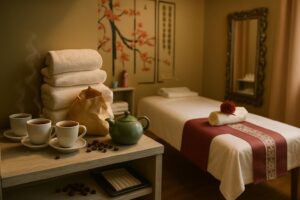
You want a good tea? Higher your standards!

I need to talk about tea, because I have been quietly suffering about it for a while now.

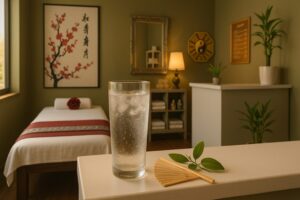
In China, tea is not a hot drink. It is a whole opinion. Where I grew up, “a good tea” means the leaves, the water, the temperature, the second and third steeping that are often better than the first. You don’t rush it. You don’t drown it in sugar. You certainly don’t leave the bag in until the cup turns the colour of a wooden table.

Then I came to Albania, where I was handed – with enormous warmth and pride – a çaj that was mostly sugar wearing a tea costume. And everyone looked at me so happily that I drank it, smiled, and said it was lovely. Reader: I have said it was lovely many times now.

I don’t want to start an international incident, so let me be fair. Albanian mountain tea – the real çaj mali, the kind that actually comes off a hillside – is genuinely wonderful, and I’ve become a little obsessed with it. That one, we agree on completely. My quarrel is strictly with the version that is ninety percent sugar and served scalding in a glass that burns three of my fingers.

So here is my gentle, foreign, entirely unsolicited advice to my adopted city: you already have good tea growing on your own mountains. Raise your standards. Steep it a little longer, sweeten it a little less, and let the leaf do the talking.

I will, of course, keep drinking whatever you hand me and telling you it’s lovely. Some standards are worth keeping. Politeness is one of them.

Yang Wang is a Liaoning transplant who runs a small Chinese massage parlour a short walk from Bulevardi Myslym Shyri – and has strong feelings about tea.

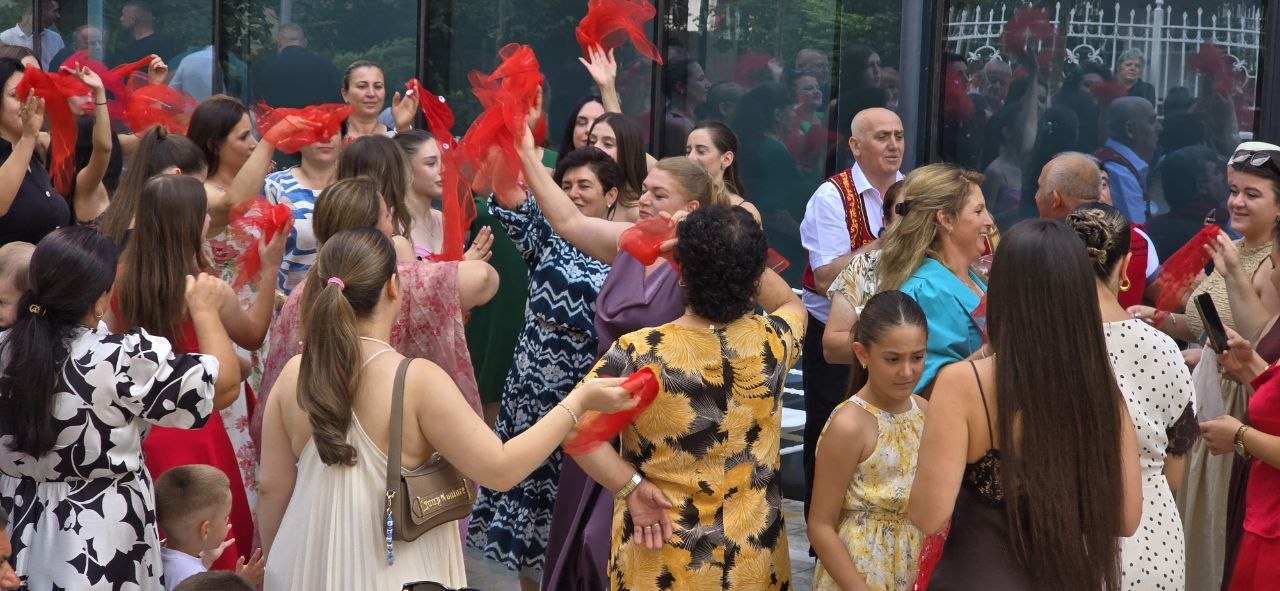
The wedding downstairs — Urime and a small gift!

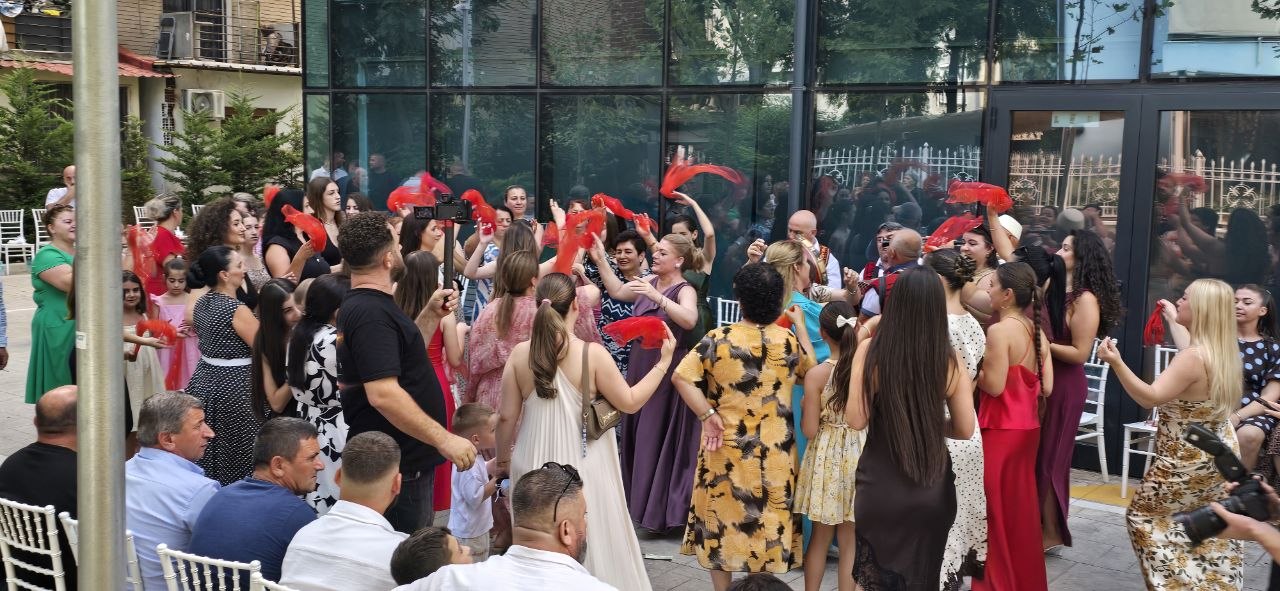
It started outside. The kind of music that belongs in the street — a deep, joyful thrum rolling out through the doors of Si Hotel next door and into the afternoon. We looked at each other. A wedding.

All three of us put down what we were doing and went downstairs.

Candy bags and congratulations

The entrance had transformed. There were flowers, relatives in their best clothes, and the particular organised chaos that only a wedding morning can produce. The bride was radiant. The groom looked happy in the way people do when they are simultaneously terrified and completely certain. We shook hands, offered what Albanian we had, and were each handed a small bag of sweets — the kind you do not refuse under any circumstances.

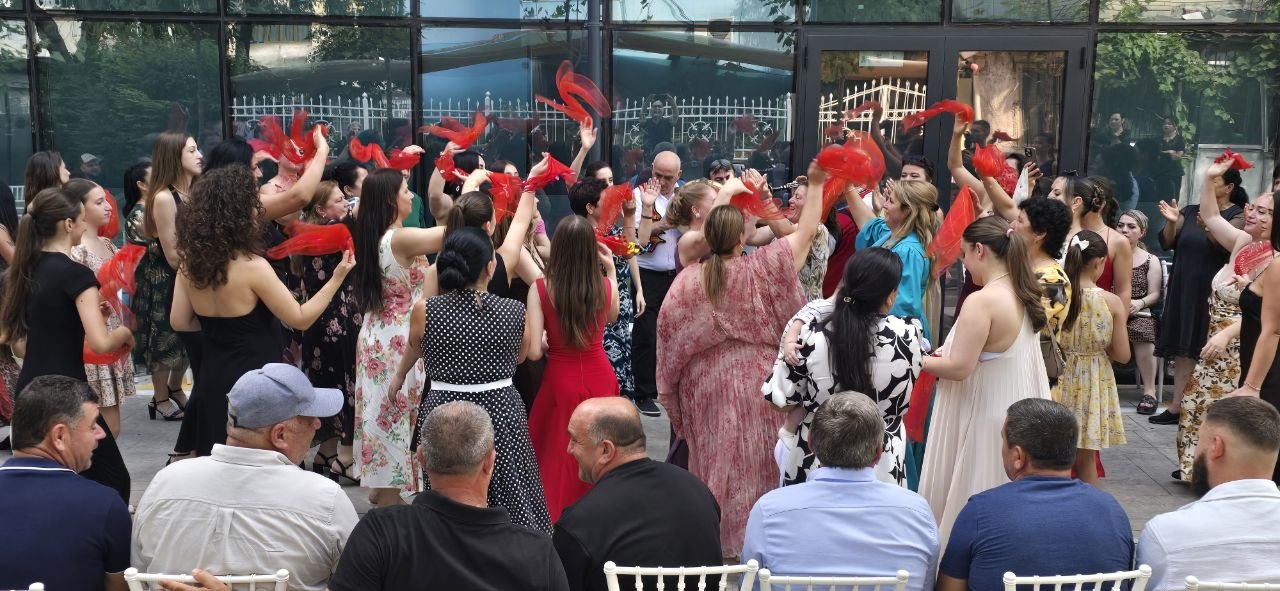
And then the dancing started.

The celebration moved out into the street — music, movement, the whole procession carrying its joy into the open air. We followed. People were already moving, not waiting for a cue, not needing an invitation. Just joy, spilling down the steps and along the pavement. We liked them immediately, the people dancing and being joyful, and we felt welcomed into their celebration without even asking. One more reason we love Albania so much: this is a country whose people make you feel at home before you have had time to feel like a guest.

Back upstairs, sitting with our candy and the warmth of it all still with us, we had the same thought at almost the same moment: we should give them something.

The wedding downstairs — Urime and a small gift!

The gift

A couple massage. Not because it is the most expensive thing we offer. Because it is, genuinely, one of the nicest things two people can do together after a day that enormous. The ceremony, the family, the toasts, the shoes — by evening, even the happiest newlyweds are carrying a great deal in their shoulders.

Sixty quiet minutes side by side. Warm, quiet, no more decisions to make. That is the gift.

To the newlyweds: Urime! Contact us to receive your couple massage gift!

The wedding downstairs — Urime and a small gift!

A small building, a real community

I have been in Tirana since 2020. What I did not expect — and what I am still a little moved by — is how much ordinary neighbourhood life here resembles what I knew growing up: people who actually know each other, doors that open, and strangers who dance in the street and want you to join them.

We are a small parlour. We do not have a pool or a hammam. What we do have is a proper massage, a clean warm room, and the instinct to go downstairs when someone is getting married next door.

You can find out more about what a couple massage looks like in practice on our service page.

The wedding downstairs — Urime and a small gift!

Yang Wang practises therapeutic massage and acupuncture at Chinese Massage – Tai Chi Tirana. The parlour is in central Tirana, a short walk from Bulevardi Myslym Shyri.

How much hotter can a northern girl get?

I grew up in Liaoning, in the northeast of China, where winter is a serious person. Real winter – the kind that arrives in November and doesn’t apologise until spring, where the air bites your face and everyone walks fast with their shoulders up around their ears. As a girl I complained about the cold the way all northern children do: loudly, constantly, and without ever actually wanting it to go away.

So I thought I understood weather. I thought I was tough about it.

Then July in Tirana happened to me.

I want to be dramatic and say I have never known heat like this – but the honest truth is that my body has simply filed a complaint it has never filed before. By eleven in the morning I am negotiating with the fan. By two I have accepted that the fan is winning. I have eaten more watermelon this month than in my entire previous life, I keep a cold bottle pressed to my wrist like it’s medicine, and I have developed strong opinions about which side of the street has shade.

My Albanian friends find this hilarious. “But you’re from the cold place,” they say – as if that should make me better at summer, when in fact it has made me spectacularly worse. A northern girl, wilting, in front of everyone.

I’m told August is warmer. I’ve decided not to believe that yet.

So if you see a small Chinese woman moving very slowly from shade to shade near Myslym Shyri, holding a cold bottle like a treasure – hello. That’s me, surviving. Ask me again in winter, and I’ll be the happiest person in Tirana.

Yang Wang is a Liaoning transplant who runs a small Chinese massage parlour a short walk from Bulevardi Myslym Shyri.

The Liaoning Aunts: A History of Quiet Women

There were three older women in my family in Liaoning whose lives stayed in the background of our family memory, while the louder lives of the men around them were the ones that got told. This piece is about them — my three aunts — and about the kind of quiet steady work that women have done across many generations that does not get recorded but without which nothing else would have held together.

This is a personal piece. It is not a treatment guide. But it sits behind a lot of how I think about the older women who come into the parlour, and writing it down has been on my mind for a while.

What I know about my aunts

I had three aunts on my father’s side in Liaoning. The eldest, born in 1928, was my grandfather’s first daughter. The middle, born in 1933, was a year older than my father. The youngest, born in 1940, was the only sibling in their generation who got past primary school in any meaningful way — she trained as a schoolteacher and taught in a small town outside Shenyang for forty years.

The eldest aunt died in 2007. The middle aunt died in 2018. The youngest is still alive, in her mid-eighties, living quietly in the same town where she taught.

They lived long lives, the three of them. They were the kind of women who watched their families grow up around them, made the meals, kept the bedding aired, fed the chickens, remembered every birthday, knew which cousin was angry with which other cousin, kept the small disputes from becoming large ones.

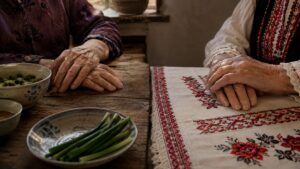
What I remember most about them, from the few visits we made when I was a child, is the kitchen of the eldest aunt. It was a long narrow room with a kang along one wall — the traditional brick bed-platform heated from underneath by the cooking fire. In winter, all the women in the family sat on the kang in the late afternoon, peeling vegetables, chopping garlic, drinking strong tea. The conversation was constant and never about anything in particular. It was the steady murmur that I now associate with how my aunts spent most of their adult lives.

The eldest aunt was the cook. She made a Liaoning cabbage stew with pork that, in my memory, is the food I have spent twenty years in Europe trying to find equivalents for. The middle aunt was the one who kept the accounts of who owed what to whom — not in money, but in favours, in eggs, in the borrowed jar of fermented bean paste that needed to be returned. The youngest, the schoolteacher, was the one who handled anything that required reading or writing. They divided the work without ever explicitly negotiating it.

None of them held any visible position outside the household. The eldest worked as a textile factory worker for thirty-eight years. The middle worked as an administrative assistant in a state agricultural office. The youngest, the schoolteacher, was the most publicly active. Their visible lives were ordinary. Their interior lives, and the family network they managed between them, were the larger thing.

The work that does not get recorded

I have come to see, with the perspective of distance and time, what my three aunts actually did across their long lives. None of it produced dramatic events. None of it generated biographies. But it was the work without which the events that do get recorded could not have happened.

The work of holding family together, across generations, falls disproportionately to women whose names do not appear in any chronicle. The wars and the careers and the public achievements are credited to visible people whose names enter the histories. The continuity — the meals, the mended quarrels, the remembered birthdays, the kang kept warm — is maintained by mostly-invisible women whose names rarely do.

I have come to think that one of the small useful things we can do, as people who notice what happens around us, is to give some attention to these women specifically. Not to over-romanticise them — my aunts were ordinary women doing necessary work, not saints — but to give them the kind of attention that the larger world did not. Naming them, in the small writing I do, is a way of saying that this kind of work matters, even when no one is keeping a record of it. (For another small piece on how Chinese calendar time shapes my year, I have written about the Chinese zodiac and what each cycle quietly carries.)

How this connects to the work I do

I work with many women in their forties, fifties, and sixties. They are the demographic that comes most often to the parlour. They come in carrying the accumulated weight of having held things together for decades. Family, careers, ageing parents, children growing up, complicated relationships, the practical running of households and small businesses.

The pattern of their bodies, when they come in, is recognisable. The upper back tension from carrying. The lower back tension from constant low-grade vigilance. The neck and shoulder restrictions from years of compromise postures. The chronic fatigue of having been responsible for too much for too long. Many of them will still insist, settling onto the table, that they are fine — do të kalojë, it’ll pass. The shoulders, when I reach them, tell a longer story.

I do not talk about any of this during the sessions. The sessions are quiet, focused on the work that needs to be done. But the parallels are present in my mind. I am working on a body that has been doing, for many years, the kind of work my aunts did in their Liaoning kitchen. The work is not recognised by the larger world. The body remembers it. Part of what bodywork can offer, in the right register, is a small acknowledgement that the body has been carrying something significant and that it is allowed, briefly, to put it down.

That is a small thing. It is, I think, also a real thing.

The youngest aunt, the one still alive

My youngest aunt is the one who is still here. She is now eighty-five. We speak by phone roughly once a month. The phone calls are mostly about ordinary things — what she ate, what she read, who came to visit, the weather in Liaoning. She does not have many strong opinions about large matters. She has the calm, settled register of someone who has lived a long time and seen enough not to be in a hurry.

The last time we spoke, a few weeks ago, she asked me about Tirana. She has never been to Albania and never will go — she is not in a condition to travel — but she likes to hear small details about my life here.

I told her about the parlour. About the clients who come every week. About a particular older Albanian woman who has been a regular for several years and who reminds me, in some way I cannot quite name, of her.

My aunt asked what the Albanian woman looked like.

I described her — the careful posture, the practical clothes, the warm but reserved manner, the way she sometimes sits in our front room after a session and seems to be thinking about things she does not put into words.

My aunt was quiet for a moment. Then she said, “She sounds like one of us.”

I told her she was probably right.

This is, in the end, what I think my aunts and the older clients at the parlour share. They are the women who hold things together. They have been doing this work for many generations, in Liaoning kitchens and in Tirana front rooms alike. They will, presumably, continue to do it. The least I can do, in the small writing I send out into the world, is to notice them.


Yang Wang practises Chinese medicine at Chinese Massage – Tai Chi Tirana.
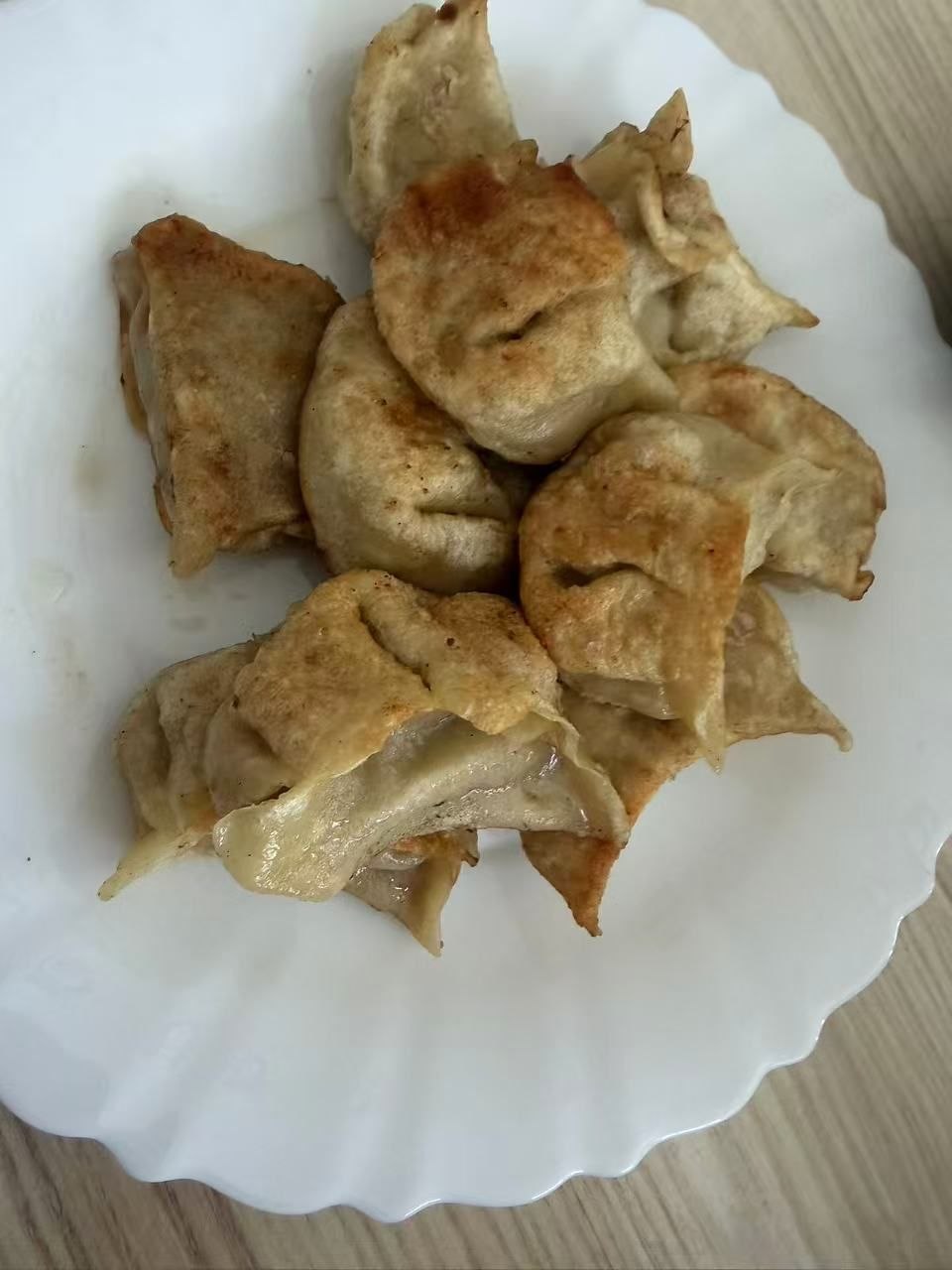
Homemade Jiao Zi and a Long Day Well Spent

Some evenings the parlour empties slowly. The last client leaves, the sheets are folded, and the four of us — Ying, Xiao, Wei, and I — stand there for a moment in that particular silence that only comes at the end of a day when you have used your hands without stopping. Someone says jiao zi? and the answer is always yes.

Tonight it is Xiao’s turn to lead, which means we are all in luck.

Xiao’s Dumplings Are Not a Democracy

Xiao makes jiao zi the way her grandmother made them in Liaoning: the filling first, then the dough rested for exactly as long as it takes to argue about the filling. The ratio of pork to cabbage is a matter she does not discuss. When Ying once suggested more ginger, Xiao looked at her the way you look at someone who has said something technically in Chinese but somehow wrong.

The rest of us are allowed to fold. This is the generous part. Ying folds quickly and her pleats are even. Wei folds slowly and his are — well, they hold together, which is the main thing. My own folds look like I am attempting origami for the first time after a twelve-hour shift. Xiao says nothing, but she refolds mine when she thinks I am not watching.

!Homemade Jiao Zi and a Long Day Well Spent

The Conversation That Happens Every Time

While we fold, we talk about home. This is not a sad conversation — it is a warm, slightly chaotic one that jumps between Mandarin and whatever Albanian word someone picked up from a client that day. Someone mentions their mother’s version of the filling. Someone else says their father would boil half and pan-fry half, and this produces a heated debate about which method is correct (it is pan-fried, obviously, but we let Wei have his opinion).

Wei pulls up a voice message from his family on his phone and plays it without warning, filling the kitchen with his aunt’s rapid northern Chinese, which none of us can quite follow because she speaks faster than anyone should. We laugh. The dumplings keep coming.

What Tirana Has That Home Did Not

Here is something I did not expect when I arrived: Tirana does not slow down in the evenings — it is a lively capital city that hums on into the night. But something in us needs to slow down, to step out of the day and reflect. That is harder to find when you are far from home. Here, after the parlour closes, we give ourselves that pause.

A neighbour knocked on our door once to bring us peppers from her balcony garden and stayed for forty minutes. We did not share a language, but we shared the peppers, and somehow that was enough.

The jiao zi fit into that pause perfectly. You cannot rush them. The folding takes time, and the talking fills the time, and by the end of it you have forgotten to be tired.

The Boiling Is the Dramatic Part

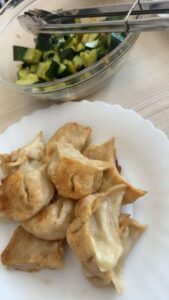
Xiao drops them into the pot in batches, and we all crowd around like it is a sporting event. When they float to the surface she counts to thirty in her head — she says this out loud every time as if reminding herself — and then fishes them out. The ones that split open are the cook’s privilege. Xiao eats these without ceremony, standing at the stove, which feels exactly right.

We eat with black vinegar and a little chilli oil. Wei insists on soy sauce as well, which Xiao permits but does not endorse. The kitchen window fogs up. Someone’s phone plays a playlist that is half Jay Chou and half, inexplicably, an Albanian iso-polyphony recording that Ying found and thought was beautiful, which it genuinely is.

Not a Recipe, Just an Invitation

I am not going to give you the recipe. That belongs to Xiao and her grandmother. What I will say is that if you ever find yourself in Tirana, far from home, with flour on your hands and your colleagues arguing cheerfully about ginger — you are probably right where you should be.

If you want to find us before the jiao zi hour, we are at the parlour most days, using those same hands for something slightly different.

Yang Wang practises Traditional Chinese Massage at Chinese Massage – Tai Chi Tirana. The parlour is in central Tirana, a short walk from Bulevardi Myslym Shyri. Names in team stories appear with permission and affection.