The wedding downstairs — Urime and a small gift!

It started outside. The kind of music that belongs in the street — a deep, joyful thrum rolling out through the doors of Si Hotel next door and into the afternoon. We looked at each other. A wedding.

All three of us put down what we were doing and went downstairs.

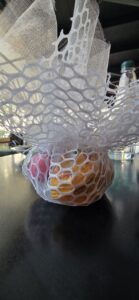
Candy bags and congratulations

The entrance had transformed. There were flowers, relatives in their best clothes, and the particular organised chaos that only a wedding morning can produce. The bride was radiant. The groom looked happy in the way people do when they are simultaneously terrified and completely certain. We shook hands, offered what Albanian we had, and were each handed a small bag of sweets — the kind you do not refuse under any circumstances.

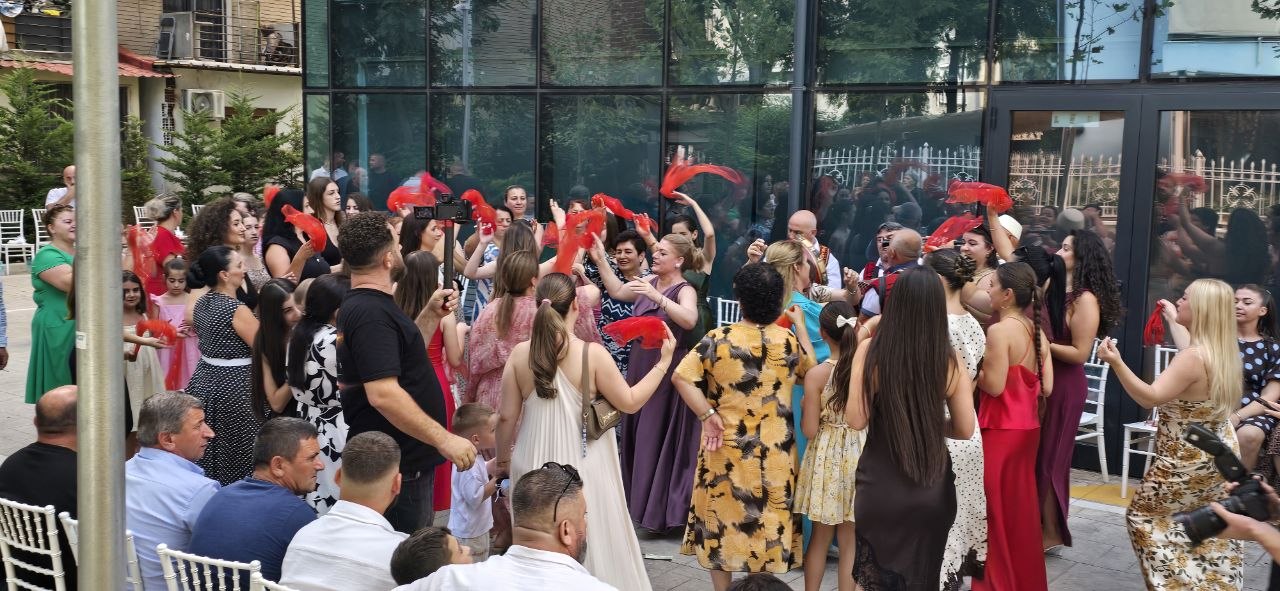
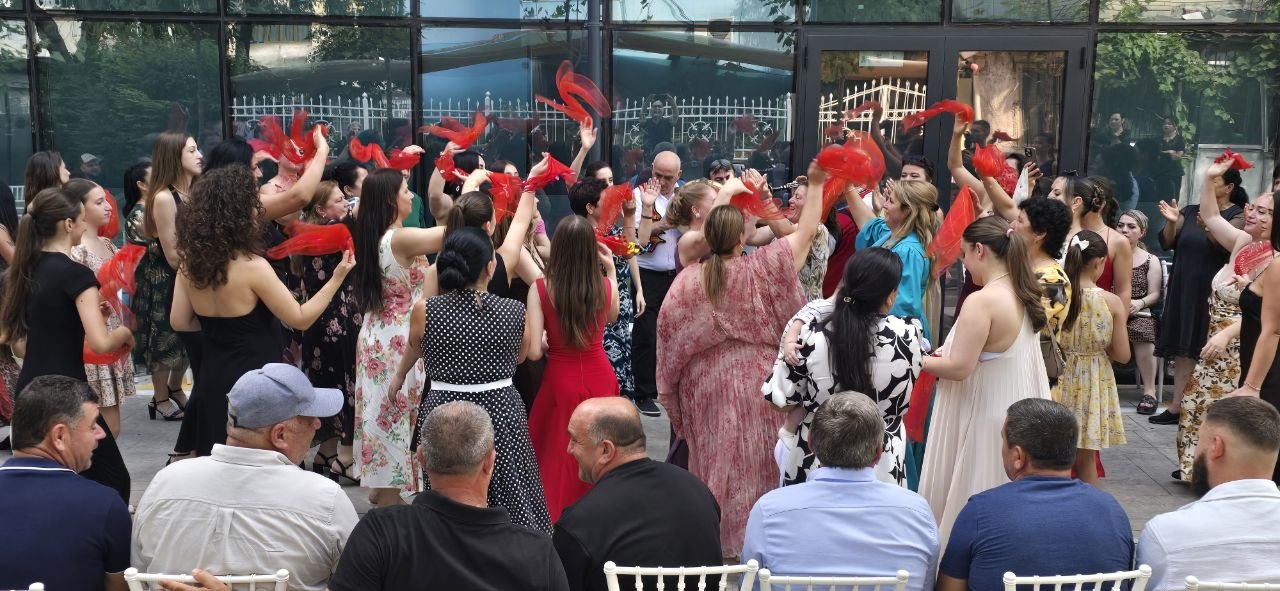
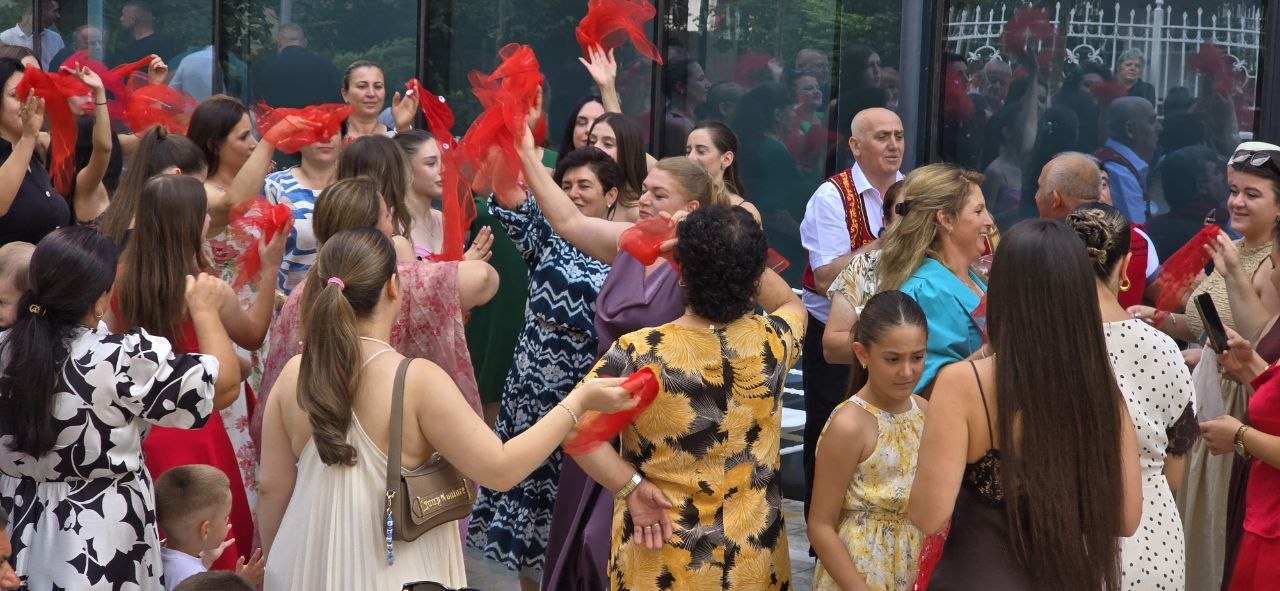
And then the dancing started.

The celebration moved out into the street — music, movement, the whole procession carrying its joy into the open air. We followed. People were already moving, not waiting for a cue, not needing an invitation. Just joy, spilling down the steps and along the pavement. We liked them immediately, the people dancing and being joyful, and we felt welcomed into their celebration without even asking. One more reason we love Albania so much: this is a country whose people make you feel at home before you have had time to feel like a guest.

Back upstairs, sitting with our candy and the warmth of it all still with us, we had the same thought at almost the same moment: we should give them something.

The wedding downstairs — Urime and a small gift!

The gift

A couple massage. Not because it is the most expensive thing we offer. Because it is, genuinely, one of the nicest things two people can do together after a day that enormous. The ceremony, the family, the toasts, the shoes — by evening, even the happiest newlyweds are carrying a great deal in their shoulders.

Sixty quiet minutes side by side. Warm, quiet, no more decisions to make. That is the gift.

To the newlyweds: Urime! Contact us to receive your couple massage gift!

The wedding downstairs — Urime and a small gift!

A small building, a real community

I have been in Tirana since 2020. What I did not expect — and what I am still a little moved by — is how much ordinary neighbourhood life here resembles what I knew growing up: people who actually know each other, doors that open, and strangers who dance in the street and want you to join them.

We are a small parlour. We do not have a pool or a hammam. What we do have is a proper massage, a clean warm room, and the instinct to go downstairs when someone is getting married next door.

You can find out more about what a couple massage looks like in practice on our service page.

The wedding downstairs — Urime and a small gift!

Yang Wang practises therapeutic massage and acupuncture at Chinese Massage – Tai Chi Tirana. The parlour is in central Tirana, a short walk from Bulevardi Myslym Shyri.

A summer reset, together

August in Tirana empties out slowly. The city thins, the office grows quiet, half the people you know message you from a beach somewhere. And in that lull, the couples who stay behind – or who come home from the coast more tired than when they left – start looking for something small to reset with. Not a holiday. Just an hour where nobody needs anything from them.

There’s a couple I’ve seen a few times now who book exactly for this. They don’t arrive with a crisis. They have jobs, a car that needs something, the ordinary weight two people carry when the summer has been long and hot. They come in, take the double room, and leave looking like they’ve each put down a bag they’d been holding without noticing.

Rest is easier in company

There’s a quiet thing that happens when two people relax in the same room. Breathing slows and drifts into the same rhythm; the body reads the calm next to it and lets go a little faster. It’s the same reason a hard week feels lighter the moment you finally sit down with someone instead of alone. In the double room, with two therapists working at the same unhurried pace, that shared settling is the whole point – not a luxury add-on, just what happens when two tired people stop at the same time.

The summer that quietly wears you down

Heat is sneaky. You don’t feel it as tension the way you feel a cold-weather ache, but it’s there: shorter sleep, less water than you think, a low background irritation that tightens shoulders and shortens tempers. By the end of August most people are running on a reserve they’ve stopped topping up. A shared hour on the table won’t change the weather, but it resets the dial – the two of you leave a little kinder to each other, which across a long summer is worth more than it sounds.

What you’re actually booking

I’ll be plain about it. We’re a small place – two single rooms and one double, kept spotlessly clean, run by people who care more about the hour on the table than the decor around it. No sauna, no pool, none of the expensive extras that make a spa feel grand and charge you for the privilege. Just a warm, quiet room and a full hour where the two of you are the only thing on the schedule.

A good week for it

You don’t need an anniversary or an excuse. A slow August evening is reason enough. Book the double room, leave your phones in your bags, and let the summer lift off both your shoulders at once. That’s the whole idea – a reset you take together, and then carry back out into the heat a little lighter.

Yang Wang practises therapeutic and relaxation massage at Chinese Massage – Tai Chi Tirana. The parlour is in central Tirana, a short walk from Bulevardi Myslym Shyri.

Couples Massage Is Not What Movies Show — A Practical Guide

There is a particular image of couples massage in popular culture that bears almost no resemblance to what the experience actually is. The image involves rose petals on the table, candles arranged in clusters, soft jazz, two glasses of champagne waiting for the end of the session, and a kind of glamorous romantic intimacy that exists more in advertising than in any real spa I have visited or worked in.

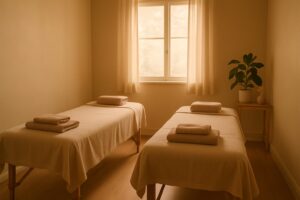
The reality is simultaneously more ordinary and more interesting. Two people in the same room, on two tables, receiving professional bodywork in parallel. The room is warm, comfortable, well-lit but not bright. There is no champagne; most couples here would rather have a strong coffee afterwards anyway. The therapists are present and focused. The couple, depending on their preference, either talks quietly during the early part of the session or remains silent throughout. There are no rose petals.

The interesting part is what the shared experience actually does for the couple, which is often different from what people expect when they book the session for the first time. This piece is for couples considering booking a session and trying to figure out what to expect, and for anyone receiving the session as a gift and wondering what they have signed up for. (There is an earlier short piece, a growing trend in Tirana — couples discovering Chinese massage together, which sketches the broader context.)

What it is, and what it is not

A couples massage at our parlour is two simultaneous individual sessions performed in the same room by two therapists. The therapists work independently of each other — this is not four-hands work, where the therapists coordinate. Each therapist focuses on their own client. The clients are next to each other but are receiving separate treatments.

The choices we make about pressure, technique, and protocol are determined individually for each client at intake. If one partner wants firm pressure on a specific complaint and the other wants gentle relaxation work, we deliver these different sessions in parallel. The fact of being in the same room does not require the two sessions to be identical.

What couples massage is not: a romantic experience designed to produce intimacy. Romance is the client’s business, not ours. We provide professional bodywork. If the shared experience produces a quality of connection between the partners, that is welcome, but we do not engineer it. Our job is to deliver excellent sessions to each person on the table.

What couples massage is also not: a discount for booking two. The pricing reflects the use of two simultaneous therapists and the dedicated room. We do not offer a discount for the couples format. If price is the deciding factor, two separate single-therapist sessions on the same day are often more economical.

Why people book it

There are several reasons couples choose this format over individual sessions, and the reasons matter because they affect what kind of session is most appropriate.

Convenience. The couple has a single window of time available — a Sunday afternoon, a weekend in Tirana, a wedding anniversary on a specific evening — and they want to share the experience rather than each go separately. The couples session lets them book one appointment instead of two.

Comfort with the unfamiliar. One partner has never had a professional massage and is nervous about the experience. Having the other partner in the room reduces the anxiety considerably. We see this frequently — a partner who has been getting regular sessions for years brings the other partner in for the first time, and the shared format makes the introduction much smoother.

Shared rhythm. Some couples have built a regular practice of receiving sessions together as part of their ongoing relationship. The shared time is a touchstone in the week or month. They have decided, deliberately, that the parallel experience is part of how they care for themselves together.

Special occasions. Anniversaries, birthdays, milestones in the relationship. The session marks an event in a particular way that individual sessions would not.

Discharge after travel. A couple has just arrived in Tirana — sometimes from abroad, sometimes after a difficult drive — and wants to recover together before the rest of their trip begins.

The booking pattern that works less well, in my experience, is the booking pattern that approaches the session as a substitute for difficult conversation or accumulated relationship tension. The session itself cannot resolve relationship strain. It can sometimes create conditions in which strain becomes more workable, but it is not a therapeutic intervention for relationships. We are massage therapists, not couples counsellors.

The intake conversation

The intake before a couples session is slightly different from the intake before an individual session. We ask each partner the same questions we would ask any individual client — about their physical complaints, their history with massage, their preferences for pressure and technique — but we do these intakes separately. Each partner has their own brief private conversation with their therapist before the session begins.

The reason for the separate intakes is practical. People are sometimes reluctant to mention certain things in front of their partner. A specific medical condition they have not yet disclosed. A particular area of pain they prefer not to discuss. A psychological context (recent grief, anxiety about something) that they would rather their therapist know about quietly. The separate intakes allow each client to give us the full information we need without performing it for the partner.

The therapists then briefly coordinate between themselves before the session begins, agreeing on the overall rhythm and ambient temperature and which protocols each will use. The clients lie on their tables. The session begins.

The early minutes

The first minutes of a couples session have a particular quality that is different from individual sessions. Both clients are slightly aware of the other’s presence. The room has more sensory input than a single-client room would. There is a small ongoing recalibration as each partner registers that the other is also being attended to.

For many couples, this awareness gradually fades over the first ten to fifteen minutes. The partners settle into their own experiences. By the twenty-minute mark, most couples have entered what is essentially a parallel rather than shared experience — they are both receiving sessions in the same physical space, but their attention has turned inward.

For some couples, the awareness of the other persists throughout the session and is actually part of what they value about the format. They like knowing that the other is also being cared for at the same time. The parallel experience, even without explicit interaction, has a quality of shared time that they appreciate.

Neither pattern is more correct. The session works either way.

A small parlour observation

I have been doing this work for many years, and I have observed an interesting pattern in couples sessions that I do not entirely have an explanation for.

Couples who have been together for more than five or six years tend to develop a kind of breathing synchronisation during a couples session that does not happen in individual sessions. About twenty minutes in, the breathing patterns of the two partners begin to align. They are not visible to the partners themselves — neither of them is consciously coordinating — but if I watch the rise and fall of both chests, I can usually see the synchronisation begin to emerge around the twenty-minute mark.

This is not, as far as I can tell, the same phenomenon as the breath-matching that occurs between trained therapy partners (which I described in a piece about four-hands work). The therapist breath-matching is the result of deliberate training. The couple breath-matching seems to emerge spontaneously, perhaps because the partners’ nervous systems have, over years of intimate cohabitation, developed an unconscious responsiveness to each other.

I have begun, when I notice this happening, to think of it as evidence that the relationship is in a state of basic regulation. The two nervous systems are speaking to each other quietly. The session is providing the conditions in which this normally invisible communication becomes briefly observable.

When the synchronisation does not happen — which is rare, but it occurs — it sometimes points to a couple that is going through a more difficult period. I do not comment on this to the clients. It is not my business and might be misleading anyway. But it is, for me, one of the small interesting features of the work.

What to expect afterwards

The post-session experience for couples is often slightly different from individual sessions in one specific way: many couples report that the conversations they have in the hour after the session have a different quality than usual.

The parasympathetic state produced by the session shifts the nervous system into a more open, less defended mode. Combined with the shared experience just completed, this often makes whatever conversation arises between the partners more relaxed, more honest, less reactive. Couples often go out for a meal afterwards and find that the conversation flows easily, that small irritations from the past week feel less important, that they can talk about something that has been weighing on them without it becoming a problem.

This is not the session’s purpose. It is a useful side effect.

The effect is usually best preserved by not planning an immediate high-stimulation activity after the session. A quiet meal at a small restaurant near the parlour, a walk, an unhurried afternoon — these honour the post-session state. A loud event, a difficult social situation, a stressful conversation — these tend to override the effect quickly.

When this is the right choice

A couples massage session is particularly appropriate when:

The two partners both want a professional bodywork session and find it more pleasant to share the timing.

One partner is new to massage and the other’s presence helps with comfort.

The relationship has a regular self-care rhythm and the session fits into it as part of the broader pattern.

A special occasion calls for a shared experience that is not strictly romantic in the conventional sense.

It is a less appropriate choice when:

The partners have significantly different bodywork needs that would be better served by different therapists or different types of sessions.

One partner wants to discuss their physical complaints in detail and the other partner does not want to hear about them.

The relationship is in a stressed period and the session is being booked as an attempt to repair the strain.

The booking is being made primarily for the romantic-package aesthetics rather than for the therapeutic value.

For couples who have not yet tried it, my honest recommendation is to come once, see what the actual experience is like, and decide afterwards whether the format suits you. Some couples discover that they prefer it. Others discover they prefer individual sessions. Either answer is fine, and the discovery is the value of the first try.


Yang Wang practises Chinese medicine at Chinese Massage – Tai Chi Tirana. The parlour is in central Tirana, near Bulevardi Gjergj Fishta.

Couple massage. Why the both of you need it urgently.

There’s a particular silence that settles over the double room about ten minutes in. Two people walk in still finishing the argument they started in the car – the parking, the in-laws, whose turn it was to call the plumber – and then, quietly, nobody is talking anymore. Not because they’ve made peace. Because their shoulders have.

I notice it most in summer. Tirana in August is its own kind of tired. The heat sits on you by eleven, the traffic is shorter-tempered than usual, and everyone you love is slightly damp and slightly irritated. When people feel like that, they don’t think massage. They think a holiday we can’t book, or we just need one quiet weekend. But an hour on two tables, side by side, often does what the weekend doesn’t.

Two tables beat one sofa

When you relax next to someone, your bodies quietly borrow calm from each other – slower breathing, a heart rate that drifts down to meet theirs. On a shared sofa that almost never happens, because one of you is on a phone and the other is already thinking about dinner. In the double room there are no phones and nothing to decide. Two therapists, working at the same unhurried pace, and the two of you finally still in the same place at the same time. It sounds like a small thing. Couples tell me afterwards that it wasn’t.

The summer version of “we’re fine”

Heat tightens people in ways they don’t notice. You drink less water than you think, you sleep a little worse, and your neck and lower back clench quietly through every hot afternoon. “We’re fine” is what you say once you’ve stopped noticing. The couples I see in July and August usually book for a reason that isn’t really the reason – before a trip, after guests finally leave, the week the children go to their grandparents. They come for the excuse. They come back for how the evening felt afterwards.

What the double room actually is

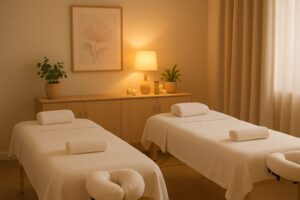
Let me be honest about what we are, because it’s the point. We’re a small parlour – two single rooms and one double. We are not a spa with a sauna and an infinity pool, and we’ve never wanted to be; that kind of place charges you for the marble, not the massage. What we put the money into is the hour itself, and into keeping the room spotless and the welcome warm. So the double room is simple: soft light, clean linen, two therapists who know exactly what they’re doing, and the two of you, undisturbed, for a full hour.

When to book it – and when not

Book it when you’re both running on empty at the same time, which in a Tirana summer is most weeks. Book it before the long drive to the coast, not after a heavy lunch. Don’t book it expecting it to settle an argument – it won’t referee anything. It simply gives you both a quiet hour in the same room, which, far more often than people expect, turns out to be the thing you were actually missing.

The both of you don’t need it urgently the way a headache needs a tablet. You need it the way two tired people need to sit down together and stop, before they forget how. This week is a good week for that.

Yang Wang practises therapeutic and relaxation massage at Chinese Massage – Tai Chi Tirana. The parlour is in central Tirana, a short walk from Bulevardi Myslym Shyri.

Wedding Anniversary Couples Massage — The Returning Pair

There is a couple who come to the parlour every March, in the second week, for their wedding anniversary. They have been coming for nine years. They will be married twenty years this coming March. The first session they booked with us was their eleventh anniversary, and they have not missed a year since.

I want to write about them because they have, in their quiet way, demonstrated something I have come to think about often — the role that small recurring rituals play in the long arc of a marriage, and the unexpected ways that something as ordinary as an annual massage session can become a marker of time and care.

This piece is for couples considering whether to make a couples massage a recurring practice rather than a one-time experience, and for the much smaller number of clients who have read the other couples massage piece and wondered what the long-term version of the practice looks like. (For the gift-giving register specifically — anniversaries, birthdays, year-end — I have a piece on Tai Chi massage gift cards that may be useful.)

How they started

I asked them once, in passing, how they had come to choose a couples massage as their anniversary tradition. The answer surprised me at the time.

It was not, they said, a romantic choice in any conventional sense. They had been married ten years. Their relationship was solid, but they had reached a point — common in long marriages — where the standard anniversary observances had become rote. The dinner at a nice restaurant. The card. The token gift. They went through these motions every year and they felt slightly performative. There is a particular Tirana restaurant table reserved for anniversaries, and most couples know the quiet weight of sitting at it with nothing new left to say. Neither of them was sure what would feel like a meaningful observance instead.

The wife had received a couples massage as a birthday gift from a friend several months before the eleventh anniversary. She had enjoyed it considerably. She suggested to her husband, half-jokingly, that they book one for their anniversary instead of doing the dinner that year.

He agreed, partly because he was as tired of the dinner as she was, partly because he was curious. They booked a session with us — their first visit to the parlour — and they had what they later described to me as “the most rested two hours we have had in months.”

They walked home together afterwards, stopped at a small restaurant for an unscheduled meal that ended up being more relaxed than any anniversary dinner they could remember. The next morning they both said, more or less independently, “We should do that again next year.”

They have done so for nine years now. It has become the anniversary observance, replacing the previous traditions entirely.

What the practice has evolved into

The original session was a simple couples massage in our standard format. Over the years, the practice has evolved into something slightly more elaborate, mostly through their own preferences rather than any suggestion from us.

They book a longer session now — ninety minutes rather than sixty — to give themselves more time. They schedule it for late afternoon so that they have an unhurried evening afterwards. They book a particular pair of our therapists with whom they have developed an ongoing rapport. They request specific elements they have come to value: a few minutes of synchronised work at the very beginning (a small touch we sometimes offer when both therapists in a couples session have also done four-hands training), an extended foot massage at the end, the same essential oil blend each year.

The session has become specific in the way that any annual tradition becomes specific over time — small accumulated choices that, together, constitute a ritual. The ritual would not look special to an outside observer. To them, it has become deeply familiar and quietly cherished.

After the session, they have a particular small restaurant they go to. It is not anywhere expensive or remarkable; it is a place near the parlour that they discovered the first year and have returned to every year since. The owner, who has come to recognise them after eight years of annual visits, brings them a particular bottle of wine without being asked.

What I have observed across nine years

The interesting thing about seeing a couple once a year for nine years is the long arc that becomes visible. Most of the year, I do not see them. We exchange a brief friendly email occasionally — they sometimes write to me when they have travelled and want to ask about a question they have about something they encountered. But the visits are once a year.

Across the visits, I have seen things I would not have seen at any other observation rate.

I have seen them get older together. The slight changes in posture, the subtle increase in chronic accumulated tension in certain areas, the gradual softening of the body that happens to all of us across our forties and fifties. They have aged side by side, in the same chronological direction, in the way that long marriages produce.

I have seen one of them through a difficult illness in year five — a six-month period when he was recovering from what had been a serious health scare. The session that year, I was particularly careful about, and they were noticeably more present with each other than they had been the year before. The shared experience, in a difficult year, served as a small claim that they were still doing the things they did together.

I have seen them through a family loss in year seven — her mother had died in January, two months before their anniversary session. They considered not coming that year and decided to come anyway. The session that year had a different quality. Quieter. Slower. We did not pretend the loss had not happened.

I have seen them in good years and ordinary years. The visits have, across the nine years, formed a kind of low-resolution photograph of a long marriage. Each year a single frame. Together, the frames make a portrait that is more honest than any annual photograph could be.

What this suggests about the practice

I do not want to suggest that any particular couples ought to make an annual massage session their anniversary observance. Different couples have different rhythms and different ways of marking time. The conventional anniversary dinner works beautifully for many couples and should not be abandoned for the sake of novelty.

What I think this couple’s practice suggests is something more general: the long-term value of small recurring rituals that involve both partners receiving care simultaneously. The ritual matters more than the specific form. A shared bodywork session is one form; there are others. What they have in common is that they create a small annual island in the year where both partners are simultaneously being attended to, not by each other, but together. The shared experience of receiving care is different from the shared experience of providing care, and many long marriages have an excess of the second and a shortage of the first.

For couples reading this who do not currently have such a ritual, the suggestion would be: consider whether there is something you could add to your year that would have this quality. A massage session is one option. A weekend at a guesthouse where neither of you has to do the cooking or the planning. An annual unplugged retreat in a quiet location. The specific form does not matter. The shared receiving of care, in a sustained way, is what does the work.

The besa of returning

There is an Albanian concept I have written about in other pieces — besa, the word given and kept. It usually appears in the context of promises made to others. But there is a smaller, equally important application: the promises one makes implicitly to one’s own marriage, and the keeping of them.

When this couple booked their second session, the year after their first, they were making a small implicit promise to themselves and to each other. They had chosen to do this again. The promise was not articulated. But the booking, repeated the following year, then the year after, gradually became a thing they were committed to.

Across nine years, the implicit promise has become a strong unspoken bond. They will come this year. They will probably come for many years to come. The ritual has acquired its own weight, beyond either of their individual preferences. They have built it together, year by year, and now it carries some of the relationship’s continuity in a quiet way.

This is what small recurring practices can do. They become structures that support the larger thing. The marriage is built of many such structures. The anniversary session is one of theirs.

A practical note for couples considering this

If you have read this and are thinking about establishing some version of this practice with your own partner, a few suggestions that draw on what I have observed in this couple and several other long-term recurring clients.

Choose a date that means something to you. Not necessarily the anniversary itself — they actually chose a date a few days off, because the actual anniversary was sometimes inconvenient. The date should be meaningful but flexible enough to schedule reliably.

Book it as early in the year as possible. Annual rituals fail when they are not scheduled in advance. Block the date a year ahead each time you complete a session.

Build a small surrounding ritual. The session itself is not enough; the dinner afterwards, the walk, the quiet evening — these are what make the day feel like an observance rather than an appointment.

Stick with the same parlour and the same therapists if you find a pair you trust. The continuity adds to the ritual. We have become, across nine years, familiar enough with this couple that the session feels like a small reunion as much as a treatment.

Do not abandon the ritual in difficult years. The years when you feel least like coming are often the years when the practice does the most quiet work for you. They came in the year of his illness and the year of her mother’s death, and they have told me both years were among the most valuable.

The marriage builds itself across many small practices. This is one couple’s version of one of theirs. There are many others worth building.


Yang Wang practises Chinese medicine at Chinese Massage – Tai Chi Tirana. Details have been altered to protect client privacy.
A Growing Couples Trend: Chinese Massage in Tirana

Tirana is a city in transformation—not only in its skyline and cultural offerings, but also in the way people care for themselves and their relationships. Traditionally, massage in Tirana has been seen as a personal escape: a solo session to unwind, ease tension, and reset. But now, a quiet yet meaningful shift is beginning to take place. More and more couples are discovering the joy of experiencing a Chinese massage together.

This isn’t yet a widespread trend. Most locals still see massage as something you do alone, perhaps after a long day or as part of a personal wellness routine. However, among the expat community—where couples’ massages are already a common practice—the idea of sharing the healing experience of Traditional Chinese Medicine (TCM) as a pair is already well established. And slowly, curious Albanian couples are starting to follow.

A Shared Healing Ritual
A couples Chinese massage isn’t just two people getting a massage in the same room. It’s a coordinated, deeply relaxing experience that blends ancient Chinese techniques with a quiet moment of connection.

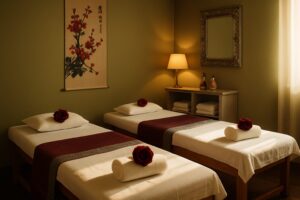
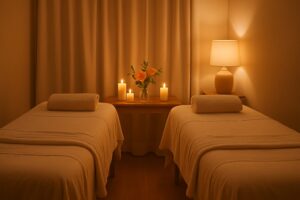
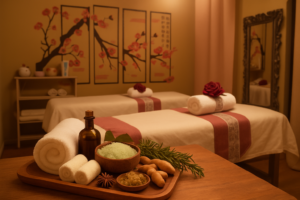
When the couple enters the softly lit room, side-by-side massage beds await. There’s a sense of stillness, the gentle scent of herbs, and therapists trained in the art of balancing energy and unblocking tension through meridian pathways. The massage unfolds in harmony—both bodies attended to simultaneously, mirroring the sense of partnership and unity at the heart of the experience.

Why Couples Are Starting to Try It
The benefits go beyond the physical. Yes, stress melts away, muscles unwind, and energy begins to flow again—but there’s more to it. Couples report feeling emotionally closer after the session. It becomes a form of wordless communication, a shared moment of vulnerability and care.

It’s ideal for:

  • Celebrating an anniversary
  • Giving a thoughtful, intimate gift
  • Taking time away from the screens and daily stress
  • Reconnecting when words fall short
  • And for those willing to be honest—many also notice an unexpected bonus: a gentle spark in their intimacy. By easing stress, increasing body awareness, and sharing an intimate setting, couples often find that their sexual connection improves as well. It’s not the goal—but it’s a welcomed side effect.

From Expat Secret to Local Love Language
Right now, couples Chinese massage is still something of a hidden gem in Tirana. Expats have embraced it as part of their wellness and relationship routines, but local couples are just beginning to realize its potential. It’s a quiet trend—growing by word of mouth, one romantic afternoon at a time.

For couples looking to try something new, meaningful, and healthful, this may be the perfect escape. It’s a fresh way to say “I love you” without words. And in a city that’s always evolving, what better time to start a new ritual together?

Next time you want to celebrate your relationship, consider this: don’t just give flowers—give peace, touch, and presence. A Chinese couples massage might be exactly what you didn’t know your love life was missing.

Call us today to ask about our special offers for couples.

Whether you’re celebrating something big or simply want to reconnect, we’re here to guide you on this shared journey of wellness and love.

A girl could get used to this
Couple Chinese Massage