Chinese Massage – Tai Chi Tirana

Couples Massage Is Not What Movies Show — A Practical Guide

There is a particular image of couples massage in popular culture that bears almost no resemblance to what the experience actually is. The image involves rose petals on the table, candles arranged in clusters, soft jazz, two glasses of champagne waiting for the end of the session, and a kind of glamorous romantic intimacy that exists more in advertising than in any real spa I have visited or worked in.

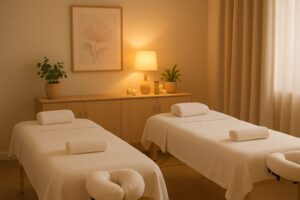
The reality is simultaneously more ordinary and more interesting. Two people in the same room, on two tables, receiving professional bodywork in parallel. The room is warm, comfortable, well-lit but not bright. There is no champagne; most couples here would rather have a strong coffee afterwards anyway. The therapists are present and focused. The couple, depending on their preference, either talks quietly during the early part of the session or remains silent throughout. There are no rose petals.

The interesting part is what the shared experience actually does for the couple, which is often different from what people expect when they book the session for the first time. This piece is for couples considering booking a session and trying to figure out what to expect, and for anyone receiving the session as a gift and wondering what they have signed up for. (There is an earlier short piece, a growing trend in Tirana — couples discovering Chinese massage together, which sketches the broader context.)

What it is, and what it is not

A couples massage at our parlour is two simultaneous individual sessions performed in the same room by two therapists. The therapists work independently of each other — this is not four-hands work, where the therapists coordinate. Each therapist focuses on their own client. The clients are next to each other but are receiving separate treatments.

The choices we make about pressure, technique, and protocol are determined individually for each client at intake. If one partner wants firm pressure on a specific complaint and the other wants gentle relaxation work, we deliver these different sessions in parallel. The fact of being in the same room does not require the two sessions to be identical.

What couples massage is not: a romantic experience designed to produce intimacy. Romance is the client’s business, not ours. We provide professional bodywork. If the shared experience produces a quality of connection between the partners, that is welcome, but we do not engineer it. Our job is to deliver excellent sessions to each person on the table.

What couples massage is also not: a discount for booking two. The pricing reflects the use of two simultaneous therapists and the dedicated room. We do not offer a discount for the couples format. If price is the deciding factor, two separate single-therapist sessions on the same day are often more economical.

Why people book it

There are several reasons couples choose this format over individual sessions, and the reasons matter because they affect what kind of session is most appropriate.

Convenience. The couple has a single window of time available — a Sunday afternoon, a weekend in Tirana, a wedding anniversary on a specific evening — and they want to share the experience rather than each go separately. The couples session lets them book one appointment instead of two.

Comfort with the unfamiliar. One partner has never had a professional massage and is nervous about the experience. Having the other partner in the room reduces the anxiety considerably. We see this frequently — a partner who has been getting regular sessions for years brings the other partner in for the first time, and the shared format makes the introduction much smoother.

Shared rhythm. Some couples have built a regular practice of receiving sessions together as part of their ongoing relationship. The shared time is a touchstone in the week or month. They have decided, deliberately, that the parallel experience is part of how they care for themselves together.

Special occasions. Anniversaries, birthdays, milestones in the relationship. The session marks an event in a particular way that individual sessions would not.

Discharge after travel. A couple has just arrived in Tirana — sometimes from abroad, sometimes after a difficult drive — and wants to recover together before the rest of their trip begins.

The booking pattern that works less well, in my experience, is the booking pattern that approaches the session as a substitute for difficult conversation or accumulated relationship tension. The session itself cannot resolve relationship strain. It can sometimes create conditions in which strain becomes more workable, but it is not a therapeutic intervention for relationships. We are massage therapists, not couples counsellors.

The intake conversation

The intake before a couples session is slightly different from the intake before an individual session. We ask each partner the same questions we would ask any individual client — about their physical complaints, their history with massage, their preferences for pressure and technique — but we do these intakes separately. Each partner has their own brief private conversation with their therapist before the session begins.

The reason for the separate intakes is practical. People are sometimes reluctant to mention certain things in front of their partner. A specific medical condition they have not yet disclosed. A particular area of pain they prefer not to discuss. A psychological context (recent grief, anxiety about something) that they would rather their therapist know about quietly. The separate intakes allow each client to give us the full information we need without performing it for the partner.

The therapists then briefly coordinate between themselves before the session begins, agreeing on the overall rhythm and ambient temperature and which protocols each will use. The clients lie on their tables. The session begins.

The early minutes

The first minutes of a couples session have a particular quality that is different from individual sessions. Both clients are slightly aware of the other’s presence. The room has more sensory input than a single-client room would. There is a small ongoing recalibration as each partner registers that the other is also being attended to.

For many couples, this awareness gradually fades over the first ten to fifteen minutes. The partners settle into their own experiences. By the twenty-minute mark, most couples have entered what is essentially a parallel rather than shared experience — they are both receiving sessions in the same physical space, but their attention has turned inward.

For some couples, the awareness of the other persists throughout the session and is actually part of what they value about the format. They like knowing that the other is also being cared for at the same time. The parallel experience, even without explicit interaction, has a quality of shared time that they appreciate.

Neither pattern is more correct. The session works either way.

A small parlour observation

I have been doing this work for many years, and I have observed an interesting pattern in couples sessions that I do not entirely have an explanation for.

Couples who have been together for more than five or six years tend to develop a kind of breathing synchronisation during a couples session that does not happen in individual sessions. About twenty minutes in, the breathing patterns of the two partners begin to align. They are not visible to the partners themselves — neither of them is consciously coordinating — but if I watch the rise and fall of both chests, I can usually see the synchronisation begin to emerge around the twenty-minute mark.

This is not, as far as I can tell, the same phenomenon as the breath-matching that occurs between trained therapy partners (which I described in a piece about four-hands work). The therapist breath-matching is the result of deliberate training. The couple breath-matching seems to emerge spontaneously, perhaps because the partners’ nervous systems have, over years of intimate cohabitation, developed an unconscious responsiveness to each other.

I have begun, when I notice this happening, to think of it as evidence that the relationship is in a state of basic regulation. The two nervous systems are speaking to each other quietly. The session is providing the conditions in which this normally invisible communication becomes briefly observable.

When the synchronisation does not happen — which is rare, but it occurs — it sometimes points to a couple that is going through a more difficult period. I do not comment on this to the clients. It is not my business and might be misleading anyway. But it is, for me, one of the small interesting features of the work.

What to expect afterwards

The post-session experience for couples is often slightly different from individual sessions in one specific way: many couples report that the conversations they have in the hour after the session have a different quality than usual.

The parasympathetic state produced by the session shifts the nervous system into a more open, less defended mode. Combined with the shared experience just completed, this often makes whatever conversation arises between the partners more relaxed, more honest, less reactive. Couples often go out for a meal afterwards and find that the conversation flows easily, that small irritations from the past week feel less important, that they can talk about something that has been weighing on them without it becoming a problem.

This is not the session’s purpose. It is a useful side effect.

The effect is usually best preserved by not planning an immediate high-stimulation activity after the session. A quiet meal at a small restaurant near the parlour, a walk, an unhurried afternoon — these honour the post-session state. A loud event, a difficult social situation, a stressful conversation — these tend to override the effect quickly.

When this is the right choice

A couples massage session is particularly appropriate when:

The two partners both want a professional bodywork session and find it more pleasant to share the timing.

One partner is new to massage and the other’s presence helps with comfort.

The relationship has a regular self-care rhythm and the session fits into it as part of the broader pattern.

A special occasion calls for a shared experience that is not strictly romantic in the conventional sense.

It is a less appropriate choice when:

The partners have significantly different bodywork needs that would be better served by different therapists or different types of sessions.

One partner wants to discuss their physical complaints in detail and the other partner does not want to hear about them.

The relationship is in a stressed period and the session is being booked as an attempt to repair the strain.

The booking is being made primarily for the romantic-package aesthetics rather than for the therapeutic value.

For couples who have not yet tried it, my honest recommendation is to come once, see what the actual experience is like, and decide afterwards whether the format suits you. Some couples discover that they prefer it. Others discover they prefer individual sessions. Either answer is fine, and the discovery is the value of the first try.


Yang Wang practises Chinese medicine at Chinese Massage – Tai Chi Tirana. The parlour is in central Tirana, near Bulevardi Gjergj Fishta.

The Best Chinese Massage in the Heart of Tirana

The Best Chinese Massage in the Heart of Tirana

Experience authentic Chinese massage techniques designed to restore your energy and soothe your soul, right in the vibrant center of Tirana! 🌿

✅ Authentic Techniques: Traditional methods for deep healing.
✅ Professional Care: Expert therapists dedicated to your wellbeing.
✅ Premium Oasis: A calm, zen atmosphere in the middle of the capital.

Treat yourself to the care you deserve. Your journey to wellness starts here! ⛩️🙌

After You Leave

After You Leave — Tai Chi Wellness

Behind the Calm

After You Leave

The door closes softly behind you. For a moment the room is quiet again — the calm that remains after an hour of slower breathing, relaxed shoulders, and a mind that has finally let go of the noise outside.

You leave feeling lighter. That is how it should be.

But the story of that hour does not end when you step outside.

In our center there are three massage rooms. I work together with two massage therapists, and after each guest leaves we begin a quiet routine that repeats many times every day.

The bed is cleared first. The sheets that held the last hour are removed and replaced with new ones — smooth, fresh, carefully arranged so the next person sees only calm order when they enter.

Towels are folded again, clean and soft.

The showers are washed until the glass is clear and the tiles shine. Toiletries are checked and replaced so that everything feels untouched and ready.

Windows open for fresh air. The room breathes again.

A light fragrance returns slowly to the space. The floor is cleaned. Decorations are adjusted. Candles straightened. Small stones placed back in their perfect order. Music returned to the beginning.

Each room must feel as if it has been waiting quietly for the next guest.

This is teamwork. Three rooms, three therapists, many small details. We move quietly from room to room, preparing everything again.

Most guests experience one peaceful hour.

For us, that hour begins long before they arrive and continues long after they leave.

Because every guest who walks through our door is important. They trust us with their time, their comfort, their relaxation. The room they enter should reflect that respect.

Everything must be ready.
When the next door opens, the room should feel fresh, calm, and prepared —
as if this moment had been created just for them.

Yang Wang

Yang Wang

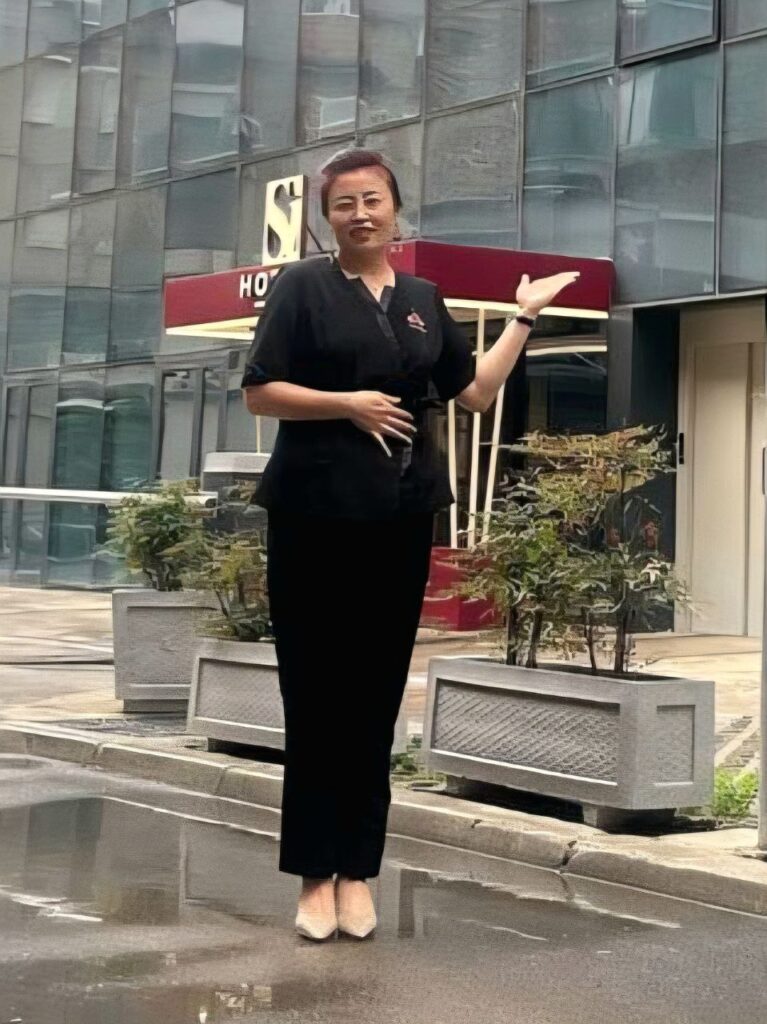
Founder & Therapist — Chinese Massage – Tai Chi Tirana Wellness Center

How One Hour in March Can Change Everything

How One Hour in March Can Change Everything — Chinese Massage - Tai Chi Tirana Tirana
🌿 Chinese Massage - Tai Chi Tirana · Tirana · March Wellness

How One Hour in March
Can Change Everything

Recovery does not need to be long to be powerful.
It needs to be complete.

🌸 When the City Wakes

March in Tirana does not arrive quietly. It rushes in. One moment the city is wrapped in winter gray and damp air. The next, the sun grows stronger, cafés fill, traffic accelerates, and everyone seems ready to begin again.

After months of cold, Tirana breathes.

Spring boulevard — city awakening
✦ Spring energy rises · Tirana awakens

🫱 What the Body Still Carries

But inside the treatment room, I see something different. Shoulders still lifted from February. Necks stiff from long hours at screens. Lower backs tight from cold days and accumulated stress.

Almost every client arrives and says the same thing:

"I'm exhausted."
"But I don't have time."
"I can only manage one hour."

As if one hour is too little to matter.


🕯️ Then We Begin

The door closes. The outside noise fades. For sixty minutes, there is no traffic, no calls, no pressure.

At first, the body remains guarded. The breath is shallow. And then — something shifts.

10 min
Shoulders begin to drop The first layer of tension releases. The nervous system starts to recognise safety.
20 min
Warmth spreads through deeper tissues Circulation improves. Muscles that have been braced for weeks begin to soften.
30 min
Breathing slows — naturally This is where real recovery begins. The body no longer needs to be guided — it remembers how to rest.
60 min
Complete The session ends. There is always a pause — they sit up slowly, roll their shoulders, take a deeper breath.

🌿 Why One Hour Is Enough
Chinese massage therapy hands
Deep tissue work
Calm wellness space
Stillness restored

One hour is short — but it is complete. It allows focused, deep work without exhausting the body. The body does not measure healing in days. It responds to presence.

Sixty minutes of uninterrupted attention can reset the nervous system, improve circulation, and release tension built over weeks.

"How can just one hour make such a difference?" — Because recovery does not need to be long to be powerful. It needs to be complete.

☯️ March, Spring Energy & the Body

In Traditional Chinese Medicine, spring is governed by the Wood element — the energy of growth, movement, and new beginnings. After winter's contraction, the body naturally seeks to expand, to move, to release what has been held.

This is why March is one of the most important months to receive care. As spring energy rises through the body, a single session of deep massage becomes the bridge — between winter heaviness and renewed vitality.

Stillness restored — spring renewal
✦ Spring · Renewal · Balance

Outside, Tirana keeps moving fast.
Inside that hour, the body learns to move with it — lighter, calmer, stronger.

Your one hour is waiting.

Step out of March's rush — and into a room where the only thing that matters is how you feel when you leave.

🌿   Book Your Session

The Art of Chinese Massage | Newly redesigned for your comfort

🌿 We are delighted to welcome you back to our TCM center in central Tirana. We’ve newly redesigned our therapy rooms to create an even fresher, more modern, and deeply welcoming relaxing and cozy place. 🌿 👉

BOOK NOW: www.taichi.al/book-now/ 📍 Central Tirana

The benefits of the Chinese Massage

Discover the benefits of Chinese Massage. 🌿 Precision techniques for total wellness, stress relief, and body harmony. Heal naturally, live better.

🔗 Visit www.taichi.al for more.

Cupping and Bloodletting in Traditional Chinese Medicine

How These Therapies Help in Everyday Health Problems

In my daily centeral practice, many patients ask the same question: “What exactly do cupping and bloodletting do, and how do I know which one I need?”
Both therapies belong to the external treatment methods of Traditional Chinese Medicine (TCM), and while they may look simple, their effects can be deep and precise when applied correctly.

Cupping and bloodletting share a common goal – to restore circulation and remove what the body no longer needs – but they do so in different ways and for different situations. Understanding this difference helps patients feel more confident and involved in their treatment.


Cupping Therapy: Releasing Tension and Restoring Flow

What Cupping Therapy Does

Cupping creates a gentle suction on the skin that draws blood and fluids to the surface. From a TCM perspective, this helps move stagnant Qi and Blood, warm the meridians, and relax contracted tissues.

Many patients describe the feeling after cupping as lighter, warmer, and more flexible – especially in areas that felt tight or blocked before.

Common Symptoms and Conditions Treated with Cupping

In practice, cupping is often helpful for:

  • Chronic neck and shoulder stiffness from desk work

  • Lower back pain that feels heavy or sore rather than sharp

  • Muscle tightness after sports or physical labor

  • Frequent colds with chest tightness or cough

  • Fatigue accompanied by a sense of body heaviness

  • Digestive discomfort linked to stress and tension

For example, patients who sit long hours at a computer often come in with stiff shoulders, headaches, and a feeling of pressure between the shoulder blades. Cupping in these cases helps relax the muscles and improve circulation, often bringing noticeable relief even after one session.


Bloodletting Therapy: Clearing Heat and Stagnation

What Bloodletting Therapy Does

Bloodletting involves releasing a very small amount of blood from specific points or congested areas. In TCM, this is used when there is excess Heat, strong stagnation, or toxicity.

Patients are often surprised by how little blood is involved – and how quickly symptoms can change afterward.

Common Symptoms and Conditions Treated with Bloodletting

Bloodletting may be recommended when patients present with:

  • Sharp or intense headaches, especially with a feeling of pressure or heat

  • Sudden neck or shoulder pain with redness and swelling

  • Acute flare-ups of acne or skin inflammation

  • Migraines accompanied by irritability or facial flushing

  • Pain that feels fixed, stabbing, or burning

For instance, patients with recurring migraines often describe a heavy, tight sensation in the head that worsens with stress or heat. In selected cases, gentle bloodletting can quickly reduce this pressure and calm the system.


When Cupping and Bloodletting Are Combined

There are situations where cupping alone is not enough, and bloodletting alone would be incomplete. This is when combining the two therapies becomes especially effective.

Practical Examples of Combined Therapy

In my experience, combined treatment works well for:

  • Long-standing shoulder or back pain with swelling and heat

  • Sports injuries that remain painful and inflamed for weeks

  • Chronic fatigue with a feeling of heaviness and congestion

  • Recurrent neck pain with visible dark or congested areas

  • Old injuries that flare up with weather changes

In these cases, bloodletting helps release the deep stagnation, while cupping immediately afterward encourages fresh blood flow and faster recovery.


Possible Disadvantages and Temporary Reactions

Both therapies are generally well tolerated, but it is important to know what to expect:

  • Temporary bruising or marks from cupping

  • Mild soreness for one or two days

  • Feeling tired or relaxed after bloodletting

  • Rare skin irritation if aftercare instructions are not followed

These reactions are usually signs that circulation has been activated and tend to resolve on their own.


When These Therapies Should Not Be Used

Safety always comes first. Cupping and bloodletting are not suitable for everyone, and proper assessment is essential.

General Contraindications

  • Pregnancy (especially abdomen and lower back)

  • Severe weakness, exhaustion, or anemia

  • Bleeding disorders or poor clotting

  • Advanced chronic disease without medical supervision

Bloodletting-Specific Contraindications

  • Use of anticoagulant medication

  • Very low blood pressure

  • Severe fear or sensitivity to blood

  • Children and elderly patients (unless strictly indicated)

A personalized diagnosis ensures that treatment supports the body rather than overloading it.

cupping therapy on their back

December in Tirana: A Beautiful Month That Quietly Exhausts Us

Every December, as I walk through Tirana on my way to the center, I can feel the city transforming around me. Lights appear on every street corner, cafés dress up their windows, and Skanderbeg Square becomes a little universe of music, color, and warmth. Families stroll together, children run around with glowing balloons, and the whole city vibrates with a kind of festive joy that is impossible to ignore.

Even after many years in Albania, these sights still make me smile and, on a different scale remind me of what we do at home, in China, to celebrate the Lunar New Year.

But at the same time, in hDecember I notice something else — something quieter, hidden behind the sparkle: people getting more and more tired.

December’s Hidden Pace

December looks magical, but it moves fast. Too fast.

Traffic becomes unpredictable, the malls feel like airports during holiday season, and everyone seems to be carrying more bags, more to-do lists, more obligations.

My patients often arrive and sit down with a sigh:

“I’ve been running around all day.”

“I still haven’t finished buying gifts.”

“I need to prepare the house for guests.”

“I’m cooking every day now.”

“I can’t sleep well lately.”

It’s the month when joy and pressure walk hand in hand.

The Holidays Are Beautiful — But the Body Pays a Price

Then come the celebrations. Christmas dinners, New Year parties, late nights, heavy meals, family gatherings, planning, cleaning, cooking again… All wonderful moments — but also physically intense.

By the time January begins, most people realize that the holiday season didn’t give them much rest at all.

But something I always remind my patients is this:

the tiredness doesn’t start in January — it starts in December. And that means the care for your body should begin in December too.

Why Massage Helps During December

During December, the body is already under constant pressure:

  • heavy holiday preparations
  • long hours standing, cooking, cleaning
  • rushing through crowded stores
  • poor sleep from stress and late evenings
  • cold weather tightening the muscles

A massage during December works like putting the brakes on an engine that’s overheating.

It prevents tension from accumulating, helps you sleep better, supports your immune system, and clears your mind so you can actually enjoy the holidays instead of just surviving them.

Many people wait until January to take care of themselves — but by then, the stress has already settled deep.

And Why You Still Need It in January

Then, when the decorations come down and normal life starts again, the fatigue becomes more noticeable. I often hear:

“I thought I would rest during the holidays, but I’m even more tired now.”

January is the perfect moment to reset, to allow the body to release everything it carried through the last month.

A massage in January:

  • melts the tension accumulated during December
  • improves circulation after weeks of heavy meals and little movement
  • restores energy for work and daily routines
  • lifts mood and clears mental fog

Your body needs care both during the holiday rush and after it.

My “Jingle Bells” Gift Card

Because I see how challenging this season is every year, I created something to help you take care of yourself or someone you love.

The “Jingle Bells” Gift Card

  • 5 massage sessions
  • 60 minutes each
  • with a 14% discount

It’s a beautiful way to support your wellbeing throughout December and into January — a small gift with a big impact. Moreover, you are not limited to massage, the 5 sessions can combine massage, acupuncture, cupping, moxibustion and gua sha, depending on your specific needs. Did I say this a beautiful gift to show you care for the ones you love?

December in Tirana is charming, emotional, and full of light. But it’s also a month that demands a lot from us. If you feel the weight of it — in your body, in your sleep, in your energy — you are not alone.

Give yourself permission to pause, to breathe, to reset.

Whether in the middle of December or at the start of the new year, your body will thank you.

Meanwhile, Merry Christmas and a Happy New Year to all you!

Love,
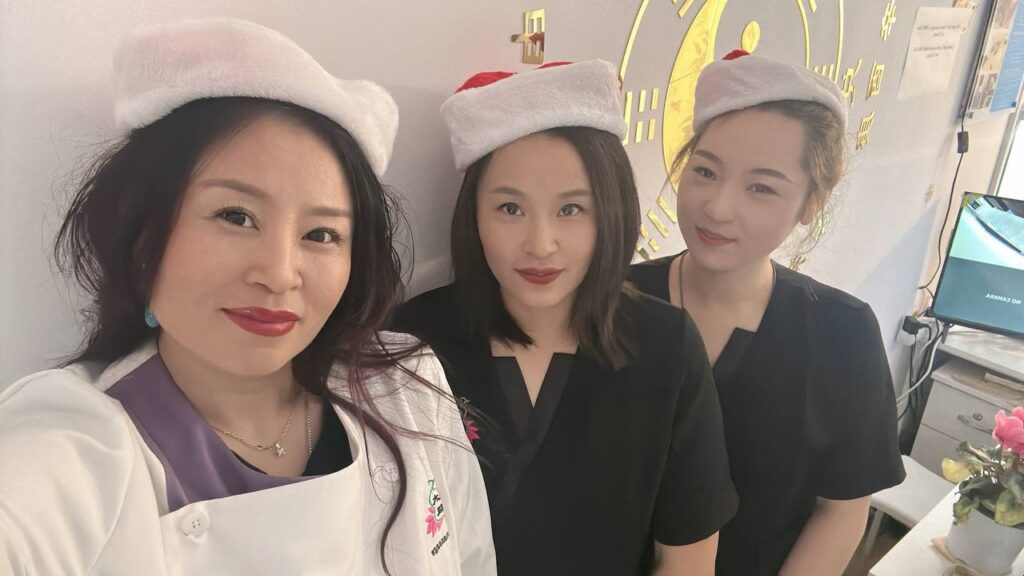
TaiChi team

Your Acupuncture Invitation

Are you seeking a natural way to relieve pain, reduce stress, and restore your inner harmony?

🧘 Holistic Benefits: Acupuncture is well-known for effectively treating chronic pain, easing anxiety, improving sleep, and boosting your overall energy.

🎓 Expert Guidance: Your treatment will be led by our certified TCM therapists who bring deep knowledge and years of experience.

📍 The Perfect Setting: Our center for acupuncture and massage is a welcoming oasis of calm and relaxation. We are conveniently located right in the heart of Tirana, making it easy to fit self-care into your busy life.

Ready to find your balance?

📅 Book Your Session Today! www.taichi.al/book-now/ | TEL: 068 541 4141

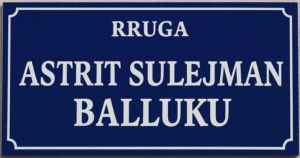
🗺️ Visit us: Astrit Sulejman Balluku Street, Alb Trans Building, 1st floor, apartment 11 and 12, Administrative Unit No. 7, Tirana

A Street with a Story

When I first opened Chinese Massage – Tai Chi Tirana here in Tirana, one of the first things that caught my attention was the name of the street — Rruga Astrit Sulejman Balluku. It’s a long name, melodic and unfamiliar to me at first, and I used to wonder who this person was. Every time I wrote down the address for a new client or looked up at the street sign, I felt a quiet curiosity. Streets carry stories, I thought — and this one, surely, must too.

At the beginning, I tried to look for information online, but it was not easy to find much. Later, through conversations over coffee, some of my Albanian friends told me that Astrit Sulejman Balluku was a trade-union leader in Tirana who lived during the country’s difficult years of transition after the fall of communism. He was killed in October 1998, at a time when Albania was facing unrest and political violence.

For someone who arrived in Tirana decades later, it’s hard to imagine what those days were like. My friends described a city filled with uncertainty — protests, fear, and the feeling that the future was not yet secure. It was a time when courage and loss often went hand in hand.
When I walk along this same street today, it feels like another world. The air hums with the sound of construction; cafés spill laughter onto the sidewalks; people talk about their children studying abroad, about tourism, about business, and about Albania’s European future. The transformation is visible everywhere — in the new buildings, in the energy of young people, and even in the small details of daily life.

Of course, not everything is perfect. Like every growing city, Tirana still faces challenges — traffic, rising prices, moments of impatience, and the fast rhythm that modern life brings. But beneath it all, there is a strong sense of movement and possibility. People care deeply about their city. They are proud of how far it has come, and they keep working toward something better.

For me, coming from China and living here for six years, Tirana has become more than just a place of work — it feels like a community. I walk to the market and see familiar faces, I hear greetings in three different languages, and I feel safe walking home even late in the evening. There is a quiet trust in everyday life that I appreciate very much.
Sometimes, as I stand outside our center and look at the sign that says Rruga Astrit Sulejman Balluku, I think about how time transforms pain into memory, and memory into meaning. This street, once named after a man who lost his life in troubled times, is now a place where people come to rest, heal, and find balance. That feels symbolic — as if the city itself is breathing more peacefully now.

When I talk to my Albanian friends about the past, they often say the same thing: “We have been through worse. Now we want to live better.” And I believe they are doing just that.
So whenever I see the evening light fall softly on this street — the children playing, the trees whispering, the city slowly calming down after a busy day — I think of how far Tirana has come. The journey from unrest to peace is not simple, but it is beautiful.

And perhaps, in our own quiet ways, each of us can take a moment to slow down, to breathe, and to appreciate the calm we now enjoy — both within ourselves and around us.