Reading the Marks: What Cupping and Gua Sha Bruises Actually Mean

There is a moment of slight panic that visits almost every first-time cupping client about ten minutes after they have left the parlour and looked in a mirror at home. Their back is covered in circular reddish-purple marks, evenly spaced, some darker than others. In the lighting of their bathroom, this looks alarming. They wonder, briefly, whether something has gone wrong.

Nothing has gone wrong. Those marks are the entire point of the treatment, and reading them is one of the more interesting parts of the practice — for both the therapist and, increasingly, for clients who become curious about what their own body is communicating.

This piece is the longer answer to the question I get asked most often: “What do the marks mean?”

The marks are not bruises

The first thing to understand is that the marks left by cupping are not bruises in the conventional sense. A bruise comes from broken capillaries leaking blood into surrounding tissue, usually as a result of blunt force. The pattern is irregular, the pain is localised and worsens for the first day or two, and the surrounding tissue feels tender.

A cupping mark is something different. The negative pressure inside the cup pulls capillaries to the surface and increases their permeability. Some red blood cells and plasma move into the surrounding tissue — not because the capillaries are broken, but because the pressure differential temporarily opens the cell-to-cell junctions. The marks are flat (not raised), generally not tender to the touch by the next day, and resolve over three to seven days without any of the colour-cycling (red to blue to yellow) of a true bruise.

This distinction is not just academic. It matters because the body responds to a cupping mark differently than to a bruise. The marks initiate a local immune and circulatory response that is the actual therapeutic effect of the treatment. The body identifies the area as needing attention, sends additional blood flow, brings local immune cells, and begins clearing whatever metabolic waste had been accumulated in the tissue. This response continues for several days after the cup is removed.

Why the marks differ from person to person

The most useful information in a cupping session is encoded in how dark the marks become and where they appear darkest. A skilled practitioner reads these patterns the way a doctor might read a blood test.

Light pink, fades within an hour or two. The tissue underneath was well-circulated and not particularly stagnant. The treatment is producing a mild beneficial effect but the area was not in acute need of intervention. Common in young, healthy clients receiving a maintenance session.

Pink to red, fades within twenty-four hours. The area had some mild congestion or muscle tension but no significant underlying stagnation. This is the most common reading in clients who come in for stress-related back tension.

Dark red to purple, persists for three to five days. The tissue had significant accumulated stagnation — meaning a combination of poor circulation, retained metabolic waste, and chronic muscle tension. Common in office workers with long-standing upper back complaints, and in clients whose injury or strain happened weeks or months ago but never fully resolved.

Very dark purple, almost black, persists for a week or longer. This indicates either deep chronic stagnation (often associated with chronic pain conditions) or, more rarely, a circulation problem that warrants medical attention. When I see this in a client without an obvious explanation, we have a longer conversation about whether anything else in their health picture might be contributing.

Mark with a yellow or greenish edge. The body is processing the cupping response unusually slowly, often indicating depleted reserves. We adjust the treatment to be gentler in subsequent sessions.

The geography of the back

Where on the back the marks are darkest matters as much as how dark they are.

The classical Chinese mapping of the back uses the bladder meridian and the governor vessel as reference points. Modern Western anatomy uses muscle groups and segmental nerve distribution. The two systems map onto each other reasonably well for practical purposes.

The upper trapezius region — where most office workers carry tension — typically shows darker marks in clients whose work involves desk-bound keyboard use. The pattern often follows a “shoulder yoke” shape, deeper on whichever side carries the dominant hand.

The thoracic paraspinals — the muscle groups running alongside the spine in the upper-to-middle back — show darker marks in clients with chronic stress, particularly stress held in the breathing pattern. Clients with shallow chest breathing almost always have detectable stagnation in this region.

The lower thoracic region (between the shoulder blades and the bottom of the rib cage) corresponds, in TCM, to the liver shu and gallbladder shu points. In clients with chronic frustration, suppressed irritability, or sluggish digestion, this region often shows the deepest marks.

The lumbar region — lower back — shows stagnation patterns related to physical workload, chronic standing, or, in TCM terms, kidney-yang deficiency. Clients with chronic fatigue and cold extremities often show their deepest marks here.

In the parlour, I sometimes show clients a photograph of their own back after the treatment (with their permission, on their phone) and walk them through what the pattern is showing. Most clients find this surprisingly engaging — it is, in a sense, the first time they have seen their own internal stress state mapped onto their skin.

What gua sha shows differently

Gua sha — scraping therapy — leaves a different kind of mark, in a different pattern, that carries different information.

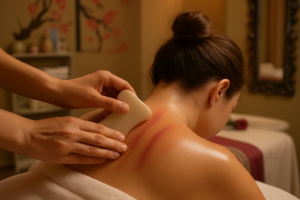
The technique uses a smooth-edged tool (traditionally a piece of polished horn, in modern practice often porcelain or jade) to scrape the surface of the skin with moderate pressure, after oiling the area. The friction causes a similar capillary-to-tissue response as cupping, but the pattern is linear rather than circular, and the marks tend to be more variable across the treated area.

What gua sha shows particularly well is the distribution of sha — the term for the small red spots that emerge in areas of greatest stagnation. In a well-circulated area of tissue, gua sha produces a uniform pink flush that fades in an hour. In a stagnant area, distinct red pinpoint spots emerge that may take days to resolve.

This makes gua sha excellent for diagnosing the specific zones within a larger muscle group that are most in need of intervention. The technique reveals the local pattern in a way cupping cannot, because cupping treats a whole circular area while gua sha can identify a narrow strip of greatest concern within a larger field.

The Albanian grandmother’s version

I mention this in several pieces but it bears repeating in this context: cupping is not a Chinese exclusive. Variations of the technique have existed in Albanian traditional medicine, where the word for it is ventuza. The older women in many Albanian families remember it from their childhoods — small glass cups, heated briefly with a flame to create a vacuum, applied to a child’s back to “draw out the cold” of a winter illness. The technique survived in informal household practice well into the twentieth century, became less common as modern medicine spread, and is now experiencing something of a revival. I have written more about what an Albanian grandmother taught me about cupping, if the parallel between the two traditions interests you.

What is interesting is that the diagnostic principles the Albanian grandmothers used were not as systematised as the Chinese ones, but the underlying observation was the same: where the cup leaves a darker mark, the body had more to release. The grandmothers did not have a written tradition documenting this, but they passed the observation along verbally and acted on it consistently.

A patient of mine — a woman in her sixties from a village in the north — described to me what her own grandmother had said about cupping marks. The translation she offered me was: “Where the skin remembers, there is something the body needs to forget.”

This is, in fact, a reasonable summary of the underlying principle. The marks are the body’s record of what has been held. The treatment is the process of releasing it.

When the marks should make you call us

There are circumstances where unusual cupping marks indicate something needing follow-up, not concern but attention.

Marks that take longer than seven days to resolve, in a client without obvious explanation (heavy training, recent illness, blood-thinning medication). This sometimes indicates underlying circulatory or hormonal factors worth investigating with a doctor.

Marks that are accompanied by significant ongoing pain (cupping should not produce sharp tender pain after the session — only a mild residual feeling of the work having been done).

Marks that recur in the same pattern over multiple sessions despite consistent treatment. This indicates that the underlying pattern is deeper than the cupping is reaching, and the treatment plan needs to be adjusted — sometimes by adding acupuncture or mud moxibustion, sometimes by addressing a lifestyle factor we identify together.

For ordinary cupping marks — pink to dark red, fading over three to five days, with no significant tenderness — there is nothing to worry about. They are the visible record of work done. The body will reabsorb them quickly, and what they were marking will, in most cases, no longer be there to mark.

A small etiquette note for the summer

If you have a cupping session in summer and were planning to wear an open-back top or go to the beach the next day, it is worth saying — the marks will be visible to other people. This is not a problem, but it can be unexpected. We mention it at intake. The marks have become much more recognisable in recent years (Olympic swimmers wearing them in 2016 changed the public conversation considerably), and most people now know what they are. But the first time you wear a sundress with circular marks down your back, the looks at the café can be amusing.

In Tirana, the older generation tends to nod knowingly. The younger ones sometimes ask questions. Either reaction is fine.


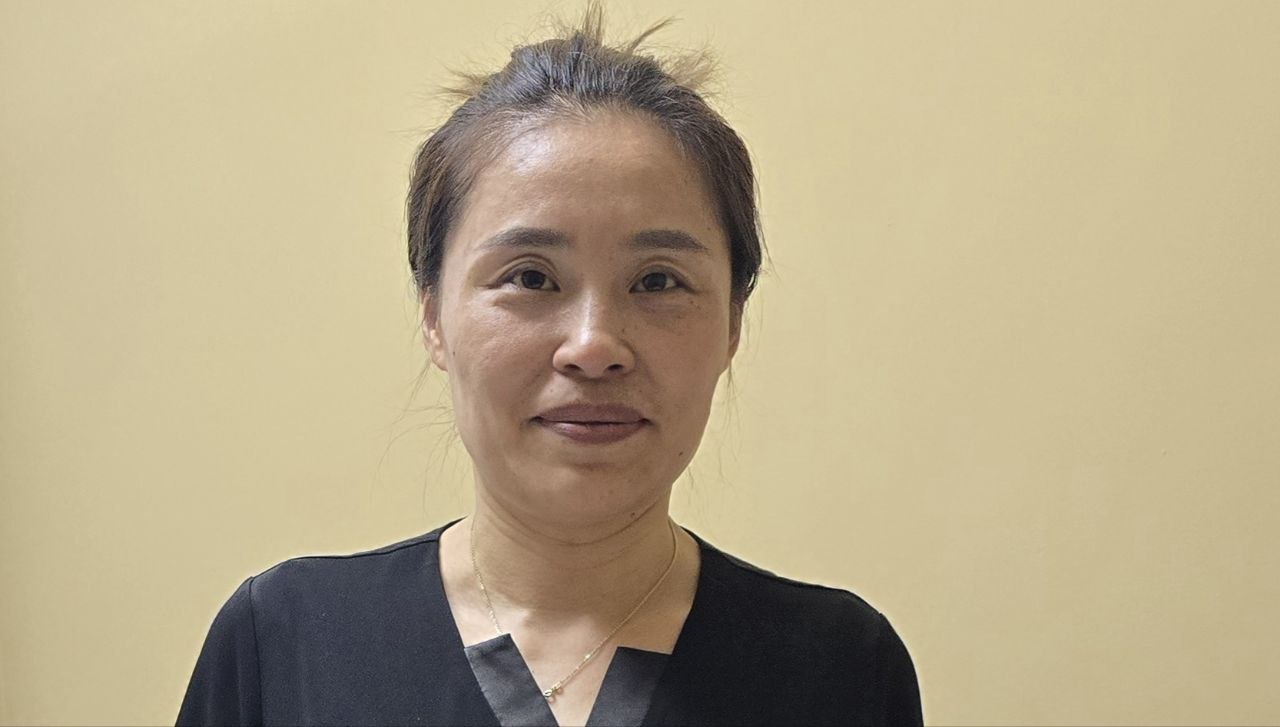
Yang Wang practises Chinese medicine at Chinese Massage – Tai Chi Tirana.
When Office Shoulders Forget How to Hang

There is a specific shape that walks into the parlour around six in the evening. The shoulders are slightly forward, slightly up, slightly turned inward toward each other as if the body had spent the day apologising for taking up space. The neck has lost its lazy curve and become a straight column. The clavicles have rotated downward by perhaps eight or ten degrees. When I press the upper trapezius with two fingers, the tissue does not yield — it answers like a piece of fabric that has been ironed too many times in the same direction.

This is the office shoulder. We see five or six of them every evening between 17:30 and 19:30, walking up from the cafés on Bulevardi Myslym Shyri after work. The diagnosis is rarely a mystery. What is interesting is the question of what the body is actually doing wrong, and why pressing harder almost never helps.

A muscle that forgets is not a muscle that needs more force

There is a common belief — held by therapists as well as clients — that a tight muscle is a strong muscle pulling. So the instinct is to push against it with equal force, the way you would push against a stuck drawer. With the upper trapezius and the levator scapulae, this instinct produces almost no result, and sometimes makes the next morning worse.

The problem is that the office shoulder is not strong. It is exhausted. After eight hours of holding the same low-grade contraction — keyboard, mouse, slightly hunched, slightly forward — those small postural muscles have entered a state that physiology calls protective splinting. They are not contracting voluntarily anymore. They have lost the neuromuscular signal to release. They are stuck in the “on” position the way a light switch can be jammed.

You cannot un-jam a switch by pressing harder on the switch itself. You have to work around it.

How Tui Na approaches this differently

Classical therapeutic massage — Tui Na in the Chinese tradition — has a specific protocol for this presentation, and it has changed almost nothing in the last thousand years. The opening movements are not on the trapezius at all. They are on the muscles around it. The forearms first, then the chest, then the upper back below the shoulder blades, then the back of the neck where it meets the skull.

The principle is simple: a muscle that has forgotten how to relax has to be given permission by its neighbours. When the surrounding tissue becomes soft, the over-contracted muscle is no longer the only one holding the structure together, and it can let go. This usually happens around the twenty-minute mark, often without the client noticing. They report afterwards that their shoulders feel “lower,” but they cannot pin down the moment when the lowering happened.

A client of mine — an interpreter who works for an Italian firm in Tirana, three days a week onsite, two days remote — described it once as the moment when “the muscle finally exhaled.” She was on the table thinking about a contract she was reviewing in her head. The exhale was not hers. It was somewhere along the right side of her neck. She felt it as a small drop, a settling, the way a building settles after a long warm afternoon.

Something I read once that confirmed what the hands already knew

I came across an article, several years ago, about how scientists had measured what happens in the trapezius muscle when therapists work on it in different ways. The detail that stayed with me was this: pressing the tight muscle directly relaxed it only for a short time. Working the neighbouring tissue — the chest, the forearm — relaxed the trapezius for much longer, even though no one touched the trapezius itself.

I do not remember the names or the dates. What I remember is feeling pleased. Tui Na practitioners have been working this way for many generations without anyone needing to measure it. The principle is one the body teaches you, if you spend long enough listening to it: the tight place is rarely the source of the tightness. The source is usually somewhere upstream, and the tight place is the body’s downstream complaint.

Why the morning matters more than the evening

A small detail that gets lost in most office-stress conversations: the office shoulder does not start at nine in the morning when work begins. It starts in the first ninety seconds of waking, when most people roll out of bed and check their phone before they have stretched.

That first ninety seconds is a window. The fascia is at its most pliable after a night of horizontal rest. If the first thing the body does is curl forward and look down at a screen, it commits to the day’s posture in a way that is very hard to undo later. If the first thing the body does is roll the shoulders three times in each direction, reach overhead, and yawn a real yawn — the kind that involves the entire chest — the day starts from a different baseline.

I tell this to clients sometimes. I do not tell it to make them feel they have done something wrong. I tell it because the cheapest, most boring intervention is also the most effective, and a session every two or three weeks is much more useful when it is built on top of a morning that is not already pre-stressed.

The return-from-Italy version

A particular kind of office shoulder I see often: the client who has lived in Italy for ten or fifteen years and moved back to Tirana for work. The pattern is the same — keyboard, sitting, screens — but there is an additional layer. Returning from a diaspora carries a quiet tension of its own. The body is doing two things at once: holding the new daily life, and re-negotiating an old one. Stories of mothers, apartments rented out, languages re-warming after years away.

That tension lives in the body somewhere, and for many returning women it lives between the shoulder blades. The first session usually goes longer than planned. We talk less than usual. Sometimes the second session is the one where they actually fall asleep on the table — which is, in my experience, the body’s signal that it has decided to trust the room.

What to do, if you do not want to come in yet

You do not need to book a session to start working with this. Three things, ranked by usefulness, that anyone with an office shoulder can do today.

First, when you sit down at your desk, set the screen one finger-width higher than your relaxed gaze. This single adjustment unloads the levator scapulae by enough to change your evening.

Second, twice a day — once mid-morning, once mid-afternoon — stand up, raise your arms straight overhead, and yawn deliberately for ten seconds. The yawn is not optional. It opens the chest the way nothing else does.

Third, before sleep, press your shoulder blades together for five seconds, then let them slide down your back as if a thread is pulling them toward your pockets. Five repetitions. Done lying down or standing, either works.

If after a few weeks the body still has not remembered how to hang its shoulders, that is when the table starts to make sense. The work is gentler than people expect, and the results, when they come, tend to last.

Yang Wang practises therapeutic massage and acupuncture at Chinese Massage – Tai Chi Tirana. The parlour is in central Tirana, a short walk from Bulevardi Myslym Shyri.
A real break for tired shoulders🌿

Tension in your shoulders can quietly build up from long hours at a desk, stress, or even bad posture — until one day, you suddenly feel that tight, heavy pressure that just won’t go away. A focused shoulder massage can do more than ease the pain in the moment; it helps restore balance, movement, and calm to your whole body.

With every session, your body learns to relax again, and posture naturally begins to improve.

In the short term, you’ll feel lighter, breathe more easily, and regain freedom of movement. Over time, regular massage supports better alignment, helps prevent recurring pain, and leaves you more energized throughout the day.

Book your session today and rediscover how it feels to move again without tension.

The Right Time for a Four Hands Massage

We all know those nights. You get in bed early, ready to sleep, and suddenly your brain opens a to-do list from hell: work, money, family, even that weird comment you made years ago. It doesn’t stop.

That’s the new normal for many of us—always “on,” rarely resting, running on empty. You wake up tired, move through the day like a zombie, and your body feels like it’s carrying the weight of it all.

This is where four hands come in. Not as a treat, but as a real reset button for your body and mind.

What Is Four Hands Massage?

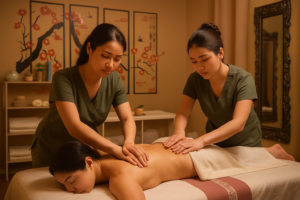
It’s exactly what it sounds like—two therapists working on you at the same time. But it’s not just “double massage.” It’s a coordinated rhythm, a mirrored flow of movement that covers your body evenly.

Picture this: you’re lying down, the room is calm, and two sets of skilled hands move in sync to release tension, boost circulation, and calm your nervous system.

It feels good, yes. But there’s also solid science behind why it works so deeply and effective.

Why Your Brain Loves It

Here’s the twist: your brain can’t keep up with two identical streams of touch at once. It stops trying to analyze or predict.

Instead, it lets go.

That endless loop of thinking, worrying, planning? It finally hits pause. Your body shifts out of stress mode and into true rest mode—the place where real healing and recovery happen.

Why It Hits Different Right Now

Life speeds up around seasonal changes, deadlines, and stress spikes. You may not even notice how much it’s weighing on you—until your shoulders lock up, your energy drops, or your stomach rebels.

Traditional Chinese Medicine calls this blocked energy, or Qi. Four-hand massage helps open the flow again. It calms down the nervous system, reconnects body and mind, and leaves you feeling more balanced than you thought it possible.

Like Meditation, Without the Effort

Meditation is hard when your head won’t stop spinning. But during a four-hand massage, your brain simply can’t hold on to all the input.

It’s like white noise for your nervous system. You stop waiting for the next move, stop planning, stop fixing.

You just exist in the moment. And that’s where calm settles.

Who Benefits Most?

If you:

  • Struggle to fall asleep or wake up groggy
  • Can’t stop replaying work or future worries
  • Feel weighed down or mentally foggy
  • Are going through a stressful change
  • Or simply forgot what deep relaxation feels like…

…then four hands might be exactly what your system is looking for.

Not Just Relaxation – A Reset

The effects go beyond a clear head. This treatment also tackles:

  • Muscle tension
  • Poor circulation
  • Low energy
  • Chronic fatigue

By working both sides of the body at once, it balances your whole system. Many walk out feeling lighter, clearer, and more grounded – like the noise finally turned down.

Final Word

A four-hand massage isn’t just “an hour of calm.” It’s the after-effect: better sleep, sharper focus, a steadier mood, and more energy to live your life.

So if you’re wired, tired, or stuck in your head, maybe the fix isn’t to push harder.

Maybe it’s letting go—while four hands do the work for you.

Double the care, double the healing."

The Hidden Highways of Health: Understanding Meridians and Meridian Conditioning in TCM

When I first studied Traditional Chinese Medicine (TCM), one of the most fascinating discoveries for me was the idea of meridians—the invisible pathways that carry energy through the body. They don’t appear in anatomy textbooks, and modern Western medicine does not recognize them as physical structures. And yet, for thousands of years, they have been central to how Chinese medicine understands health, balance, and healing.

What is interesting is that, even today, many patients who try treatments based on meridian work describe feeling lighter, more balanced, and more at ease. Whether it is through acupuncture, massage, or other techniques, they often notice changes that are difficult to explain in purely physical terms.

What Are Meridians?

Meridians can be thought of as energy highways. Instead of blood or nerves, they carry Qi (life energy) and influence how well our organs, muscles, and even emotions function. There are 12 main meridians, each linked to a specific organ system—like the lung, heart, liver, or kidneys.

When these pathways are open and flowing, the body feels alive, energetic, and in balance. When they are blocked or stagnant, problems may show up as pain, fatigue, mood swings, or other discomforts.

massage therapy

Signs of Imbalance

Many common complaints can be understood in TCM as signs of meridian imbalance:

  • Stiff muscles or aching joints
  • Constant tiredness or low energy
  • Stress, anxiety, or irritability
  • Digestive troubles
  • Poor sleep or frequent headaches

In practice, I often see that once the meridians are gently “opened,” these issues begin to improve naturally.

Manual Therapy:

What Is Meridian Conditioning?

Meridian conditioning is a way of keeping these pathways healthy and open. It is less about fixing a single symptom and more about maintaining the body’s overall balance. Some of the techniques include:

  • Acupuncture or acupressure – stimulating precise points along the meridians
  • Tui Na massage – using touch, pressure, and movement to free blocked energy
  • Cupping or gua sha – promoting circulation and removing stagnation
  • Gentle movement and breathing – such as Tai Chi or Qi Gong, to strengthen the natural flow of energy

I like to think of meridian conditioning as the equivalent of maintaining the roads in a city—if they are clear and well-kept, life moves smoothly.

Woman Suffers Medical Emergency

Why It Matters Today

Modern life is full of stress, poor posture, long hours in front of screens, and irregular routines. All of these can disrupt the body’s natural balance. That is why so many people today are turning to TCM approaches—not to replace modern medicine, but to complement it and support their own well-being.

Even though science has not yet mapped meridians the way it has blood vessels or nerves, what matters most is how people feel. And the truth is, many patients report a deep sense of relaxation, reduced pain, and renewed energy after meridian-based therapies.

cupping therapy on their back

A Personal Reflection

Over the years, I have seen people arrive tired, stressed, or in pain—and leave with a calm smile and lighter step. It’s not magic. It’s simply the body responding when the energy begins to flow again.

For me, this work is not just about easing discomfort, but about helping people reconnect with their natural vitality. Whether you see it as energy, circulation, or simply relaxation, the result is often the same: the body feels freer, and the mind feels clearer.

Frequently Asked Questions

  1. Are meridians scientifically proven?

Modern medicine does not recognize meridians as physical structures. They are not visible under a microscope or in medical imaging. However, many people find that therapies working on meridians bring real relief and improved well-being.

  1. Can meridian conditioning replace modern medical treatment?

No. TCM should not be seen as a replacement for necessary medical care. Instead, it can be a complementary approach that supports balance, relaxation, and the body’s natural healing processes.

  1. How many sessions are usually needed?

This varies from person to person. Some people feel noticeable changes after just one or two sessions, while others may benefit from regular treatments to maintain balance.

  1. Is meridian conditioning safe?

Yes, when performed by a trained professional. Techniques like acupuncture, massage, and cupping are generally safe and have been used for centuries.

  1. Who can benefit from it?

People of all ages may find benefit—from those with chronic stress or muscle pain to those who simply want to improve their energy and overall balance.

Final Thought

Meridians may not be visible under a microscope, but their effects are real to those who experience them. Meridian conditioning is about nurturing balance, preventing blockages before they turn into bigger problems, and giving the body the chance to heal itself.

As a practitioner, I see it as an invitation—to listen more closely to the body, to care for it gently, and to trust in its natural ability to restore harmony.

Discover a Taste of Home in Albania

Six years ago, I arrived in Tirana, not knowing what life in Albania would be like. I was a Chinese woman stepping into a new chapter, full of curiosity but also uncertainty. Today, Tirana is not just where I live – it’s truly my home.
Over the years, I’ve built a life here filled with meaningful connections. I’ve met many kind and wonderful people who have made me feel welcomed, respected, and cared for. Their friendship has softened the distance between me and my family in China. It’s a rare and beautiful thing to find such warmth so far from home.
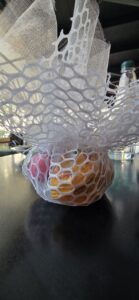
This morning, something small yet deeply touching happened. A friend surprised me with a package of dehydrated fruit – straight from China. Just opening the bag released a familiar, sweet scent that instantly took me back. The taste was exactly as I remembered from my childhood – chewy, slightly tangy, and full of nostalgia.
It reminded me of Liaoning, the province where I was born and raised. I miss the changing seasons, the rhythm of the streets, and the comforting flavors of local snacks I grew up with. I miss my parents’ voices echoing in the house and the way everything felt safe and known.
Sometimes, it’s the smallest gestures that bring the deepest emotions. A simple snack, shared with thoughtfulness, became a powerful reminder of home – and of how lucky I am to have found a second one here in Albania.

🌿 Relax, Restore and Renew with Chinese Massage 🌿

🌿 Relax. Restore. Renew. 🌿
✨ Let go of stress and invite balance back into your body. ✨
🎥 This video invites you to a relaxing massage experience, where every touch brings:
💆‍♀️ Deep relaxation – release physical and mental tension
🔥 Therapeutic warmth – feel your worries melt away
🌸 Inner regeneration – rediscover calm, energy, and well-being
📍 Cozy, clean and modern location
🕯 Techniques based on Traditional Chinese Medicine
💛 Tailored massage for you
📲 Book your session now and give yourself a moment of peace.
Your body deserves it. You deserve it. 🌺
🌐 www.taichi.al/book-now
📱 068 541 4141

Shiatsu vs Chinese Tuina: Key Differences Explained

When you hear about Shiatsu massage or Chinese Tuina massage, it’s easy to think they’re similar. After all, both are rooted in traditional Eastern medicine, use acupressure, and aim to harmonize the body’s energy. Yet their techniques, focus, and even treatment experiences differ in important ways. Understanding these differences can help you choose the therapy that best supports your unique health and wellness needs.

Shiatsu, developed in Japan, is a gentle yet powerful therapy that uses finger and palm pressure along the meridians (energy pathways). It focuses on balancing Qi — the life force energy flowing through the body — and restoring harmony in both body and mind. Shiatsu sessions are deeply relaxing, often performed fully clothed on a comfortable mat or futon, and include gentle stretches to improve flexibility and circulation. This therapy is especially effective for stress relief, emotional balance, and fatigue.

Chinese Tuina, on the other hand, is one of the oldest forms of therapeutic massage, with over 2,000 years of history in China. It uses a broader variety of techniques, including kneading, rolling, grasping, and tapping. Tuina can be quite dynamic or intense depending on the condition treated, and it often addresses both external musculoskeletal problems (like back pain, stiff neck, or sports injuries) and internal imbalances (such as digestive issues or insomnia). This makes Tuina an excellent choice if you’re seeking relief from chronic pain or functional disorders.

In modern practice, both therapies have adapted to address today’s stress-related and physical conditions, making them highly relevant and effective. However, Shiatsu tends to focus on calming the nervous system and restoring emotional balance, while Tuina prioritizes structural and energetic corrections to treat physical pain and restore organ function.

By knowing the differences, you can confidently choose the therapy that matches your goals:
👉 Shiatsu if you want to deeply relax, release emotional tension, and restore energy flow.
👉 Tuina if you need targeted treatment for chronic pain, injuries, or systemic imbalances.

Remember, both therapies offer a holistic approach to healing — you don’t have to limit yourself to one! Trying both can give you the benefits of a comprehensive wellness routine.

🔑 Find your balance, heal your body.

Summer Massage Deals to Beat the Heat

Hot weather, long days and holiday trips can put extra stress on your body – and your mind. Summer often brings swollen feet, tiresd legs, tense back muscles and a feeling of overall fatigue.

A good massage is not just a luxury during hot months – it’s a way to help your circulation, reduce water retention, boost lymphatic drainage and deeply relax muscles tired from long walks or road trips. Stone therapy is not just for winter either – did you know cold marble stones can be used for a refreshing effect in summer?

Whether you choose a relaxing massage, Chinese massage, Tai Chi therapy, acupuncture, cupping therapy or volcanic stone therapy, each session can be tailored to help you enjoy the warm season fully, feeling light, balanced and stress-free.

📞 Book your summer relaxation moment today – your body will thank you!

Cupping & Acupuncture – Natural Detox and Summer Energy Boost

When it’s hot outside, your body works hard to regulate temperature and eliminate toxins through sweating. But sometimes, you need an extra boost to feel truly revitalized.

Cupping therapy stimulates blood flow and lymphatic drainage, helping your body flush out toxins more efficiently – and it can soothe back pain after long sunbathing or travel. Acupuncture brings back your natural energy balance, relieves stress and helps you sleep better, so you can make the most of your summer days and nights.

Combined with a gentle massage or a Tai Chi session, these therapies are a natural way to support your health and wellbeing – no matter how high the temperature climbs.

📞 Ready to feel lighter, fresher and recharged? Message us and book your session!

Meridian Conditioning in TCM: What It Is and How It Heals

Meridian conditioning is a powerful and holistic practice rooted in the ancient principles of Traditional Chinese Medicine (TCM). It aims to restore the body’s natural balance and flow of energy (Qi) by stimulating the body’s meridians — the invisible channels through which vital energy circulates.

What Are Meridians?

In TCM, meridians are energy pathways that run throughout the body, connecting organs, tissues, and acupuncture points. There are twelve primary meridians, each associated with a specific organ system (such as the liver, heart, lungs, etc.), along with several secondary channels.

经 (jīng) – meridian, classic | 络 (luò) – network, connections | 调 (tiáo) – regulate, harmonize | 理 (lǐ) – manage, reason

When Qi flows freely through these meridians, the body remains in a state of harmony. However, blockages or imbalances in these pathways can lead to pain, fatigue, illness, or emotional stress. Meridian conditioning focuses on clearing these blockages and promoting optimal energy flow.

How Is Meridian Conditioning Achieved?

One of the most effective methods for meridian conditioning is Chinese therapeutic massage, also known as Tuina (推拿).

Chinese Therapeutic Massage (Tuina)

Tuina massage is a hands-on body treatment that uses techniques like kneading, pressing, tapping, and rolling to stimulate meridian points and promote the smooth flow of Qi and blood.

Key Objectives of Meridian Conditioning Through Massage:

Unblock Stagnant Qi and Blood

Gentle or firm pressure is applied along the meridians to break up stagnation, which can be caused by stress, poor posture, or internal disharmony.

Balance Yin and Yang

Massage techniques are used to harmonize Yin and Yang, the dual forces that govern all body functions in TCM. Balancing them helps maintain health and prevent disease.

Stimulate Acupressure Points

Like acupuncture but without needles, Tuina stimulates specific acupressure points (or “acupoints”) to activate healing responses in the body.

Support Organ Function

By working along meridians linked to internal organs, therapeutic massage can enhance digestion, respiration, circulation, and more.

Release Tension and Pain

Targeted massage relieves muscular tension, joint stiffness, headaches, and chronic pain, often more effectively than Western-style massage.

Benefits of Meridian Conditioning

  • Improves energy and vitality
  • Enhances circulation and lymphatic flow
  • Relieves chronic pain and stiffness
  • Reduces stress and anxiety
  • Supports sleep and digestion
  • Boosts immunity and overall wellness

Is Meridian Conditioning Right for You?

Meridian conditioning through Chinese therapeutic massage is safe, natural, and suitable for people of all ages. It can be particularly beneficial for those experiencing:

  • Fatigue or low energy
  • Back, neck, or joint pain
  • Insomnia or poor sleep quality
  • Emotional stress or anxiety
  • Poor circulation or cold hands and feet

Conclusion

Meridian conditioning is a core component of Traditional Chinese Medicine, offering a holistic path to health and harmony. Through techniques like Tuina massage, it works deeply yet gently to restore energy flow, release pain, and rebalance the body’s natural rhythms.

At Chinese Massage – Tai Chi Tirana, our certified therapists specialize in meridian-based therapeutic massage. Whether you’re looking for relief, relaxation, or long-term wellness, we’re here to guide you on your journey.

Experience the healing power of TCM today.

Read more on:

What is Meridian System ?

https://www.shen-nong.com/eng/principles/whatmeridian.html

Meridian (Chinese medicine)

https://en.wikipedia.org/wiki/Meridian_(Chinese_medicine)